
The Hidden Craft of Auto Body Filler: Sculpting Perfection in Modern Collision Repair
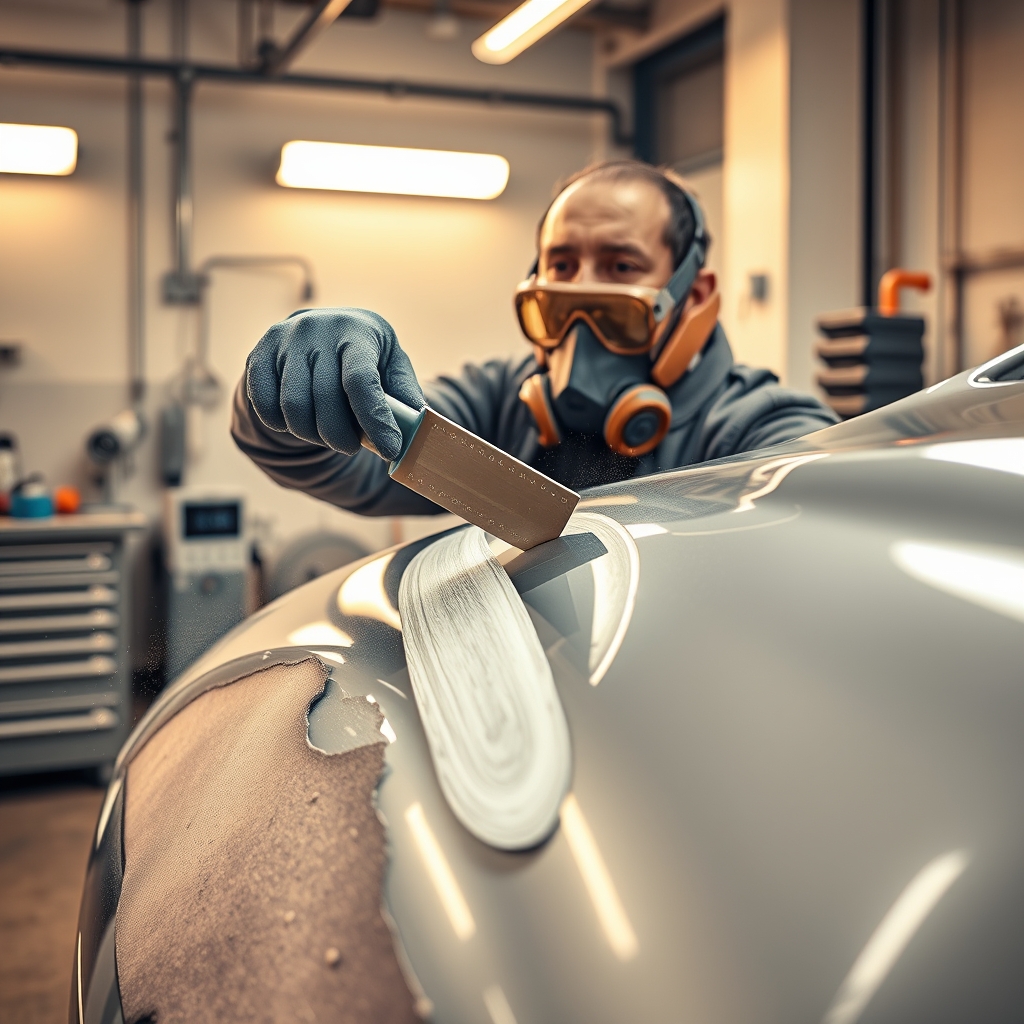
In the world of collision repair, where precision and aesthetics intersect, few processes are as transformative—or as misunderstood—as the application of auto body filler. Often dismissed as a simple “putty job,” the art of shaping and refining filler is a meticulous craft that bridges the gap between structural integrity and flawless finishes. It’s where raw metal meets refined artistry, and where the foundation of a vehicle’s restoration is quietly laid.
The Unsung Role of Auto Body Filler
Auto body filler, commonly known as Bondo (a brand name that has become synonymous with the product), is a two-part compound designed to smooth out imperfections in a vehicle’s body. Whether it’s repairing dents, filling deep scratches, or reconstructing damaged panels, filler plays a critical role in preparing a surface for painting. Yet, its importance extends beyond mere surface-level fixes. When applied with skill, it restores the structural contours of a vehicle, ensuring that the final paint job adheres seamlessly and the vehicle’s lines remain true to its original design.
Modern fillers are engineered for durability, flexibility, and ease of use. Unlike the brittle, chalky fillers of the past, today’s advanced formulas are lightweight, sandable, and resistant to shrinking or cracking over time. This evolution has allowed technicians to achieve near-invisible repairs, even on complex curves and high-stress areas like bumpers and fenders. The result? A surface so smooth that the untrained eye would never guess a repair had taken place.
The Science Behind the Smoothness
The process of applying auto body filler is deceptively complex. It begins with thorough surface preparation—cleaning, sanding, and sometimes even welding to ensure the filler bonds properly to the metal. The filler itself is a mixture of a polyester resin and a hardener, which, when combined, initiates a chemical reaction that cures the material into a solid, workable state. The ratio of resin to hardener is critical; too much hardener can cause the filler to cure too quickly, leading to brittleness, while too little can result in a soft, unworkable mess.
Once applied, the filler must be shaped with precision. Technicians use a variety of tools—from plastic spreaders to specialized sanding blocks—to contour the filler to match the vehicle’s original lines. This step is where the true artistry comes into play. A skilled technician doesn’t just fill a dent; they sculpt the filler to recreate the vehicle’s factory contours, ensuring that the repair blends seamlessly with the surrounding panels. The goal is to achieve a surface so smooth that even the most discerning touch would struggle to detect the repair.
From Rough to Refined: The Sanding Process
Sanding is where the magic happens—or where mistakes become glaringly obvious. The process begins with coarse-grit sandpaper to level the filler, gradually moving to finer grits to achieve a glass-like finish. Each pass removes imperfections, refining the surface until it’s ready for primer and paint. The challenge lies in maintaining the vehicle’s original shape while eliminating any high or low spots. Over-sanding can thin the filler, compromising its integrity, while under-sanding leaves visible imperfections that will show through the paint.
Modern collision repair shops often employ advanced tools like long-board sanders and guide coats to ensure precision. A guide coat—a thin layer of contrasting color applied over the filler—helps technicians identify low spots that need additional attention. When the guide coat is sanded away evenly, it signals that the surface is perfectly level, ready for the next stage of the repair process.
The Intersection of Technology and Craftsmanship
While auto body filler has been a staple of collision repair for decades, modern technology has elevated the process to new heights. Digital measuring systems and laser alignment tools help technicians assess damage with pinpoint accuracy, ensuring that filler is applied only where needed. This precision reduces waste, speeds up the repair process, and improves the overall quality of the work.
Additionally, advancements in filler formulations have made the material more versatile than ever. Lightweight fillers, for example, are ideal for modern vehicles with aluminum or composite panels, where excessive weight can affect performance. Flexible fillers are used in areas prone to vibration, such as around wheel wells, to prevent cracking over time. These innovations allow technicians to tailor their approach to each vehicle’s unique needs, ensuring a repair that’s as durable as it is invisible.
The Future of Filler: Smarter, Stronger, More Sustainable
As the automotive industry evolves, so too does the technology behind auto body filler. Researchers are exploring eco-friendly alternatives to traditional polyester-based fillers, such as bio-based resins that reduce environmental impact without sacrificing performance. Meanwhile, smart fillers embedded with microcapsules that release corrosion inhibitors are being developed to protect against rust, extending the lifespan of repairs.
Another exciting development is the integration of filler application with digital workflows. Some collision repair shops are now using 3D scanning and augmented reality to map out repairs before a single gram of filler is applied. This technology allows technicians to visualize the final result, ensuring that every contour is perfect before the filler even touches the vehicle. The result is a faster, more accurate repair process that minimizes guesswork and maximizes quality.
The craft of auto body filler is a testament to the blend of science, skill, and artistry that defines modern collision repair. It’s a process that demands patience, precision, and an eye for detail—qualities that separate a good repair from a great one. While it may not be as flashy as custom paint jobs or high-tech laser alignments, the humble filler is the unsung hero of the auto body world, quietly ensuring that every vehicle leaves the shop looking—and driving—like new. And as technology continues to advance, the role of filler will only become more refined, pushing the boundaries of what’s possible in collision repair.