The Hidden Craft of Auto Body Filler: Restoring Perfection in Collision Repair
Auto body repair is often perceived as a straightforward process of hammering out dents and applying a fresh coat of paint. However, beneath the surface lies a meticulous craft that blends artistry with precision engineering—auto body filler application. This unsung hero of collision repair plays a pivotal role in restoring vehicles to their pre-accident condition, ensuring structural integrity and a flawless finish. Without it, even the most advanced paintless dent removal or ceramic coating techniques would fall short of achieving true perfection.
The Role of Auto Body Filler in Modern Collision Repair
Auto body filler, commonly referred to as “Bondo” after a popular brand, is a two-part compound used to fill imperfections, dents, and deep scratches in a vehicle’s body. Unlike paintless dent removal, which is limited to minor, accessible dents, body filler is essential for repairing more severe damage where the metal has been stretched, gouged, or deformed. It acts as a bridge between the damaged metal and the final paint finish, creating a smooth, even surface that is indistinguishable from the original panel.
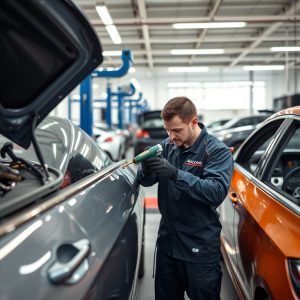
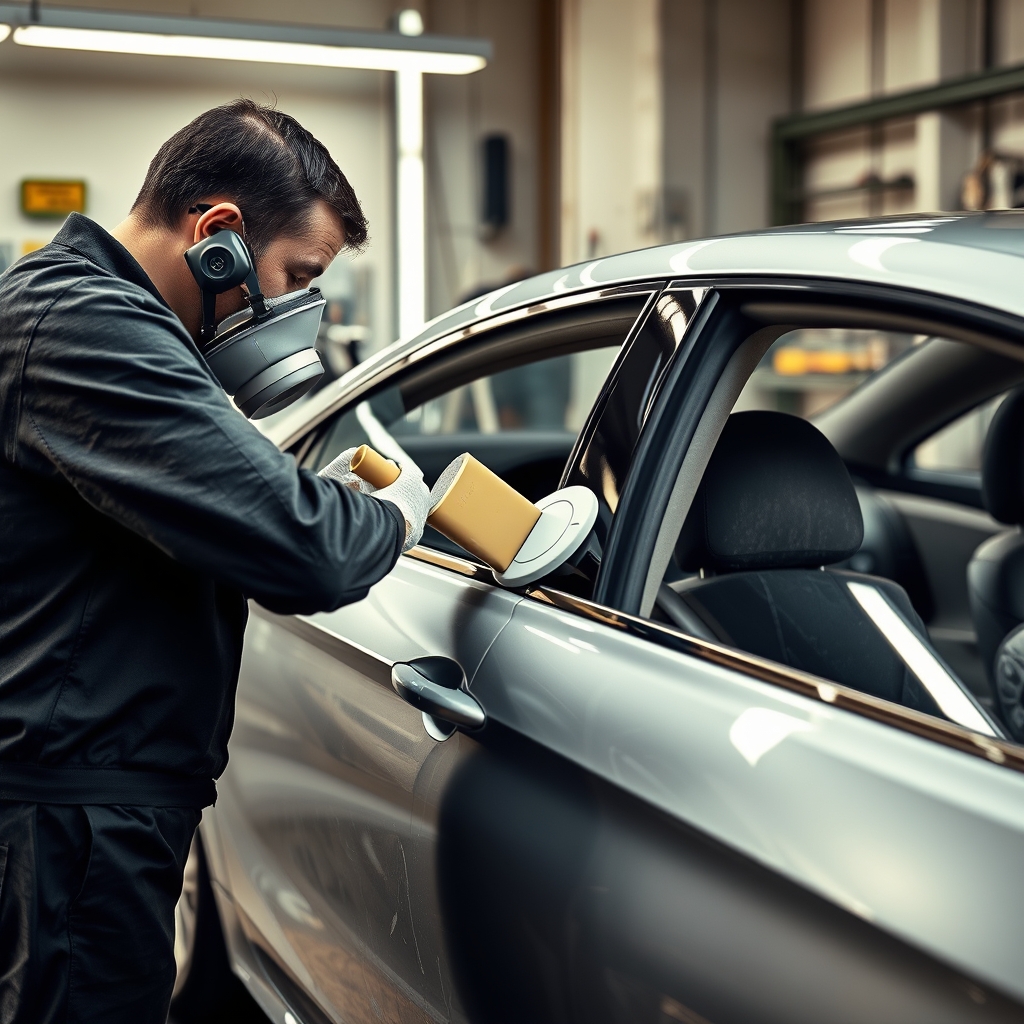
The process begins with thorough surface preparation. Technicians sand down the damaged area to remove rust, paint, and any loose debris, ensuring the filler adheres properly. Once the surface is clean and dry, the filler is mixed with a hardening agent and applied in thin layers. Each layer is carefully shaped and sanded to match the contours of the vehicle, requiring both skill and patience. The goal is not just to fill the damage but to recreate the original lines and curves of the car’s body, a task that demands an eye for detail and a steady hand.
Advanced Techniques in Auto Body Filler Application
While the basic principles of body filler application remain consistent, advancements in materials and tools have elevated the craft to new heights. Modern fillers are lighter, stronger, and more flexible than their predecessors, reducing the risk of cracking or shrinking over time. Some high-end fillers even incorporate fiberglass or aluminum particles, enhancing durability and making them ideal for repairing aluminum body panels—a growing necessity in today’s automotive industry.
One of the most significant innovations in this field is the use of computerized measuring systems and laser frame alignment tools. These technologies allow technicians to assess the extent of damage with pinpoint accuracy, ensuring that the filler is applied only where needed and in the correct proportions. This precision minimizes waste, reduces repair time, and improves the overall quality of the restoration. Additionally, the integration of smart repair systems has streamlined the process, allowing for faster curing times and more efficient sanding techniques.
Challenges and Common Misconceptions
Despite its importance, auto body filler is often misunderstood. One common misconception is that it is a quick fix for any type of damage. In reality, improper application can lead to a host of problems, including poor adhesion, premature cracking, or an uneven finish. Over-reliance on filler, particularly in areas where metal should be reshaped or replaced, can compromise the structural integrity of the vehicle. This is why skilled technicians assess each repair on a case-by-case basis, determining whether filler, metalwork, or a combination of both is the best approach.
Another challenge lies in matching the filler to the vehicle’s original contours. Modern cars feature complex curves and aerodynamic designs, making it difficult to achieve a seamless repair. Technicians must possess an in-depth understanding of automotive design and body lines to ensure the filler blends invisibly with the surrounding panels. This is where the artistry of auto body repair truly shines—transforming a damaged, uneven surface into a smooth, factory-like finish.
The Future of Auto Body Filler in Collision Repair
As vehicles evolve, so too must the techniques and materials used in their repair. The rise of electric vehicles (EVs) and advanced lightweight materials, such as carbon fiber and aluminum, presents new challenges for auto body filler application. Traditional fillers may not adhere as effectively to these materials, necessitating the development of specialized compounds. Manufacturers are already experimenting with nano-enhanced fillers that bond more securely to non-ferrous metals and composites, ensuring long-lasting repairs.
Moreover, the push toward sustainability in the automotive industry is driving innovation in eco-friendly fillers. Water-based and low-VOC (volatile organic compound) fillers are gaining popularity, reducing the environmental impact of collision repair without compromising performance. These advancements align with the broader trend of greener auto body shops, where waste reduction and energy efficiency are becoming as important as the quality of the repair itself.
Mastering the Craft: Training and Skill Development
The complexity of modern auto body filler application underscores the need for ongoing training and skill development. Technicians must stay abreast of the latest materials, tools, and techniques to deliver repairs that meet the high standards of today’s vehicles. Many auto body schools and certification programs now include advanced courses in filler application, emphasizing hands-on training and real-world scenarios. Apprenticeships and mentorship programs also play a crucial role, allowing newcomers to learn from experienced professionals who have honed their craft over decades.
For auto body shops, investing in training is not just about keeping up with industry trends—it’s about maintaining a competitive edge. Customers expect flawless repairs, and the ability to deliver consistent, high-quality results can set a shop apart in a crowded market. Whether it’s repairing a classic car or a cutting-edge EV, the principles of auto body filler application remain the same: precision, patience, and an unwavering commitment to excellence.
In the world of collision repair, auto body filler may not garner the same attention as flashy custom car painting or high-tech ceramic coatings, but its role is indispensable. It is the foundation upon which every flawless repair is built, a testament to the skill and dedication of the technicians who wield it. As automotive technology continues to advance, so too will the methods and materials used to restore vehicles to their former glory, ensuring that the hidden craft of auto body filler remains a cornerstone of the industry for years to come.