
The Evolution of Automotive Elegance: How Minimalism, Smart Tech, and Biomimicry Are Redefining Vehicle Interiors and Exteriors
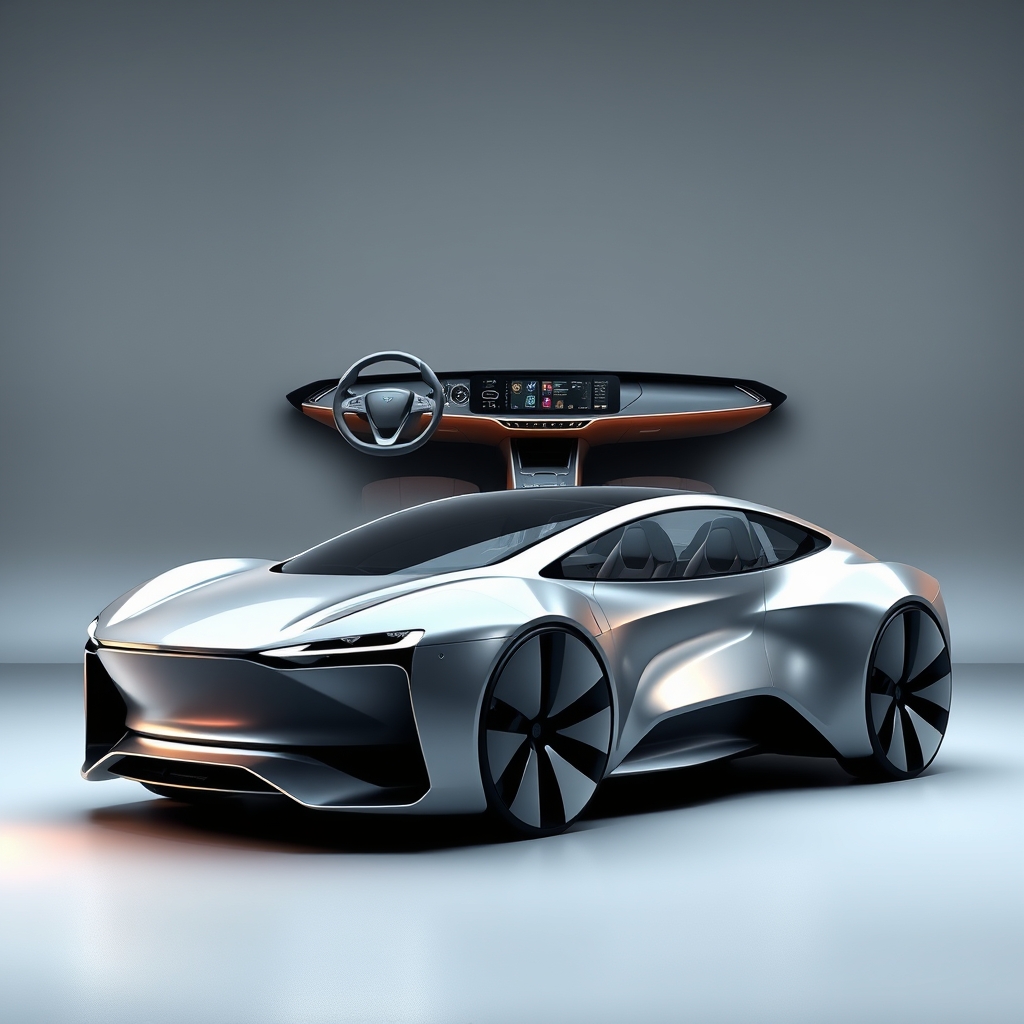
The automotive industry is undergoing a transformative shift, where the boundaries between technology, sustainability, and design are blurring to create vehicles that are not just modes of transportation but extensions of human experience. At the heart of this evolution lies a delicate balance between aesthetic refinement and functional innovation, where every curve, material, and interface is meticulously crafted to enhance efficiency, comfort, and sustainability. The future of automotive design is no longer just about speed or power—it’s about harmony between form and function, where every element serves a purpose beyond mere utility.
The Rise of Minimalist Dashboard Layouts: Less Clutter, More Clarity
One of the most striking trends in modern automotive design is the shift toward minimalist dashboard layouts. Gone are the days of cluttered instrument clusters and overwhelming button arrays. Today’s vehicles embrace clean lines, unobtrusive displays, and intuitive interfaces that prioritize driver focus and ease of use. This minimalist approach is not just an aesthetic choice—it’s a functional necessity in an era where distractions can have serious consequences.
Automakers are leveraging seamless display integration to create dashboards that feel like a single, cohesive surface rather than a collection of disparate screens. Touch-sensitive controls, haptic feedback, and voice-activated systems further reduce visual clutter, allowing drivers to interact with their vehicles more naturally. The result is an interior that feels more like a high-end consumer electronics device than a traditional car cockpit, blending sophistication with usability.
Biomimetic Vehicle Aesthetics: Nature as the Ultimate Designer
Nature has always been a source of inspiration for designers, but recent advancements in biomimetic vehicle aesthetics are taking this concept to new heights. By studying the efficiency, resilience, and beauty of natural forms, automotive engineers are creating exteriors that are not only visually stunning but also aerodynamically optimized. From the fluid curves of a fish’s body to the structural efficiency of a honeycomb, biomimicry is reshaping how vehicles move through the world.
One of the most compelling applications of biomimicry is in active aerodynamics systems. Just as birds adjust their wing shapes to optimize flight, modern vehicles can now dynamically alter their exterior surfaces to reduce drag and improve fuel efficiency. These systems, often integrated with lightweight structural designs, allow cars to adapt to different driving conditions in real time, enhancing performance without compromising aesthetics. The result is a vehicle that doesn’t just look like it belongs in nature—it behaves like it, too.
Sustainable Interior Materials: Where Luxury Meets Responsibility
The shift toward sustainability is no longer a niche concern—it’s a fundamental expectation. Consumers are increasingly demanding interiors that are not only luxurious but also environmentally responsible. This has led to a surge in the use of sustainable interior materials, from recyclable body composites to plant-based upholstery and biodegradable plastics. These materials are not just eco-friendly; they’re also durable, lightweight, and often more cost-effective than traditional alternatives.
Automakers are also exploring modular platform engineering to create interiors that can be easily updated or recycled. This approach not only reduces waste but also allows for greater customization, enabling drivers to refresh their vehicle’s interior without the need for a full redesign. The result is a more sustainable lifecycle for vehicles, where every component is designed with its end-of-life in mind.
Human-Centric Lighting and Smart Glass: Enhancing Comfort and Connectivity
The interior of a vehicle is no longer just a space for driving—it’s a sanctuary for relaxation, productivity, and connection. Human-centric lighting design plays a crucial role in this transformation, using adjustable color temperatures and intensities to create an environment that adapts to the driver’s needs. Whether it’s warm, dim lighting for a calming effect or bright, cool tones to enhance alertness, these systems are designed to support well-being on the road.
Smart glass technology further enhances this experience by allowing drivers to control transparency, tint, and even display information directly on the windows. This not only improves privacy and comfort but also opens up new possibilities for augmented reality dashboards, where critical information can be overlaid onto the driver’s field of view without distracting from the road ahead. The integration of these technologies creates an interior that is not just functional but deeply attuned to the human experience.
The Role of Generative Design and Digital Twins in Shaping the Future
Behind the scenes, generative automotive design and digital twin prototyping are revolutionizing how vehicles are conceived and developed. Generative design uses algorithms to explore thousands of potential design iterations, optimizing for factors like weight, strength, and aerodynamics in ways that would be impossible for human designers alone. This approach allows for the creation of structures that are both lighter and stronger, pushing the boundaries of what’s possible in automotive engineering.
Digital twin prototyping takes this a step further by creating virtual replicas of vehicles that can be tested and refined in a simulated environment. This not only accelerates the development process but also reduces the need for physical prototypes, saving time, resources, and waste. Together, these technologies are enabling automakers to bring innovative designs to market faster and more sustainably than ever before.
Holographic Interfaces and Augmented Reality: The Next Frontier of Interaction
The way we interact with our vehicles is evolving rapidly, with holographic user interfaces and augmented reality dashboards leading the charge. These technologies transform the driving experience by projecting critical information directly into the driver’s line of sight, reducing the need to glance away from the road. Whether it’s navigation cues, speed limits, or hazard warnings, these systems ensure that essential data is always within easy reach.
Beyond safety, holographic interfaces also open up new possibilities for entertainment and connectivity. Imagine a vehicle where passengers can interact with 3D projections, adjust settings with a wave of their hand, or even collaborate on work presentations during a commute. These innovations are not just about enhancing the driving experience—they’re about redefining what it means to be in a vehicle in the first place.
The automotive industry stands at the precipice of a new era, where design is no longer constrained by the limitations of the past. By embracing minimalism, biomimicry, sustainability, and cutting-edge technology, vehicles are becoming more than just machines—they’re evolving into intelligent, adaptive companions that enhance every aspect of the journey. As these trends continue to converge, the line between the car and the driver will blur, creating a future where mobility is not just efficient and sustainable, but also deeply human.