The Silent Evolution: How Fiber Laser Welding and Hydrographics Are Redefining Auto Body Customization
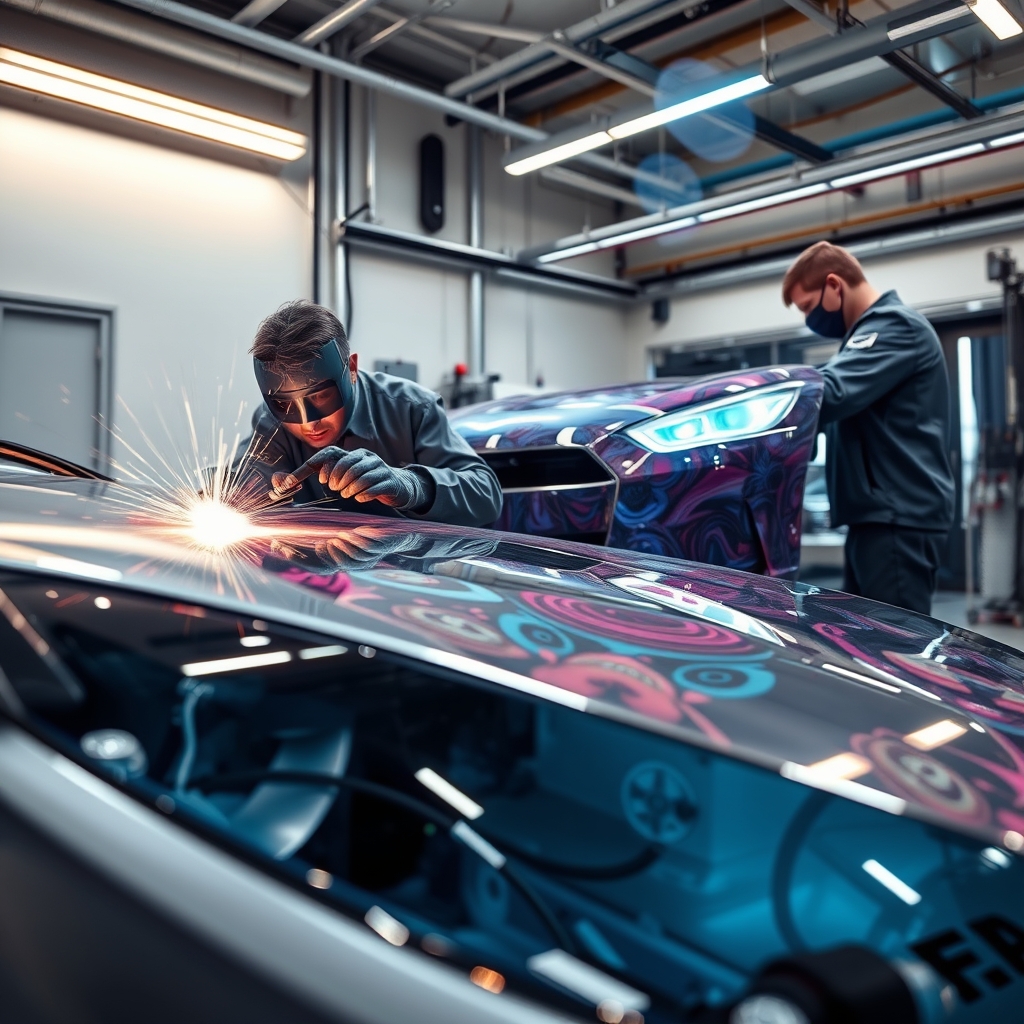
In the world of auto body repair and customization, innovation often moves quietly, transforming the way vehicles are restored, enhanced, and protected without always making headlines. Two technologies, in particular, have been making waves beneath the surface: fiber laser welding and hydrographics water transfer printing. While they serve distinct purposes, their combined impact is reshaping the possibilities of automotive customization, blending precision engineering with artistic expression in ways that were once unimaginable.
The Precision Revolution: Fiber Laser Welding in Collision Repair
Fiber laser welding has emerged as a game-changer in modern collision repair, particularly for vehicles constructed with advanced materials like aluminum and high-strength steel. Unlike traditional welding methods, which rely on intense heat and can compromise the structural integrity of lightweight metals, fiber laser welding delivers pinpoint accuracy with minimal heat input. This precision is critical for maintaining the strength and safety of a vehicle’s frame, especially in electric vehicles (EVs) where battery placement and structural integrity are paramount.
The technology works by focusing a high-powered laser beam onto a small area, creating a deep, narrow weld that is both strong and aesthetically clean. This method reduces the risk of warping or distortion, which is a common challenge in aluminum body repair. For auto body shops specializing in EV repairs, fiber laser welding is not just an advantage—it’s a necessity. The ability to weld delicate components without damaging surrounding materials ensures that repairs meet the exacting standards required for modern vehicles, particularly those with complex electrical systems and lightweight architectures.
Why Aluminum and High-Strength Steel Demand Laser Precision
Aluminum has become the material of choice for many automakers due to its lightweight properties, which improve fuel efficiency and performance. However, its lower melting point and higher thermal conductivity compared to steel make it more susceptible to heat damage during traditional welding. Fiber laser welding addresses this challenge by concentrating heat in a controlled manner, allowing technicians to join aluminum panels without compromising their structural integrity. This is particularly important in frame straightening and car panel replacement, where even minor distortions can affect a vehicle’s safety and drivability.
High-strength steel, another common material in modern vehicles, also benefits from fiber laser welding. The technology’s ability to create strong, narrow welds ensures that repairs maintain the vehicle’s crashworthiness, a critical factor in collision repair. As automakers continue to push the boundaries of material science, the demand for advanced welding techniques like fiber laser welding will only grow, making it an indispensable tool in the modern auto body shop.
The Artistic Frontier: Hydrographics Water Transfer Printing
While fiber laser welding revolutionizes the structural aspects of auto body repair, hydrographics water transfer printing is transforming the aesthetic possibilities of vehicle customization. Also known as immersion printing or water transfer imaging, this process allows for intricate designs to be applied to virtually any three-dimensional surface, from car bumpers to entire vehicle bodies. The result is a seamless, high-quality finish that can mimic everything from carbon fiber to exotic wood grain, all with a level of detail that traditional painting methods struggle to achieve.
How Hydrographics Works: A Blend of Science and Art
The hydrographics process begins with a film printed with the desired pattern, which is then floated on the surface of a water tank. The film dissolves, leaving the ink suspended on the water’s surface. The object to be customized—whether it’s a car panel, interior trim, or even a motorcycle helmet—is then carefully dipped into the water. The ink adheres to the object’s surface, wrapping around curves and contours with remarkable precision. Once removed from the water, the object is rinsed, dried, and sealed with a clear coat to protect the design and enhance its durability.
The versatility of hydrographics makes it a powerful tool for custom car painting. Unlike traditional airbrushing or vinyl wraps, which can be limited by the complexity of a vehicle’s shape, hydrographics can cover even the most intricate surfaces with ease. This makes it ideal for creating one-of-a-kind designs that reflect a vehicle owner’s personality or brand identity. From camouflage patterns for off-road enthusiasts to sleek, metallic finishes for luxury cars, the possibilities are nearly endless.
Durability and Protection: Beyond Aesthetics
Hydrographics isn’t just about looks—it also offers practical benefits. The clear coat applied after the printing process provides an additional layer of protection against UV rays, scratches, and corrosion. When combined with ceramic coating application, the result is a finish that is not only visually stunning but also highly resistant to the elements. This makes hydrographics an excellent choice for vehicle corrosion prevention, particularly in regions with harsh climates or high levels of road salt.
For auto body shops, hydrographics represents a lucrative opportunity to expand their service offerings. Customization is a growing trend in the automotive industry, with consumers increasingly seeking unique ways to personalize their vehicles. By incorporating hydrographics into their repertoire, shops can attract a broader range of customers, from car enthusiasts looking to stand out to businesses seeking branded fleet vehicles.
The Synergy of Innovation: Where Laser Welding Meets Hydrographics
While fiber laser welding and hydrographics serve different purposes, their combined use in auto body repair and customization highlights the broader trend of integrating advanced technologies into traditional processes. Fiber laser welding ensures that repairs are structurally sound and meet the highest safety standards, while hydrographics allows for creative expression without compromising durability. Together, they represent the future of auto body work—a future where precision engineering and artistic innovation go hand in hand.
For collision repair centers, staying ahead of these trends is essential. As vehicles become more complex and consumer expectations evolve, the demand for advanced techniques like fiber laser welding and hydrographics will continue to rise. Shops that embrace these technologies will not only enhance their capabilities but also position themselves as leaders in the industry, capable of delivering repairs and customizations that are as durable as they are visually striking.
The quiet evolution of auto body technology is a testament to the industry’s ability to adapt and innovate. Whether it’s the structural precision of fiber laser welding or the artistic versatility of hydrographics, these advancements are redefining what’s possible in vehicle repair and customization. As the lines between functionality and aesthetics continue to blur, one thing is clear: the future of auto body work is brighter—and more creative—than ever before.