The Unseen Mastery of Automotive Paint Refinishing: Blending Chemistry, Craftsmanship, and Cutting-Edge Technology
In the world of collision repair, few processes demand as much precision, patience, and artistry as automotive paint refinishing. It’s a discipline where science and craftsmanship intersect, transforming damaged vehicles into showroom-worthy masterpieces. Yet, despite its critical role in restoring a car’s aesthetic and protective integrity, paint refinishing remains one of the most underappreciated aspects of auto body work. Behind the flawless finishes lies a complex dance of chemistry, advanced tools, and skilled hands working in harmony to achieve perfection.
The Chemistry Behind the Shine
At the heart of automotive paint refinishing is a deep understanding of chemistry. Modern automotive paints are sophisticated formulations, often consisting of multiple layers—primer, base coat, and clear coat—each serving a distinct purpose. The primer provides adhesion and corrosion resistance, the base coat delivers color and vibrancy, while the clear coat acts as a protective shield against UV rays, environmental contaminants, and minor abrasions.
Waterborne paints, now the industry standard in many regions, have revolutionized refinishing by reducing volatile organic compound (VOC) emissions without compromising quality. These paints require precise environmental controls—temperature, humidity, and airflow—to cure properly. A slight deviation can result in imperfections like orange peel texture, runs, or uneven gloss. Mastering the chemistry behind these coatings is what separates a mediocre finish from one that gleams with depth and clarity.
The Craftsmanship of Surface Preparation
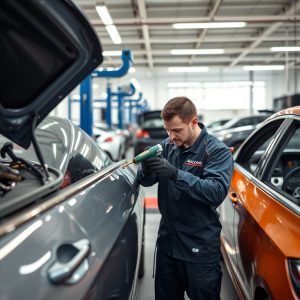
Before a single drop of paint is applied, the real magic happens in surface preparation. This stage is where the foundation for a flawless finish is laid, and it’s often the most labor-intensive part of the process. Technicians must meticulously sand, fill, and prime every imperfection, ensuring the surface is perfectly smooth and free of contaminants.
Auto body fillers, often referred to as Bondo, play a crucial role in this phase. Modern fillers are lightweight, easy to sand, and designed to bond seamlessly with metal and composite materials. However, their application requires a keen eye and steady hand. Over-sanding can weaken the filler, while under-sanding leaves visible imperfections. The best technicians treat this step as an art form, blending the filler into the surrounding panel with such precision that the repair becomes invisible once painted.
The Role of Advanced Spray Booths
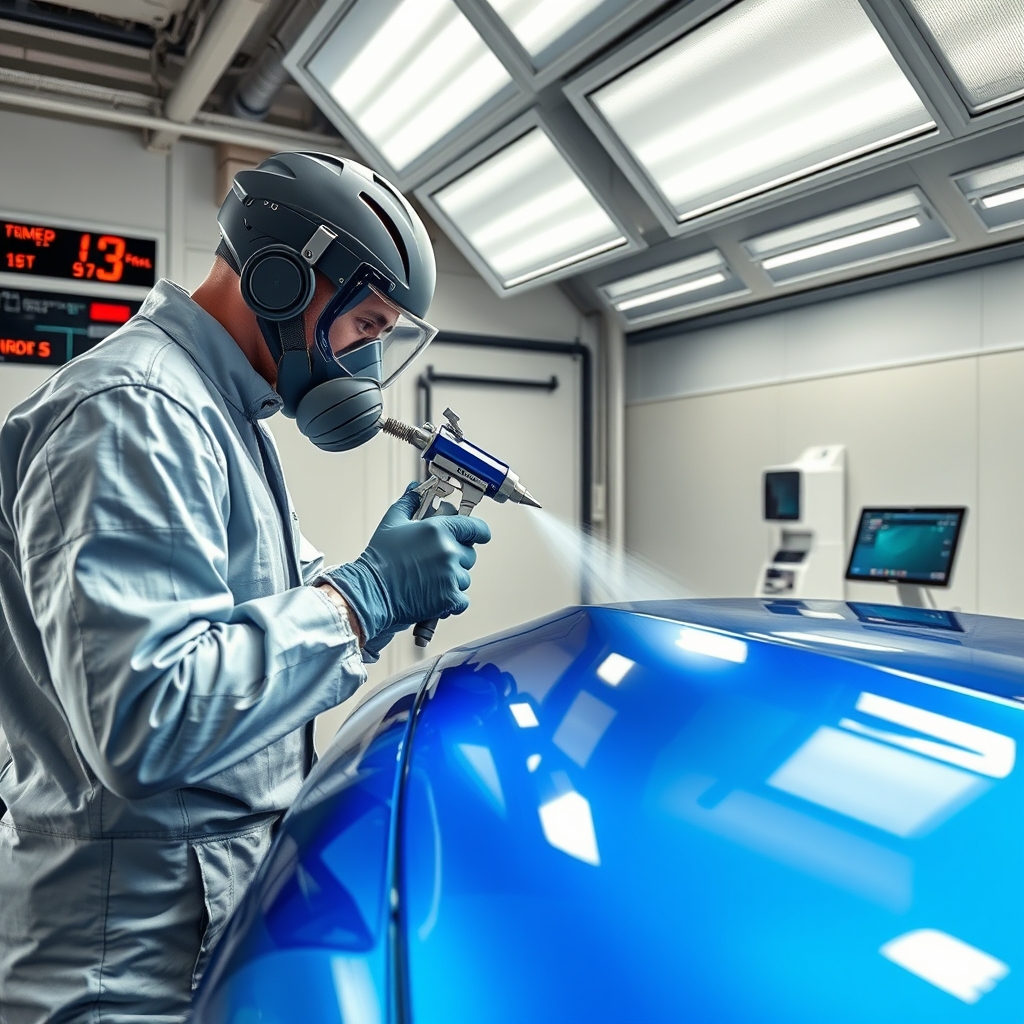
No discussion of paint refinishing would be complete without highlighting the importance of automotive spray booths. These controlled environments are engineered to provide optimal conditions for painting, with features like downdraft airflow, temperature control, and advanced filtration systems. The downdraft design ensures that overspray is pulled away from the vehicle, preventing dust and debris from settling on wet paint.
Modern spray booths also prioritize sustainability, with energy-efficient lighting and recirculation systems that reduce energy consumption. Some even incorporate smart technology, allowing technicians to monitor and adjust conditions in real-time via digital interfaces. These advancements not only improve the quality of the finish but also enhance efficiency and reduce waste, making them indispensable in today’s collision repair centers.
The Art of Color Matching
One of the most challenging aspects of paint refinishing is achieving a perfect color match. With thousands of factory colors and custom blends in existence, even a slight mismatch can make a repair painfully obvious. This is where the expertise of a skilled color technician comes into play.
Using spectrophotometers and advanced software, technicians analyze the vehicle’s existing paint to create a custom formula. However, technology alone isn’t enough. Factors like the age of the paint, sun exposure, and even the angle of light can affect how a color appears. A master refinisher knows how to adjust the formula on the fly, accounting for these variables to ensure a seamless match. The result is a repair that blends so perfectly, it’s as if the damage never existed.
Clear Coat Scratch Repair: Restoring Flawless Finishes
Even after a vehicle leaves the shop, its paintwork remains vulnerable to minor scratches and swirl marks. Clear coat scratch repair has emerged as a specialized service that restores the gloss and clarity of a vehicle’s finish without the need for a full repaint. This process involves carefully polishing the affected area to remove imperfections, followed by the application of a protective sealant or ceramic coating to enhance durability.
For deeper scratches, technicians may use a multi-stage approach, starting with wet sanding to level the surface, followed by compounding and polishing to restore the shine. The key to success lies in knowing how much material to remove without compromising the integrity of the clear coat. When done correctly, the repair is virtually undetectable, preserving the vehicle’s value and appearance.
The Future of Paint Refinishing
As automotive technology evolves, so too does the field of paint refinishing. Electric vehicles (EVs), with their unique materials and construction methods, present new challenges and opportunities. For instance, the lightweight aluminum and carbon fiber used in EVs require specialized primers and paints to ensure proper adhesion and durability. Additionally, the rise of advanced driver-assistance systems (ADAS) means that refinishing must be done with even greater precision to avoid interfering with sensors and cameras.
Innovations like UV-cured paints, which dry almost instantly under ultraviolet light, are also gaining traction. These paints reduce cycle times and energy consumption, making the refinishing process faster and more sustainable. Meanwhile, advancements in robotic painting systems are improving consistency and efficiency, particularly for large-scale operations.
Every time a vehicle rolls out of a collision repair shop with a flawless finish, it’s a testament to the unseen mastery of automotive paint refinishing. It’s a process where chemistry meets craftsmanship, where advanced technology enhances human skill, and where the goal is always the same: to make the repair invisible and the result extraordinary. The next time you admire a car’s gleaming exterior, remember that beneath the surface lies a world of precision, innovation, and dedication that brings it to life.