
The Digital Skin: How Smart Glass, Holographic Interfaces, and Kinetic Styling Are Redefining Vehicle Surfaces
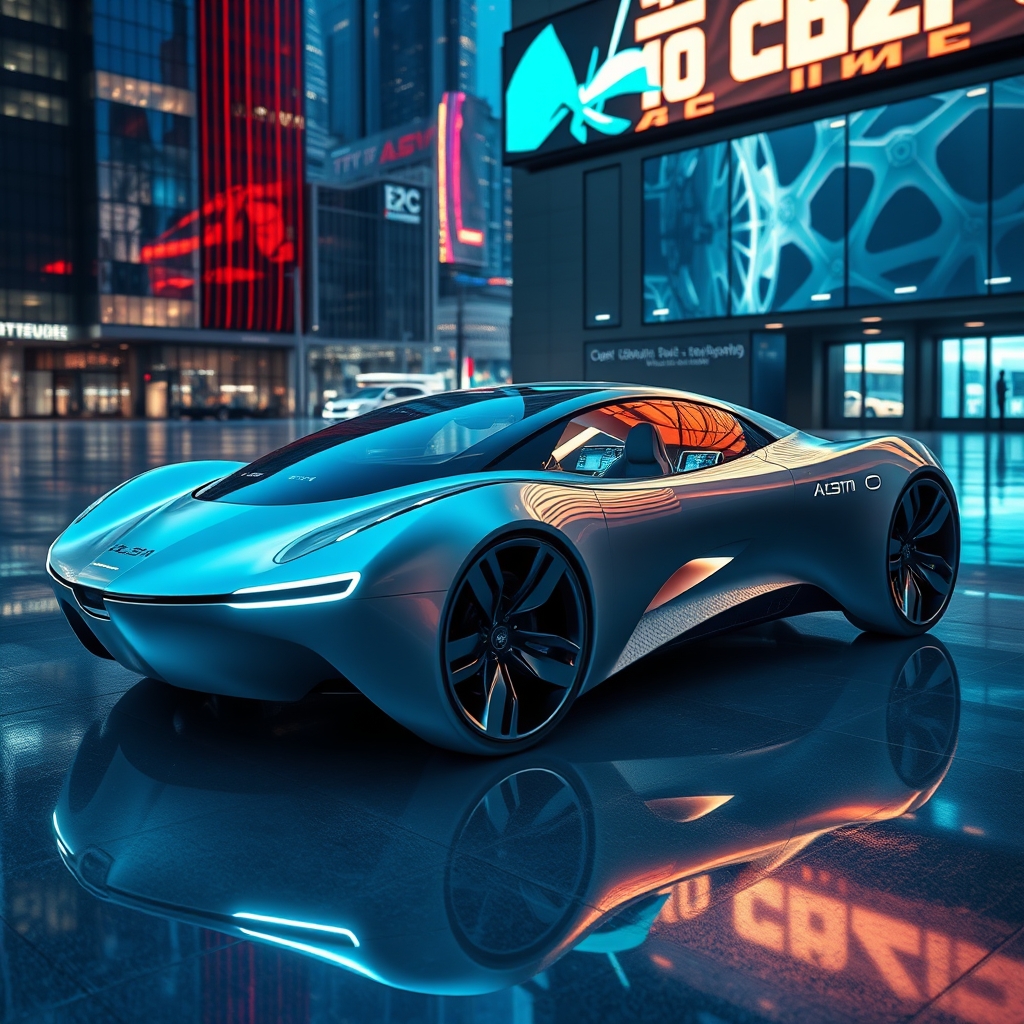
The automotive industry is undergoing a metamorphosis, where the boundaries between technology and design blur into a seamless, dynamic experience. At the heart of this transformation lies the concept of the “digital skin”—a fusion of smart materials, interactive surfaces, and adaptive aesthetics that redefine how vehicles engage with their environment and occupants. This evolution is not merely about aesthetics; it’s about creating a living, breathing entity that responds, adapts, and evolves.
The Rise of Smart Glass Technology
Smart glass is no longer a futuristic fantasy but a tangible reality reshaping vehicle interiors and exteriors. Electrochromic and suspended particle device (SPD) technologies allow glass to transition from transparent to opaque in milliseconds, offering privacy, glare reduction, and energy efficiency. Imagine a car where the windows adjust their tint based on sunlight intensity or a panoramic roof that darkens to create a cozy ambiance during long drives. Beyond comfort, smart glass reduces the need for physical shades or blinds, contributing to a minimalist dashboard layout that prioritizes clean lines and uncluttered spaces.
But the innovation doesn’t stop at functionality. Smart glass is becoming a canvas for augmented reality (AR) dashboards, projecting navigation cues, speed limits, or even virtual art onto the windshield. This seamless display integration transforms the driving experience into an immersive journey, where information is not just accessible but intuitively woven into the environment. The result? A cockpit that feels less like a machine and more like an extension of the driver’s senses.
Holographic Interfaces: The Next Frontier of Interaction
As vehicles inch closer to full autonomy, the need for traditional dashboards diminishes, paving the way for holographic user interfaces (HUIs). These 3D projections float in mid-air, allowing drivers and passengers to interact with controls through gestures or voice commands. Unlike touchscreens, which require physical contact, holographic interfaces offer a tactile-free experience, reducing distractions and enhancing safety. Picture adjusting the climate control by swiping through a hologram or selecting a playlist by pinching a virtual button—all without taking your eyes off the road.
HUIs also enable personalization on an unprecedented scale. The interface can adapt to individual preferences, displaying only the most relevant information for each occupant. For instance, a passenger might see entertainment options while the driver focuses on navigation. This level of customization is not just about convenience; it’s about creating a human-centric lighting design that aligns with the user’s mood, time of day, or even biometric data. Soft blues for relaxation, warm ambers for energy—lighting that responds to the rhythm of life.
Kinetic Styling: When Aesthetics Meet Motion
The exterior of a vehicle is no longer static. Kinetic styling introduces movement into design, where body panels, grilles, or even entire sections of the car shift to optimize performance or express personality. Active aerodynamics systems, for example, adjust spoilers or air vents in real-time to reduce drag or enhance downforce, improving efficiency without sacrificing style. This dynamic interplay between form and function is inspired by biomimetic vehicle aesthetics, where nature’s efficiency—think of a bird adjusting its wings mid-flight—is translated into automotive design.
Kinetic elements also serve as a form of communication. A car’s exterior can subtly signal its intentions, like a rear spoiler rising to indicate regenerative braking or side mirrors folding inward to announce autonomous mode. These movements create a dialogue between the vehicle and its surroundings, making the driving experience more intuitive and engaging. It’s not just about looking futuristic; it’s about feeling alive.
Sustainable Materials: The Foundation of Future Design
While technology dazzles, sustainability remains the backbone of modern automotive design. Recyclable body composites, such as carbon fiber reinforced polymers (CFRP) or natural fiber composites, are replacing traditional steel and aluminum, reducing weight and environmental impact. These materials are not only lightweight but also durable, offering designers the freedom to experiment with bold, organic shapes that were once impossible with conventional materials.
Inside the cabin, sustainable interior materials like mycelium-based leather, recycled plastics, or even algae-derived fabrics are redefining luxury. These materials are not just eco-friendly; they’re also functional. For example, smart textiles embedded with sensors can monitor air quality or adjust seat firmness based on the occupant’s posture. The result is a cabin that is as kind to the planet as it is to its passengers.
The Role of Generative Design and Digital Twins
Behind every groundbreaking design lies a process fueled by innovation. Generative automotive design leverages artificial intelligence to explore thousands of design iterations, optimizing for aerodynamics, weight, and aesthetics simultaneously. This approach allows designers to push boundaries, creating shapes that are both visually striking and functionally superior. Digital twin prototyping takes this a step further by simulating real-world performance, enabling engineers to test and refine designs in a virtual environment before a single physical prototype is built.
Together, these technologies accelerate the development cycle, reducing waste and ensuring that every component is purposeful. Whether it’s a lightweight structural design or a modular platform engineering approach, the goal is the same: to create vehicles that are efficient, sustainable, and emotionally resonant.
The digital skin of modern vehicles is more than a layer of technology—it’s a philosophy. It represents a shift from static, mechanical objects to dynamic, intelligent systems that adapt, learn, and evolve. As smart glass, holographic interfaces, and kinetic styling continue to advance, the line between the car and its environment will blur even further. The future of automotive design is not just about getting from point A to point B; it’s about creating an experience that is seamless, sustainable, and deeply human. In this new era, the vehicle is no longer just a mode of transport but a companion on the journey of life, responding to our needs before we even articulate them.