
The Future Unfolded: How Lightweight Composites, Holographic Interfaces, and Active Aerodynamics Are Crafting the Next Generation of Vehicles
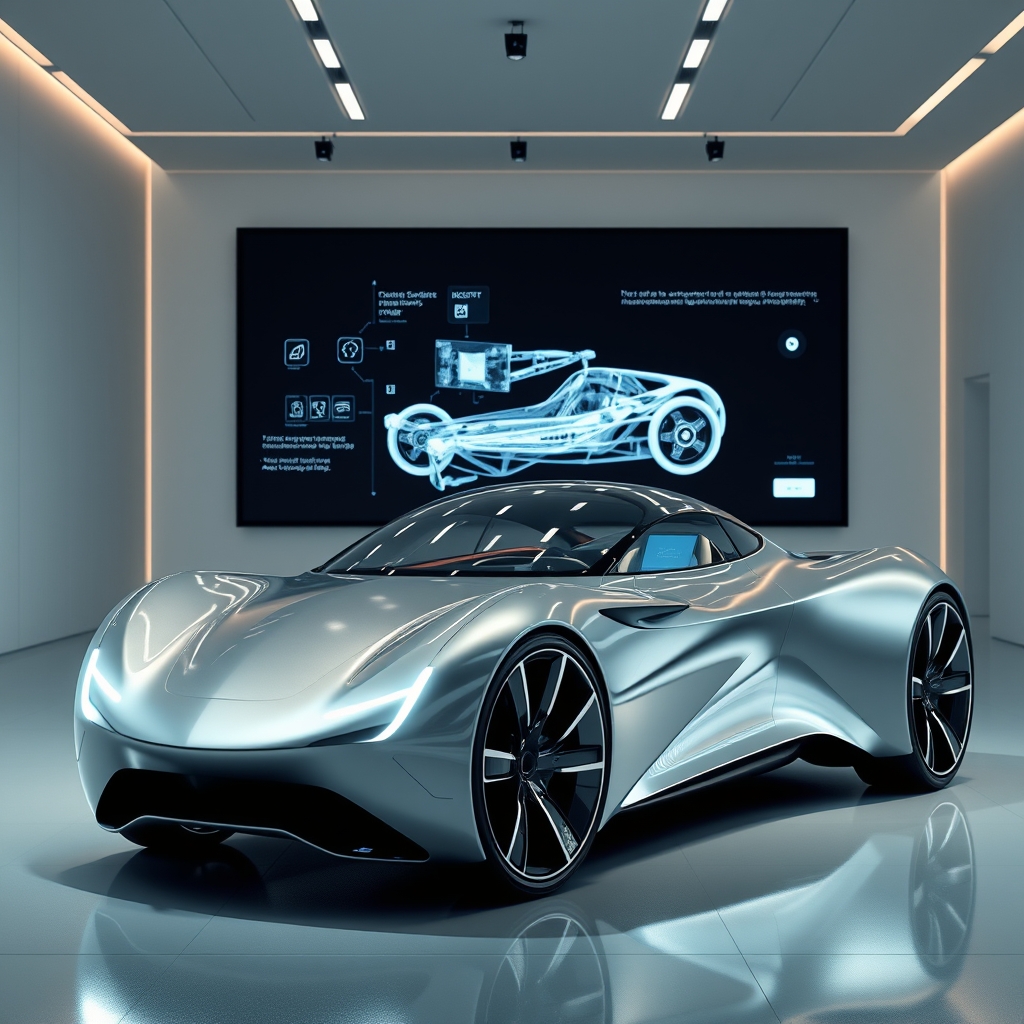
The automotive industry is undergoing a transformative shift, where innovation is not just about speed or aesthetics but about redefining the very essence of mobility. At the heart of this evolution lies a delicate balance between cutting-edge technology and sustainable practices, where every component is meticulously engineered to enhance performance, efficiency, and user experience. Among the most groundbreaking advancements are lightweight structural design, holographic user interfaces, and active aerodynamics systems, each playing a pivotal role in shaping the vehicles of tomorrow.
The Rise of Lightweight Structural Design
Weight has always been the silent adversary of automotive performance. The heavier the vehicle, the more energy it consumes, the slower it accelerates, and the less efficient it becomes. However, the advent of recyclable body composites and advanced materials like carbon fiber-reinforced polymers (CFRP) and aluminum alloys has revolutionized lightweight structural design. These materials offer an unparalleled strength-to-weight ratio, allowing engineers to reduce mass without compromising safety or durability.
Beyond performance, lightweight composites are a cornerstone of sustainability. Traditional steel and iron components are being replaced with eco-friendly alternatives that can be recycled or repurposed at the end of a vehicle’s lifecycle. This shift not only reduces the environmental footprint of manufacturing but also aligns with the growing demand for circular economy practices in the automotive sector. Companies like BMW and Tesla have already embraced these materials, integrating them into their production lines to create vehicles that are as sustainable as they are high-performing.
Holographic User Interfaces: A Glimpse into the Future of Interaction
The dashboard of a car has evolved from a cluster of analog dials to a digital canvas, and now, it is poised to become a three-dimensional interactive experience. Holographic user interfaces (HUIs) are redefining how drivers and passengers interact with their vehicles, offering a seamless blend of functionality and futuristic aesthetics. Unlike traditional touchscreens, HUIs project floating, high-resolution images that can be manipulated with gestures or voice commands, eliminating the need for physical buttons or knobs.
This technology is not just about novelty; it enhances safety by reducing driver distraction. Critical information, such as navigation prompts or vehicle diagnostics, can be displayed in the driver’s line of sight, minimizing the need to look away from the road. Moreover, HUIs can adapt to the preferences of individual users, creating a personalized experience that evolves with the driver. Imagine stepping into a car where the interface adjusts to your mood, the time of day, or even the weather outside—this is the promise of holographic technology in automotive design.
Seamless Display Integration: The Invisible Tech Revolution
While HUIs represent the cutting edge of display technology, seamless display integration is quietly transforming the way we perceive in-car interfaces. Gone are the days of clunky screens bolted onto dashboards. Today, displays are being embedded into surfaces like windshields, windows, and even the entire dashboard, creating a cohesive and immersive visual experience. Augmented reality (AR) dashboards, for instance, overlay real-time data onto the driver’s view of the road, providing turn-by-turn directions, hazard warnings, and traffic updates without ever obscuring the view.
This integration extends beyond the driver’s seat. Passengers can enjoy personalized entertainment systems, with displays embedded into headrests or even the ceiling, turning the cabin into a mobile theater or workspace. The key to this technology’s success lies in its subtlety—displays are designed to blend into the vehicle’s interior, only revealing themselves when needed. This minimalist approach not only enhances aesthetics but also reduces cognitive load, allowing occupants to focus on the journey rather than the technology.
Active Aerodynamics: Where Form Meets Function
Aerodynamic efficiency has long been a cornerstone of automotive design, but active aerodynamics systems are taking it to the next level. Unlike passive aerodynamics, which relies on fixed shapes and contours, active systems use movable components to dynamically adjust the vehicle’s profile in response to driving conditions. Spoilers that deploy at high speeds, air vents that open or close to optimize airflow, and even morphing body panels are just a few examples of how active aerodynamics can enhance performance and efficiency.
The benefits of this technology are manifold. By reducing drag, active aerodynamics improve fuel efficiency and extend the range of electric vehicles. They also enhance stability and handling, particularly at high speeds or in adverse weather conditions. For electric vehicles, where every watt of energy counts, active aerodynamics can make the difference between a good range and an exceptional one. Companies like Porsche and Mercedes-Benz have already integrated these systems into their high-performance models, proving that efficiency and exhilaration can coexist.
Biomimetic Vehicle Aesthetics: Nature as the Ultimate Designer
Nature has spent millions of years perfecting efficiency, and automotive designers are increasingly turning to biomimicry to inspire the next generation of vehicle aesthetics. Biomimetic design draws from the forms, patterns, and systems found in the natural world to create vehicles that are not only visually striking but also functionally superior. For example, the sleek, streamlined bodies of fish have inspired aerodynamic shapes that reduce drag, while the structural integrity of honeycombs has influenced the design of lightweight yet robust vehicle frames.
Beyond aerodynamics, biomimicry is also shaping the interior of vehicles. Sustainable materials like mycelium-based leather and algae-derived plastics are being used to create interiors that are both eco-friendly and luxurious. Even the color schemes and textures of these materials are inspired by nature, creating a harmonious and calming environment for occupants. This approach not only reduces the environmental impact of vehicle production but also fosters a deeper connection between humans and their machines.
The automotive industry stands at the precipice of a new era, where technology and sustainability converge to create vehicles that are faster, smarter, and more efficient than ever before. Lightweight composites are redefining structural design, holographic interfaces are transforming human-machine interaction, and active aerodynamics are pushing the boundaries of performance. As these innovations continue to evolve, they will not only shape the cars of the future but also redefine our relationship with mobility itself. The road ahead is not just about getting from point A to point B—it’s about doing so in a way that is seamless, sustainable, and deeply human.