The Precision Revolution: How Laser Frame Alignment and Fiber Laser Welding Are Redefining Structural Integrity in Collision Repair
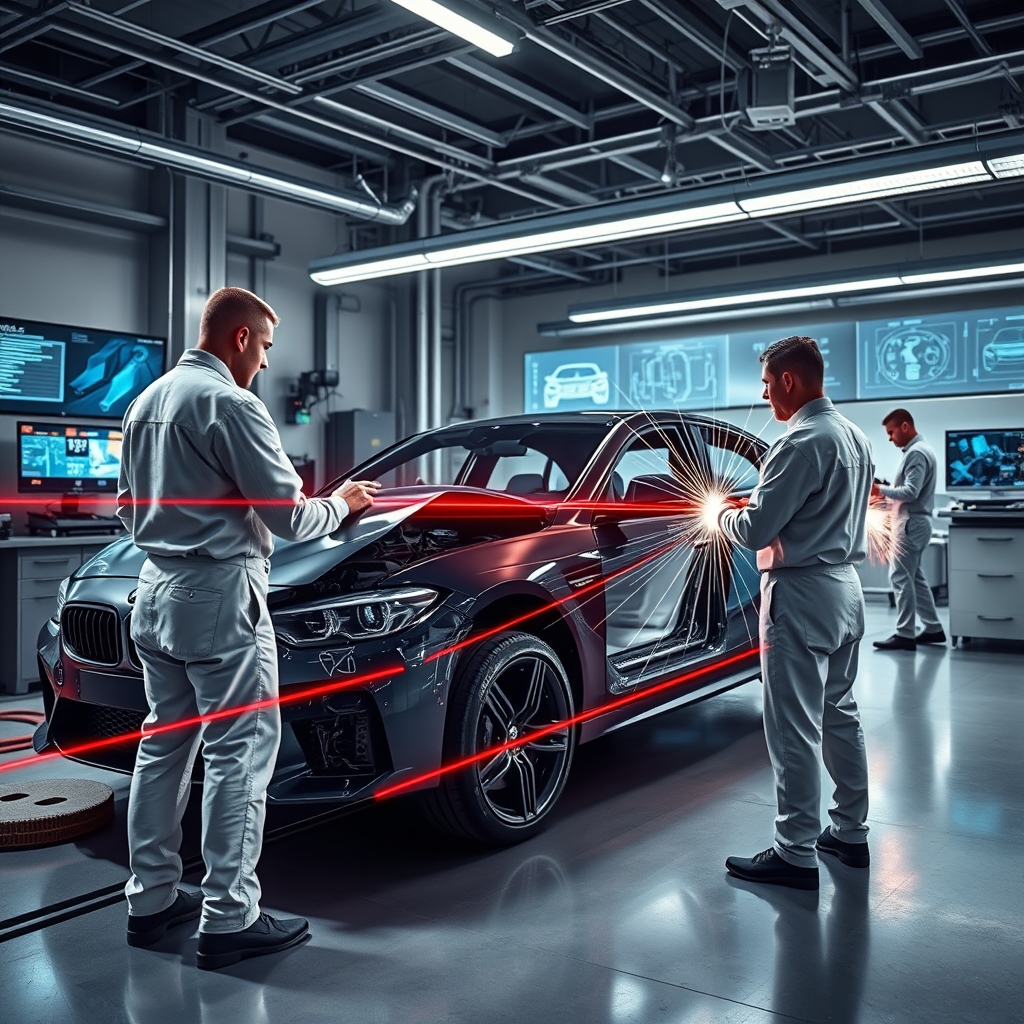
In the ever-evolving world of collision repair, the demand for precision has never been higher. Modern vehicles are engineered with advanced materials and complex designs, making traditional repair methods increasingly inadequate. Today, the industry is embracing cutting-edge technologies like laser frame alignment and fiber laser welding to restore structural integrity with unparalleled accuracy. These innovations are not just improving efficiency—they are redefining what it means to return a vehicle to its pre-accident condition.
The Rise of Laser Frame Alignment
Gone are the days when frame straightening relied solely on manual measurements and hydraulic pulls. Laser frame alignment systems have revolutionized the process by using high-precision lasers to map a vehicle’s structure in real time. These systems create a digital blueprint of the frame, comparing it to manufacturer specifications to identify even the slightest deviations. The result? Repairs that are not just close, but exact.
One of the most significant advantages of laser alignment is its ability to detect hidden damage. Traditional methods might overlook subtle misalignments that could compromise safety or performance. With laser technology, technicians can pinpoint issues that would otherwise go unnoticed, ensuring that every repair meets the highest standards of structural integrity. This level of precision is particularly critical for modern vehicles, where even minor frame distortions can affect advanced driver-assistance systems (ADAS) and crash safety performance.
How Laser Alignment Works
Laser frame alignment systems typically consist of a series of sensors and targets placed strategically around the vehicle. These sensors emit laser beams that measure the exact position of each target, creating a 3D model of the frame. The system then compares this model to the manufacturer’s original specifications, highlighting any areas that require correction. Technicians can then use hydraulic equipment to make precise adjustments, guided by real-time feedback from the laser system.
This technology is especially valuable for luxury and performance vehicles, where even the smallest misalignment can affect handling and safety. It also streamlines the repair process, reducing the time and labor required to achieve perfect results. For collision centers, this means faster turnaround times and higher customer satisfaction.
The Power of Fiber Laser Welding
While laser frame alignment ensures structural precision, fiber laser welding is transforming how technicians repair and replace damaged panels. Unlike traditional welding methods, which rely on heat and can distort surrounding materials, fiber laser welding delivers concentrated energy with minimal heat transfer. This makes it ideal for working with modern lightweight materials like aluminum and high-strength steel, which are increasingly common in today’s vehicles.
Fiber laser welding offers several key advantages over conventional techniques. First, it produces stronger, more consistent welds with less heat-affected zone (HAZ) distortion. This is crucial for maintaining the integrity of advanced materials, which can weaken if exposed to excessive heat. Second, fiber lasers are highly precise, allowing technicians to make welds in tight spaces without damaging adjacent components. Finally, the process is faster and more efficient, reducing labor costs and improving overall productivity.
Applications in Modern Collision Repair
Fiber laser welding is particularly valuable for repairing aluminum body panels, which are notoriously difficult to weld using traditional methods. Aluminum has a lower melting point than steel, making it prone to warping and distortion when exposed to high heat. Fiber lasers solve this problem by delivering energy in a controlled, focused beam, minimizing heat transfer and preserving the material’s structural properties.
Beyond aluminum, fiber laser welding is also used for high-strength steel repairs, where precision is critical to maintaining crash safety performance. The technology is equally effective for custom fabrication work, such as creating replacement panels or modifying vehicle structures. As automakers continue to adopt lightweight materials, fiber laser welding will play an increasingly vital role in collision repair.
The Synergy of Precision Technologies
While laser frame alignment and fiber laser welding are powerful tools on their own, their true potential is unlocked when used together. For example, a vehicle with frame damage can first undergo laser alignment to restore its structural geometry. Once the frame is perfectly aligned, fiber laser welding can be used to repair or replace damaged panels with minimal distortion. This combination ensures that the vehicle not only looks like new but also performs as intended in the event of another collision.
This synergy is particularly important for electric vehicles (EVs), which often feature unique structural designs and advanced materials. EVs require specialized repair techniques to maintain their safety and performance, and laser alignment and fiber welding provide the precision needed to meet these demands. As the automotive industry continues to evolve, collision repair centers must adopt these technologies to stay ahead of the curve.
Training and Investment: The Path Forward
Adopting laser frame alignment and fiber laser welding requires more than just purchasing equipment—it demands investment in training and expertise. Technicians must be skilled in operating these advanced systems, interpreting data, and making precise adjustments. Collision repair centers that prioritize training will be better positioned to deliver high-quality repairs and attract customers who demand the best.
For shops considering these technologies, the upfront costs may seem daunting, but the long-term benefits are undeniable. Faster repair times, higher accuracy, and the ability to work with advanced materials all contribute to a stronger bottom line. Moreover, as insurance companies and consumers increasingly prioritize precision and safety, shops that embrace these innovations will stand out in a competitive market.
The collision repair industry is undergoing a precision revolution, driven by technologies like laser frame alignment and fiber laser welding. These tools are not just improving the quality of repairs—they are setting new standards for structural integrity and safety. As vehicles become more complex and materials more advanced, the demand for precision will only grow. Shops that invest in these technologies today will be the leaders of tomorrow, delivering repairs that are not just good enough, but truly exceptional. The future of collision repair is here, and it is defined by accuracy, efficiency, and uncompromising quality.