
Mastering the Craft: The Evolution of Aluminum Body Repair in Modern Collision Centers
In the ever-evolving world of automotive repair, few materials have presented as many opportunities—and challenges—as aluminum. Once reserved for high-end sports cars and luxury vehicles, aluminum is now a staple in modern manufacturing, thanks to its lightweight properties and corrosion resistance. For collision repair technicians, working with aluminum demands a unique set of skills, tools, and techniques that differ significantly from traditional steel bodywork. As the automotive industry continues to embrace lightweight materials, understanding the nuances of aluminum body repair has become essential for shops aiming to stay ahead of the curve.
The Rise of Aluminum in Modern Vehicles
Aluminum’s growing popularity in vehicle manufacturing is no accident. Automakers are under increasing pressure to improve fuel efficiency and reduce emissions, and one of the most effective ways to achieve this is by shedding weight. Aluminum is roughly 40% lighter than steel, making it an ideal choice for components like hoods, doors, fenders, and even entire vehicle frames. Models like the Ford F-150, Tesla Model S, and Audi A8 have led the charge, proving that aluminum can deliver both strength and efficiency without compromising safety.
However, the shift to aluminum hasn’t been without its hurdles. Unlike steel, aluminum doesn’t have a memory, meaning it doesn’t return to its original shape after an impact. It also requires specialized tools, as using the same equipment for steel and aluminum can lead to cross-contamination and weakened repairs. For collision repair shops, this has meant investing in new training, equipment, and even dedicated workspaces to handle aluminum safely and effectively.
Tools and Techniques: The Aluminum Advantage
Repairing aluminum requires a different approach than steel, starting with the tools. Traditional steel body hammers and dollies can cause more harm than good when used on aluminum, as they can stretch or distort the metal. Instead, technicians rely on specialized aluminum-specific tools, such as plastic-tipped hammers, aluminum dent pullers, and precision welding equipment. These tools are designed to work with aluminum’s unique properties, allowing for more controlled and accurate repairs.
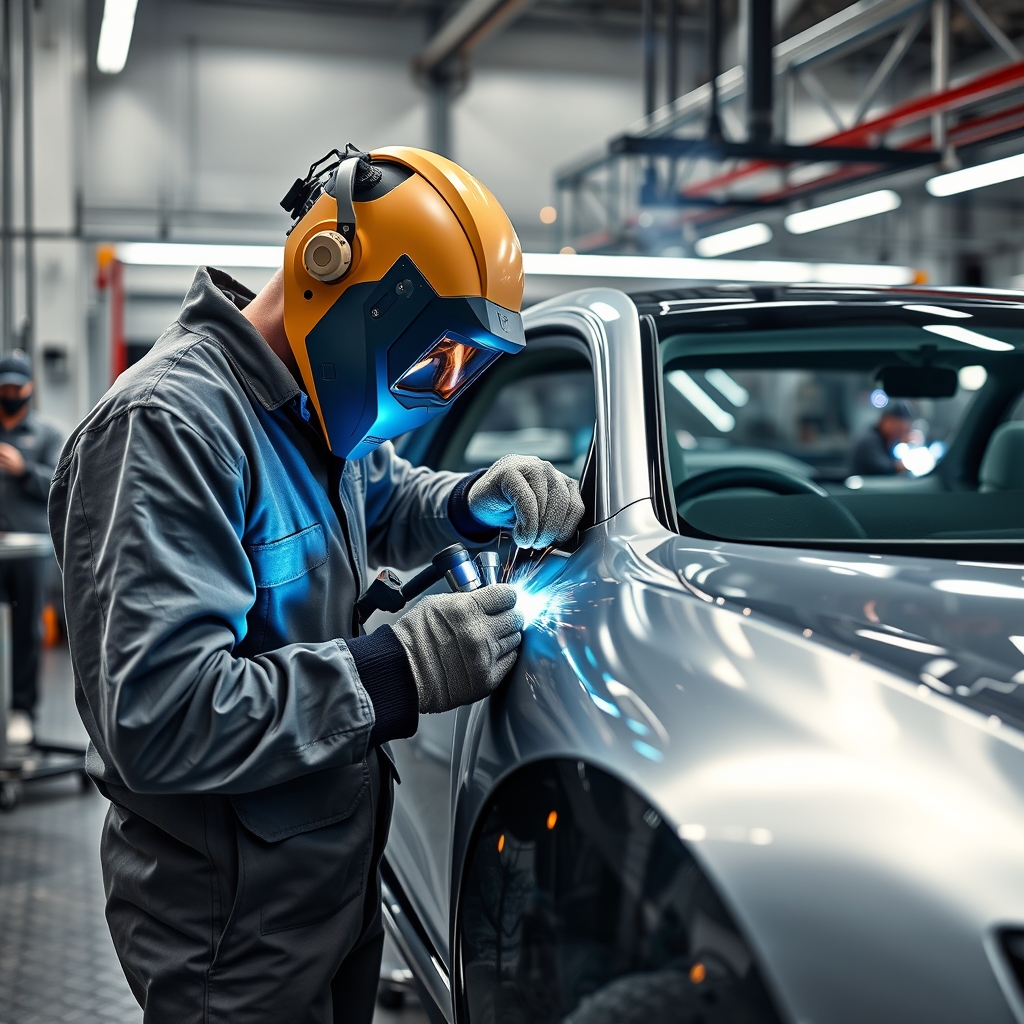
One of the most critical techniques in aluminum repair is welding. Unlike steel, which can be welded using traditional MIG (Metal Inert Gas) welders, aluminum requires TIG (Tungsten Inert Gas) welding or advanced MIG welders with pulse capabilities. TIG welding offers greater control and precision, making it ideal for thin aluminum panels. Additionally, aluminum welding requires a clean, oxide-free surface, which means technicians must meticulously prep the metal before any welding begins. Even a small amount of contamination can lead to weak welds and compromised structural integrity.
Dedicated Workspaces and Safety Protocols
Aluminum repair isn’t just about having the right tools—it’s also about creating the right environment. Aluminum dust and shavings are highly flammable, posing a significant fire risk if not properly managed. To mitigate this, many collision centers have designated aluminum-only workspaces equipped with specialized ventilation systems, fire-resistant flooring, and dust collection tools. These measures not only enhance safety but also prevent cross-contamination with steel particles, which can lead to galvanic corrosion.
Training is another critical component of aluminum repair. Technicians must undergo specialized certification programs to learn the intricacies of working with aluminum, from proper welding techniques to the use of adhesives and rivets. Organizations like the Inter-Industry Conference on Auto Collision Repair (I-CAR) offer comprehensive training programs that cover everything from basic aluminum repair to advanced structural work. For shops looking to expand their aluminum capabilities, investing in ongoing education is non-negotiable.
The Challenges of Aluminum Repair
While aluminum offers many benefits, it also presents unique challenges that can complicate the repair process. One of the biggest hurdles is its susceptibility to heat distortion. Aluminum conducts heat far more efficiently than steel, which means technicians must be extremely careful when welding or using heat to straighten panels. Overheating can weaken the metal, leading to warping or even structural failure. To combat this, technicians often use heat sinks or cooling techniques to manage temperatures during repairs.
Another challenge is the cost. Aluminum repair is generally more expensive than steel repair, due in part to the specialized tools, training, and materials required. Additionally, aluminum panels are often more expensive to replace than their steel counterparts, which can drive up the overall cost of repairs for vehicle owners. However, as aluminum becomes more prevalent, economies of scale are helping to reduce some of these costs, making repairs more accessible.
The Role of Adhesives and Rivets
In many modern aluminum-bodied vehicles, automakers are moving away from traditional welding in favor of adhesives and rivets. This shift is driven by the need for stronger, more durable bonds that can withstand the stresses of daily driving. Structural adhesives, for example, are used to bond aluminum panels together, creating a seamless and robust joint. Rivets, on the other hand, provide additional strength and are often used in conjunction with adhesives to ensure long-lasting repairs.
For collision repair technicians, this means mastering new techniques for applying adhesives and installing rivets. It also requires a deep understanding of the specific materials and products recommended by automakers, as using the wrong adhesive or rivet can compromise the repair. Many manufacturers provide detailed repair procedures and guidelines, which technicians must follow to ensure the integrity of the repair.
The Future of Aluminum Body Repair
As the automotive industry continues to evolve, so too will the techniques and technologies used in aluminum body repair. One of the most exciting developments is the rise of advanced materials like aluminum alloys and composites, which offer even greater strength and weight savings. These materials will require new repair methods and tools, further pushing the boundaries of what’s possible in collision repair.
Another trend to watch is the integration of automation and robotics in aluminum repair. While human expertise will always be essential, robotic systems are increasingly being used for tasks like precision welding and panel alignment. These systems can improve accuracy and efficiency, allowing technicians to focus on more complex aspects of the repair process. As technology advances, we can expect to see even greater collaboration between human technicians and automated systems, leading to faster, more precise repairs.
For collision repair shops, staying ahead in the world of aluminum repair means embracing change and investing in the future. Whether it’s through specialized training, advanced tools, or cutting-edge technologies, the shops that adapt will be the ones that thrive. Aluminum may present its challenges, but it also offers an incredible opportunity to redefine what’s possible in automotive repair, ensuring that vehicles remain safe, efficient, and beautiful for years to come.
The journey of mastering aluminum body repair is a testament to the ingenuity and adaptability of the collision repair industry. As vehicles continue to evolve, so too must the techniques and technologies used to restore them. The shift to aluminum is more than just a trend—it’s a fundamental change in how we think about vehicle design, safety, and sustainability. For technicians and shop owners alike, the future of aluminum repair is not just about keeping up with the times; it’s about leading the way forward, one precise weld and flawless panel at a time.