The Hidden Science of Aluminum Body Repair: Techniques, Tools, and Trends in Modern Collision Centers

Aluminum has become the material of choice for many modern vehicles, prized for its lightweight properties and impressive strength-to-weight ratio. From luxury sedans to high-performance electric vehicles, manufacturers are increasingly turning to aluminum to enhance fuel efficiency and driving dynamics. However, this shift has introduced new complexities for collision repair professionals, demanding specialized techniques, advanced tools, and a deep understanding of metallurgical principles. Unlike traditional steel, aluminum behaves differently under stress, requires distinct welding methods, and is more susceptible to corrosion if not handled correctly. As the automotive industry continues to embrace aluminum, repair shops must adapt to meet these evolving challenges while maintaining the highest standards of safety and craftsmanship.
The Unique Challenges of Aluminum in Collision Repair
Aluminum’s properties set it apart from conventional steel in several critical ways, each presenting unique hurdles for collision repair technicians. One of the most significant differences lies in its thermal conductivity. Aluminum dissipates heat far more rapidly than steel, which can complicate welding processes and increase the risk of warping or distortion if not managed properly. Additionally, aluminum is more prone to oxidation, forming a thin layer of aluminum oxide on its surface when exposed to air. While this oxide layer provides natural corrosion resistance, it can interfere with welding and bonding processes, requiring meticulous surface preparation to ensure strong, durable repairs.
Another challenge is aluminum’s work-hardening characteristic. When aluminum is bent or deformed, it becomes harder and more brittle in the affected area, making it more difficult to reshape without causing further damage. This necessitates precise techniques, such as controlled heating and strategic hammering, to restore the metal to its original form without compromising its structural integrity. Furthermore, aluminum panels are often thinner than their steel counterparts, requiring technicians to exercise greater care during disassembly, repair, and reassembly to avoid unintended damage.
Essential Tools and Equipment for Aluminum Body Repair
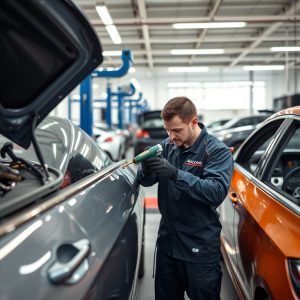
Repairing aluminum effectively requires a dedicated set of tools and equipment, many of which differ from those used for steel repairs. One of the most critical investments is a specialized aluminum dent repair system, which often includes unique hammers, dollies, and spoons designed to work with the metal’s softer properties. These tools are typically made from materials that reduce the risk of galvanic corrosion, which can occur when dissimilar metals come into contact in the presence of an electrolyte, such as moisture.
Welding aluminum also demands specialized equipment, such as a tungsten inert gas (TIG) welder or a metal inert gas (MIG) welder with a spool gun. These tools provide the precision and control needed to create strong, clean welds without overheating the material. Additionally, aluminum-specific clamps, rivet guns, and adhesive bonding systems are essential for ensuring secure, long-lasting repairs. Many modern repair shops also invest in dedicated aluminum workstations, which are designed to prevent cross-contamination with steel particles—a critical consideration, as even small steel fragments can lead to galvanic corrosion in aluminum panels.
Advanced Techniques for Precision Repairs
Mastering aluminum body repair requires a combination of traditional craftsmanship and cutting-edge technology. One of the most effective techniques is heat shrinking, which involves carefully applying heat to a damaged area to relieve stress and restore the metal’s original shape. Unlike steel, aluminum requires lower temperatures and more precise heat application to avoid weakening the material. Technicians often use infrared thermometers to monitor the temperature closely, ensuring the metal reaches the optimal range without exceeding its limits.
Another advanced technique is adhesive bonding, which has gained popularity as an alternative to welding for certain aluminum repairs. Structural adhesives, when used in conjunction with rivets or other mechanical fasteners, can create strong, durable bonds without the heat-related risks associated with welding. This method is particularly useful for joining dissimilar materials, such as aluminum to carbon fiber or composite panels, which are increasingly common in modern vehicle construction.
For more severe damage, such as bent or twisted frames, laser frame alignment systems have become indispensable. These systems use high-precision lasers to measure and restore a vehicle’s structural geometry to factory specifications, ensuring that safety systems, such as crumple zones and airbag deployment paths, function as intended. The accuracy of laser alignment far surpasses traditional methods, reducing the risk of misalignment that could compromise vehicle safety and performance.
The Role of Training and Certification in Aluminum Repair
Given the complexities of aluminum body repair, ongoing training and certification are essential for technicians to stay current with the latest techniques and industry standards. Many manufacturers and industry organizations, such as the Inter-Industry Conference on Auto Collision Repair (I-CAR), offer specialized training programs focused on aluminum repair. These programs cover topics such as material properties, welding techniques, corrosion prevention, and the use of advanced tools and equipment. Certification not only validates a technician’s expertise but also ensures that repairs meet the stringent safety and quality standards set by vehicle manufacturers.
In addition to formal training, hands-on experience plays a crucial role in mastering aluminum repair. Technicians often begin by working on less critical components, such as hoods or doors, before progressing to more complex structural repairs. Mentorship programs, where experienced technicians guide newcomers, can accelerate the learning process and help build confidence in handling aluminum’s unique challenges. As the demand for aluminum repair continues to grow, shops that invest in training and certification will be better positioned to attract customers and deliver high-quality repairs.
Emerging Trends and Future Innovations
The field of aluminum body repair is evolving rapidly, driven by advancements in materials science and collision repair technology. One of the most promising trends is the development of self-healing aluminum alloys, which have the potential to repair minor scratches and dents autonomously when exposed to heat or other stimuli. While still in the experimental stage, these materials could revolutionize the industry by reducing the need for manual repairs and extending the lifespan of aluminum components.
Another innovation is the increasing use of augmented reality (AR) and virtual reality (VR) in training and repair processes. AR systems can overlay digital instructions onto a technician’s field of view, guiding them through complex repairs step-by-step. VR training simulations, on the other hand, allow technicians to practice repairs in a risk-free virtual environment, honing their skills before working on actual vehicles. These technologies not only improve efficiency but also enhance the accuracy and consistency of repairs.
As electric vehicles (EVs) continue to gain market share, the demand for aluminum repair expertise is expected to grow even further. Many EVs feature aluminum-intensive designs to offset the weight of heavy battery packs, making aluminum repair skills increasingly valuable. Additionally, the rise of autonomous vehicles and advanced driver-assistance systems (ADAS) will require repair technicians to master new calibration and alignment techniques, further emphasizing the need for continuous learning and adaptation in the industry.
The shift toward aluminum in automotive manufacturing has transformed the collision repair landscape, presenting both challenges and opportunities for repair professionals. By embracing specialized tools, advanced techniques, and ongoing training, shops can deliver repairs that meet the highest standards of safety, durability, and aesthetics. As technology continues to advance, the ability to adapt and innovate will be key to staying ahead in this dynamic field. The future of aluminum body repair is not just about restoring vehicles to their original condition—it’s about pushing the boundaries of what’s possible, ensuring that every repair reflects the precision, craftsmanship, and forward-thinking mindset that defines modern collision repair.