
The Invisible Thread: How Generative Automotive Design and Digital Twin Prototyping Are Weaving the Future of Mobility
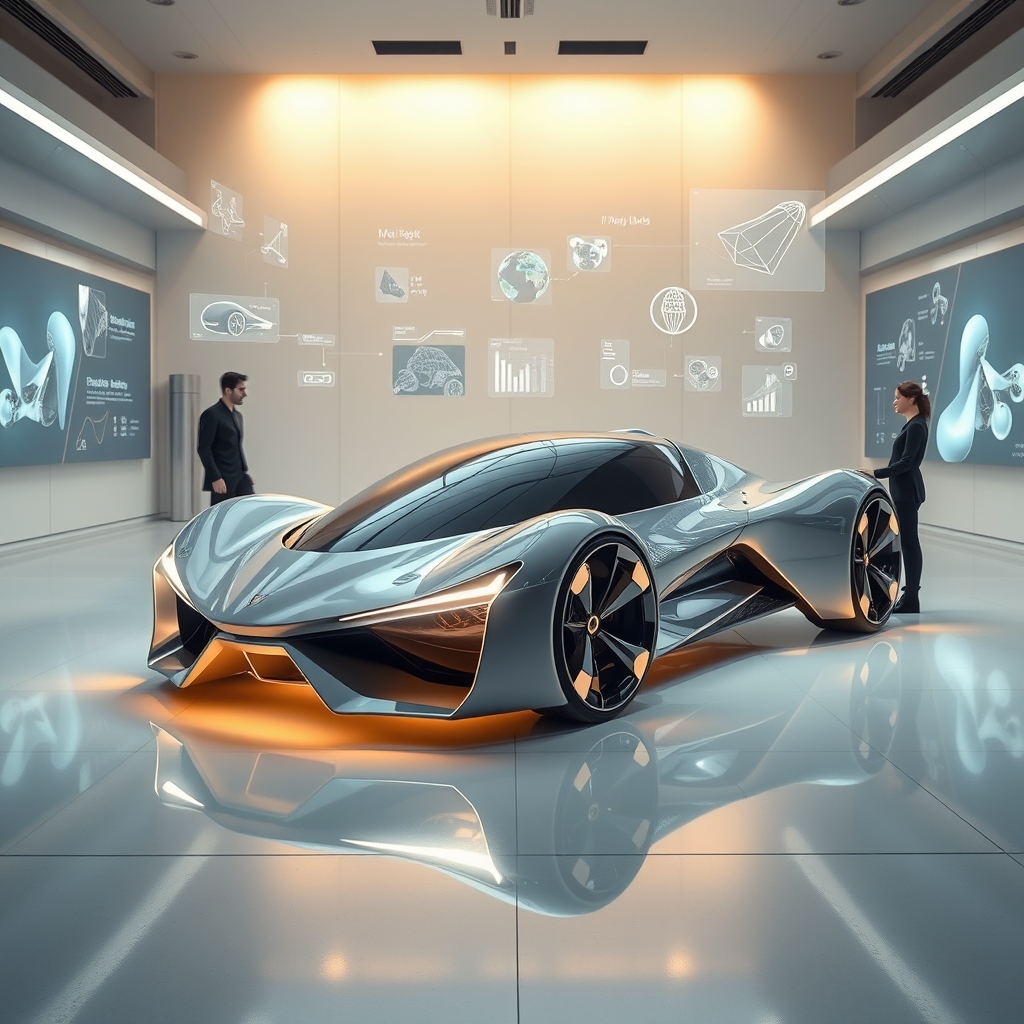
The automotive industry is undergoing a metamorphosis, one where the lines between digital innovation and physical craftsmanship blur into a seamless tapestry of progress. At the heart of this transformation lies generative automotive design and digital twin prototyping, two technologies that are redefining how vehicles are conceived, developed, and brought to life. These tools are not merely enhancing traditional processes—they are rewriting the rules of what’s possible, enabling designers and engineers to explore uncharted territories of efficiency, sustainability, and human-centric innovation.
The Alchemy of Generative Design
Generative design is a paradigm shift in automotive engineering, where algorithms and artificial intelligence collaborate with human creativity to produce optimized solutions. Unlike conventional design methods, which rely on iterative trial and error, generative design leverages computational power to explore thousands of permutations in a fraction of the time. The result? Structures that are lighter, stronger, and more efficient than anything conceived through traditional means.
Take, for example, the challenge of lightweight structural design. By inputting parameters such as material properties, load requirements, and manufacturing constraints, generative algorithms can propose geometries that reduce weight without compromising strength. This is particularly critical in electric vehicle architecture, where every gram saved translates to extended range and improved performance. Companies like BMW and General Motors have already embraced this technology, using it to design components that are not only lighter but also more sustainable, often incorporating recyclable body composites to minimize environmental impact.
But generative design isn’t just about optimization—it’s about exploration. It allows designers to push the boundaries of biomimetic vehicle aesthetics, drawing inspiration from nature to create forms that are as functional as they are visually striking. Imagine a car chassis modeled after the lattice structure of a dragonfly’s wing or a dashboard layout inspired by the efficiency of a honeycomb. These aren’t just aesthetic choices; they’re functional innovations that enhance aerodynamic efficiency and structural integrity.
The Digital Twin: A Mirror to the Future
If generative design is the brain of this new era, then digital twin prototyping is its nervous system—a real-time, virtual replica of a vehicle that evolves alongside its physical counterpart. Digital twins enable engineers to simulate, test, and refine every aspect of a car’s performance before a single prototype is built. This isn’t just a cost-saving measure; it’s a game-changer for innovation.
Consider the development of active aerodynamics systems. Traditionally, engineers would rely on wind tunnel testing and physical prototypes to refine a vehicle’s airflow dynamics. With digital twins, these tests can be conducted in a virtual environment, where variables like wind speed, temperature, and vehicle speed can be adjusted instantaneously. The result is a more precise, data-driven approach to aerodynamic efficiency, one that can adapt to real-world conditions in ways that were previously unimaginable.
Digital twins also play a pivotal role in the evolution of autonomous cabin design. By creating a virtual model of the vehicle’s interior, designers can test how passengers interact with holographic user interfaces and augmented reality dashboards in a variety of scenarios. This ensures that the final product is not only intuitive but also adaptable to the needs of different users, whether they’re navigating a busy city street or enjoying a leisurely drive through the countryside.
The Human-Centric Revolution
At the intersection of generative design and digital twin prototyping lies a fundamental shift toward human-centric lighting design and minimalist dashboard layouts. The goal is no longer just to create a vehicle that moves people from point A to point B but to craft an experience that feels personal, intuitive, and immersive. This is where technologies like smart glass technology and seamless display integration come into play.
Smart glass, for instance, can adjust its opacity based on external light conditions, reducing glare and enhancing visibility. When paired with human-centric lighting, which mimics the natural progression of daylight, the interior of a vehicle can adapt to the passenger’s circadian rhythms, promoting alertness during the day and relaxation in the evening. Meanwhile, minimalist dashboard layouts strip away unnecessary clutter, replacing physical buttons with touch-sensitive surfaces and voice-activated controls. The result is an interior that feels spacious, uncluttered, and effortlessly futuristic.
The Road Ahead: Where Art Meets Algorithm
The fusion of generative design and digital twin prototyping is not just about creating better cars—it’s about reimagining what a car can be. It’s about moving beyond the constraints of traditional manufacturing and embracing a future where vehicles are as dynamic and adaptable as the people who drive them. From kinetic exterior styling that responds to speed and road conditions to modular platform engineering that allows for customization without compromise, the possibilities are endless.
Yet, for all its technological prowess, the true magic of this revolution lies in its ability to blend art and engineering into a cohesive whole. The cars of tomorrow won’t just be machines; they’ll be living, breathing extensions of human creativity and ingenuity. And as these technologies continue to evolve, they’ll challenge us to rethink not just how we build vehicles, but how we experience the world through them. The road ahead is paved with innovation, and every turn brings us closer to a future where mobility is not just efficient and sustainable, but also deeply, undeniably human.