
The Invisible Craft of Paintless Dent Removal: Where Skill Meets Stealth in Modern Auto Body Repair
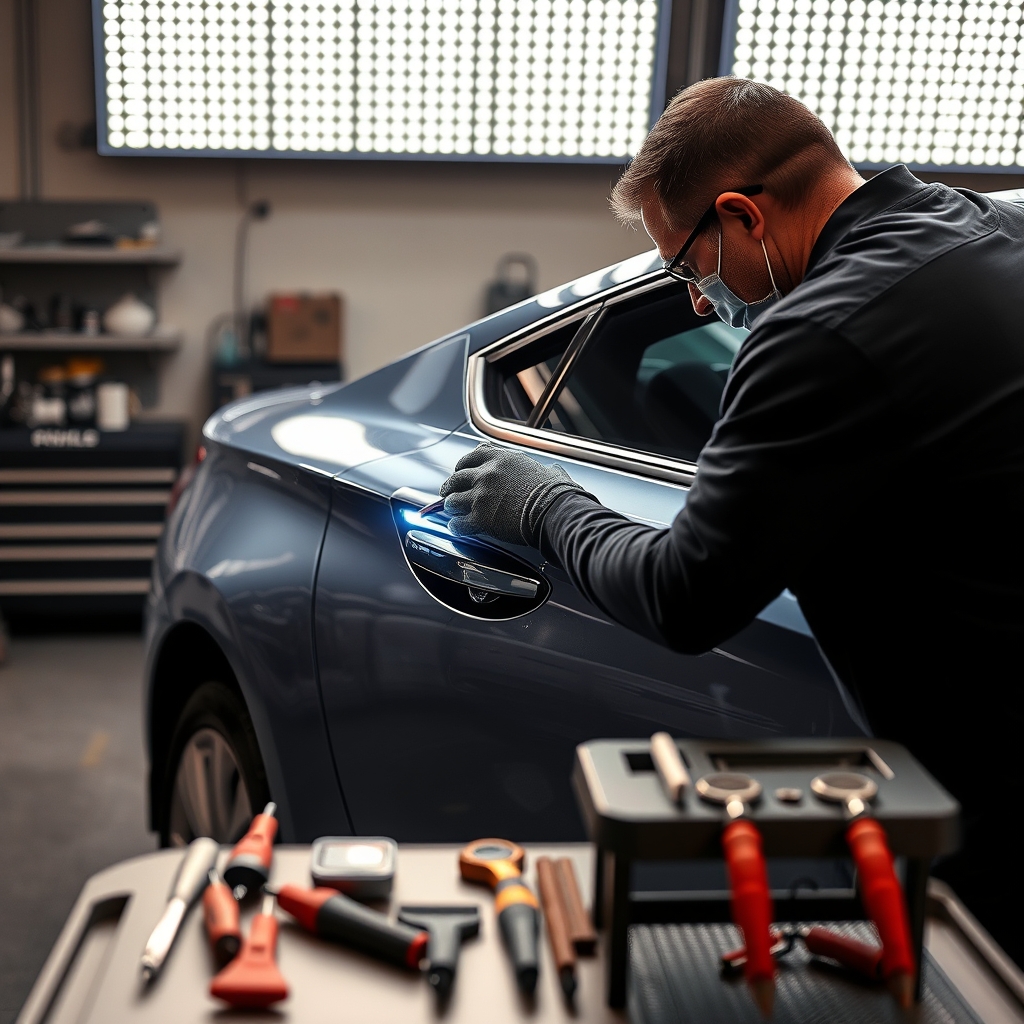
There’s a quiet magic in the world of auto body repair—one that doesn’t rely on sanding, filling, or repainting. It’s a process so subtle that, if done correctly, the untrained eye would never know a vehicle had been damaged at all. This is the realm of Paintless Dent Removal (PDR), a technique that has revolutionized the way minor dents and dings are addressed, preserving a car’s original finish while restoring its flawless appearance. Unlike traditional methods that involve extensive labor and materials, PDR is a testament to precision, patience, and the art of working with metal’s natural memory.
The Science Behind the Stealth
At its core, PDR is about understanding the behavior of automotive metal. When a dent occurs—whether from a stray shopping cart, a hailstorm, or a minor parking mishap—the metal panel doesn’t just bend; it stretches and deforms at a molecular level. The key to PDR lies in massaging the metal back into its original shape without disrupting the factory paint. Technicians use specialized tools, often resembling long, slender rods or hooks, to access the backside of the panel and apply controlled pressure. The process is akin to sculpting, where each tap and push is calculated to coax the metal back into place.
What makes PDR particularly fascinating is its reliance on light reflection. Technicians don’t just feel their way through the repair; they use reflective boards or LED lights to create a grid-like pattern on the dented surface. This visual guide allows them to track their progress in real time, ensuring that every imperfection is addressed with surgical precision. The result? A panel that looks as though it was never touched, let alone damaged.
The Tools of the Trade: More Than Meets the Eye
While the concept of PDR might sound straightforward, the tools and techniques involved are anything but simple. The most common instruments include:
- Dent Lifter Kits: These include various rods and tabs that are glued to the surface of the dent, allowing technicians to pull outward and gradually restore the panel’s shape.
- Whale Tails and Hooks: Long, curved tools designed to reach behind panels, particularly in areas where access is limited, such as door skins or quarter panels.
- Knockdown Tools: Used to gently tap down high spots that may form during the repair process, ensuring a smooth, even surface.
- LED Light Boards: These provide the critical visual feedback needed to assess the dent’s depth and the repair’s progress.
Beyond the tools, the skill of the technician is paramount. PDR requires an intimate understanding of metal fatigue, leverage points, and the nuances of different vehicle makes and models. For instance, repairing a dent on an aluminum panel—common in many modern vehicles—demands a different approach than working with traditional steel. Aluminum is more brittle and less forgiving, requiring lighter touches and a deeper knowledge of its properties.
The Advantages of Going Paintless
The benefits of PDR extend far beyond its aesthetic appeal. For vehicle owners, the most immediate advantage is cost savings. Traditional dent repair often involves sanding, filling, priming, and repainting, which can quickly add up in both time and expense. PDR, on the other hand, can often be completed in a fraction of the time, sometimes in as little as an hour, depending on the dent’s severity. This efficiency translates to lower labor costs and no need for expensive paint materials.
Another significant advantage is preserving the vehicle’s value. Factory paint is a critical factor in a car’s resale value, and any deviation from the original finish—no matter how well-executed—can raise red flags for potential buyers. PDR maintains the integrity of the factory paint, ensuring that the vehicle’s history remains unblemished. This is particularly important for lease returns, where even minor damage can result in costly penalties.
Environmental considerations also play a role. Traditional dent repair generates waste in the form of sanding dust, paint overspray, and chemical solvents. PDR eliminates these byproducts, making it a more sustainable option for eco-conscious vehicle owners and repair shops alike.
The Limits of PDR: When Stealth Isn’t an Option
While PDR is a powerful tool in the auto body repair arsenal, it’s not a universal solution. The technique has its limitations, and knowing when to use it—and when to opt for traditional methods—is crucial. PDR is most effective on shallow, smooth dents where the paint has not been cracked or chipped. Dents with sharp creases, deep gouges, or damage to the paint require more invasive repairs, such as filling and repainting.
Accessibility is another factor. PDR relies on reaching the backside of the panel, which isn’t always possible. For example, dents on reinforced areas like the edges of doors or near structural supports may not be accessible with PDR tools. In such cases, technicians may need to remove interior panels or trim pieces to gain the necessary access, which can increase the complexity and cost of the repair.
Finally, the age and condition of the vehicle can influence the success of PDR. Older cars with brittle paint or panels that have been repainted multiple times may not respond well to the technique. The paint may crack or chip under the pressure, necessitating a more traditional approach.
The Future of PDR: Technology Meets Tradition
As with many aspects of the automotive industry, technology is playing an increasingly significant role in the evolution of PDR. One of the most exciting developments is the use of laser measuring systems to assess dents with unprecedented accuracy. These systems create a 3D map of the damage, allowing technicians to plan their repairs with pinpoint precision. Some advanced setups even use augmented reality (AR) to overlay repair guides directly onto the panel, further enhancing the technician’s ability to achieve flawless results.
Robotics is another frontier. While still in its early stages, robotic PDR systems are being developed to automate parts of the process, particularly for large-scale repairs like hail damage. These systems use computer vision and machine learning to identify and repair dents, reducing the margin for human error and increasing efficiency. However, the human touch remains irreplaceable for now, especially when dealing with complex or irregular damage.
Training the Next Generation of PDR Technicians
The growing demand for PDR services has led to an increased focus on training and certification. Organizations like the Paintless Dent Repair Training Association (PDRTA) offer specialized programs that teach the fundamentals of the craft, from tool selection to advanced techniques. These programs often include hands-on training with real-world scenarios, ensuring that technicians are prepared to tackle any challenge.
For those considering a career in PDR, the path is as much about artistry as it is about technical skill. The best technicians possess a keen eye for detail, a steady hand, and an almost intuitive understanding of how metal behaves. It’s a craft that rewards patience and precision, where the difference between a good repair and a great one often comes down to millimeters.
In an industry where innovation is often measured in horsepower and cutting-edge technology, Paintless Dent Removal stands as a reminder that sometimes, the most advanced solutions are the ones that leave no trace at all. It’s a testament to the idea that true mastery isn’t about making a repair visible—it’s about making it invisible. Whether it’s a minor ding or a more substantial dent, PDR offers a way to restore a vehicle’s beauty without altering its story, ensuring that the only thing left behind is perfection.