The Future of Auto Body Restoration: Mastering Aluminum Repair and Smart Dent Removal for Next-Gen Vehicles
The automotive industry is undergoing a transformative shift, driven by lightweight materials, electric vehicle (EV) adoption, and advanced repair technologies. Among these innovations, aluminum body repair and smart dent removal systems stand out as game-changers, redefining how collision centers approach modern vehicle restoration. These techniques not only enhance efficiency but also ensure structural integrity, aesthetic precision, and long-term durability—key factors in an era where vehicles are evolving faster than ever.
The Rise of Aluminum in Modern Vehicle Design
Aluminum has become a cornerstone of modern automotive engineering, prized for its lightweight properties, corrosion resistance, and strength-to-weight ratio. Unlike traditional steel, aluminum reduces vehicle weight, improving fuel efficiency and performance—critical advantages for both internal combustion and electric vehicles. However, working with aluminum presents unique challenges for collision repair technicians.
Aluminum’s distinct properties—such as its lower melting point, higher thermal conductivity, and susceptibility to oxidation—demand specialized tools, training, and techniques. Traditional welding methods, for instance, are ineffective on aluminum due to its rapid heat dissipation. Instead, advanced techniques like fiber laser welding and MIG (Metal Inert Gas) welding have emerged as industry standards, offering precision and strength without compromising the material’s integrity. These methods ensure seamless repairs while maintaining the vehicle’s original structural design.
Challenges and Solutions in Aluminum Body Repair
One of the primary challenges in aluminum repair is its sensitivity to contamination. Even minor exposure to steel particles or improper handling can lead to galvanic corrosion, compromising the repair’s longevity. To mitigate this, collision centers now employ dedicated aluminum workspaces, equipped with specialized tools and contamination-control protocols. These measures include using non-ferrous tools, separate work areas, and advanced cleaning techniques to prevent cross-contamination.
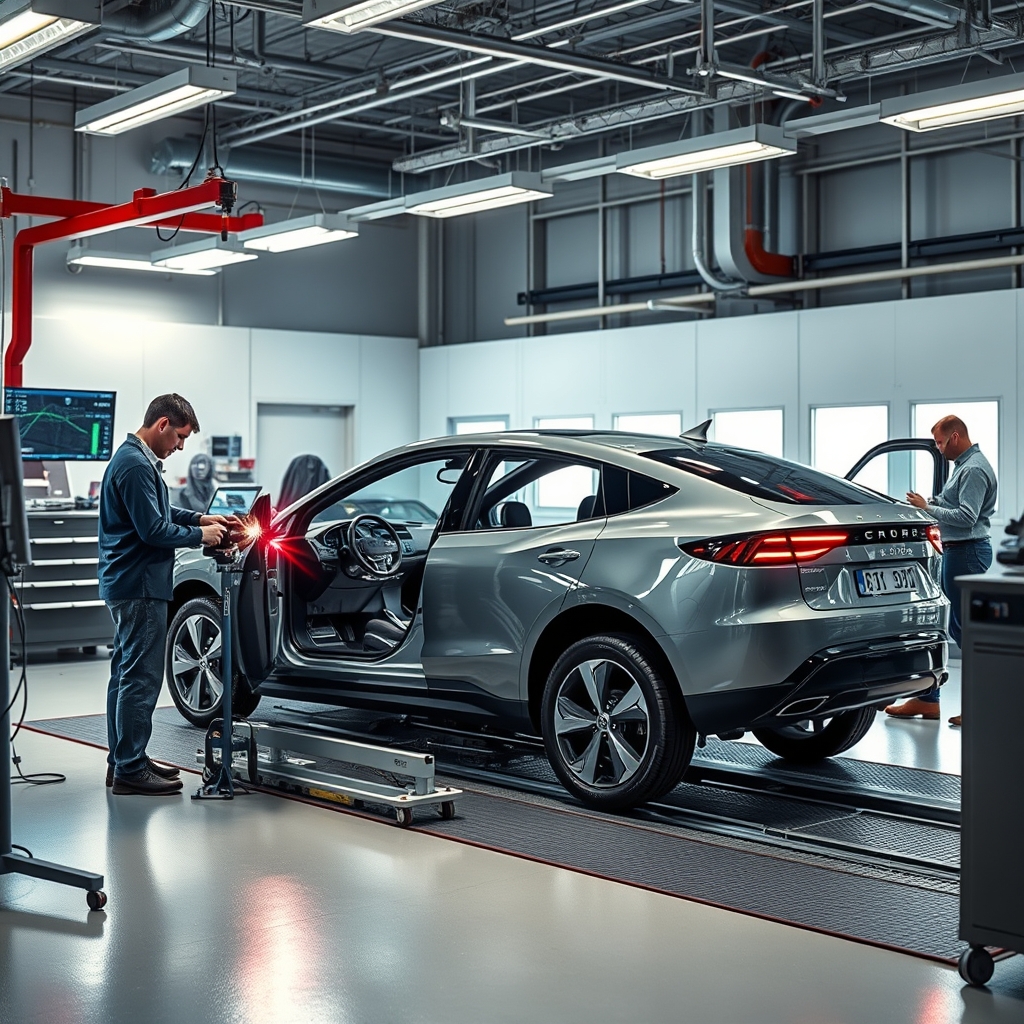
Another critical aspect is frame straightening. Aluminum frames require precise alignment to restore structural integrity, often necessitating laser frame alignment systems. These systems use high-precision lasers to measure deviations in the vehicle’s frame, ensuring repairs meet manufacturer specifications. Unlike traditional methods, laser alignment provides real-time feedback, allowing technicians to achieve millimeter accuracy—essential for modern vehicles with complex geometries and advanced safety systems.
The Evolution of Smart Dent Removal Systems
While aluminum repair addresses structural concerns, smart dent removal systems are revolutionizing the way minor cosmetic damage is restored. Traditional dent repair often involved sanding, filling, and repainting, processes that could compromise the vehicle’s original finish and value. Smart repair systems, however, offer a non-invasive alternative, preserving the factory paint and ensuring a flawless finish.
These systems leverage advanced tools like paintless dent removal (PDR) and precision glue-pulling techniques. PDR, in particular, has gained widespread adoption due to its ability to remove dents without damaging the paint. Technicians use specialized rods and LED lighting to massage dents from the inside out, restoring the panel to its original shape. This method is not only faster but also more cost-effective, making it a preferred choice for minor hail damage, door dings, and creases.
Integrating Smart Repair with Advanced Technologies
The integration of smart repair systems with other advanced technologies is further enhancing their capabilities. For example, 3D scanning and augmented reality (AR) are being used to assess dent severity and guide technicians through the repair process. These tools provide a digital overlay of the damage, allowing for precise measurements and real-time adjustments. Additionally, AI-driven diagnostics are emerging as a way to predict repair outcomes, reducing trial-and-error and improving efficiency.
Another innovation is the use of hybrid repair systems, which combine PDR with traditional methods for more complex damage. For instance, a dent with paint damage might first undergo PDR to restore the panel’s shape, followed by a clear coat scratch repair to blend the finish seamlessly. This hybrid approach ensures a factory-like result while minimizing material waste and labor time.
The Role of Ceramic Coatings in Modern Auto Body Restoration
Beyond structural and cosmetic repairs, modern auto body restoration increasingly focuses on long-term protection. Ceramic coatings have emerged as a leading solution, offering unparalleled durability, UV resistance, and hydrophobic properties. Unlike traditional waxes or sealants, ceramic coatings form a chemical bond with the vehicle’s paint, creating a protective layer that can last for years.
In the context of aluminum repair and smart dent removal, ceramic coatings play a dual role. First, they protect the repaired areas from environmental damage, such as oxidation, bird droppings, and road salt. Second, they enhance the aesthetic appeal of the repair, providing a deep, glossy finish that rivals factory paint. For collision centers, offering ceramic coating application as part of the restoration process adds value for customers, ensuring their vehicle remains pristine long after the repair is complete.
Sustainability and Efficiency in Modern Collision Repair
The shift toward aluminum and smart repair systems also aligns with the industry’s growing emphasis on sustainability. Aluminum is highly recyclable, reducing the environmental impact of vehicle production and repair. Similarly, smart repair systems minimize material waste by eliminating the need for fillers, primers, and excessive paint. These methods not only reduce costs but also lower the carbon footprint of collision repair operations.
Moreover, the adoption of automotive spray booths with advanced filtration systems ensures that repair processes are both efficient and eco-friendly. These booths capture overspray and volatile organic compounds (VOCs), preventing them from entering the atmosphere. Combined with water-based paints and low-VOC clear coats, modern collision centers are setting new standards for sustainability in the industry.
As vehicles continue to evolve, so too must the techniques and technologies used to repair them. Aluminum body repair and smart dent removal systems represent the cutting edge of auto body restoration, offering precision, efficiency, and sustainability. These innovations not only meet the demands of today’s vehicles but also pave the way for the future, where lightweight materials, advanced diagnostics, and eco-friendly practices will define the next generation of collision repair. The journey toward flawless restoration is no longer just about fixing damage—it’s about redefining what’s possible in automotive craftsmanship.