The Art of Custom Car Painting: Blending Creativity with Cutting-Edge Automotive Refinishing Techniques
Custom car painting is more than just a service—it’s an art form that transforms vehicles into rolling masterpieces. Whether it’s a vintage restoration, a high-performance show car, or a daily driver with a unique flair, the process of custom automotive painting demands precision, creativity, and the latest refinishing technology. Unlike standard factory finishes, custom paintwork pushes boundaries, incorporating intricate designs, metallic flakes, pearlescent effects, and even hydrographics to create one-of-a-kind results. But achieving a flawless, long-lasting finish requires more than just artistic skill; it relies on advanced techniques, high-quality materials, and state-of-the-art equipment.
The Foundation of Flawless Custom Paintwork
Before the first stroke of paint is applied, proper surface preparation is critical. Custom paint jobs often begin with stripping the vehicle down to bare metal or composite panels, ensuring a clean slate free of imperfections. Auto body fillers, such as high-grade polyester or epoxy-based compounds, are used to smooth out dents, scratches, or factory defects. For aluminum or carbon fiber panels, specialized fillers and adhesion promoters are necessary to ensure durability and a seamless finish.
Once the surface is prepped, a multi-stage priming process begins. High-build primers help fill minor imperfections, while etch primers enhance adhesion, especially on aluminum or galvanized surfaces. Modern refinishing systems often incorporate UV-resistant primers to prevent premature fading or chalking, ensuring the custom paint job remains vibrant for years. Sanding between each layer—using progressively finer grits—creates a glass-smooth foundation that allows the final paint to flow and reflect light evenly.
Innovative Techniques in Custom Automotive Painting
The world of custom car painting has evolved far beyond traditional airbrushing. Today, auto body shops leverage cutting-edge technologies to achieve show-stopping results:
1. Advanced Spray Booths and HVLP Systems
High-volume, low-pressure (HVLP) spray guns and downdraft spray booths are essential for achieving a flawless, even coat. These systems minimize overspray, reduce waste, and ensure consistent coverage, even on complex curves and contours. Climate-controlled booths maintain optimal temperature and humidity, preventing dust contamination and ensuring proper paint flow. Some high-end shops even use robotic spray systems for ultra-precise application on luxury or exotic vehicles.
2. Multi-Stage and Tri-Coat Paint Systems
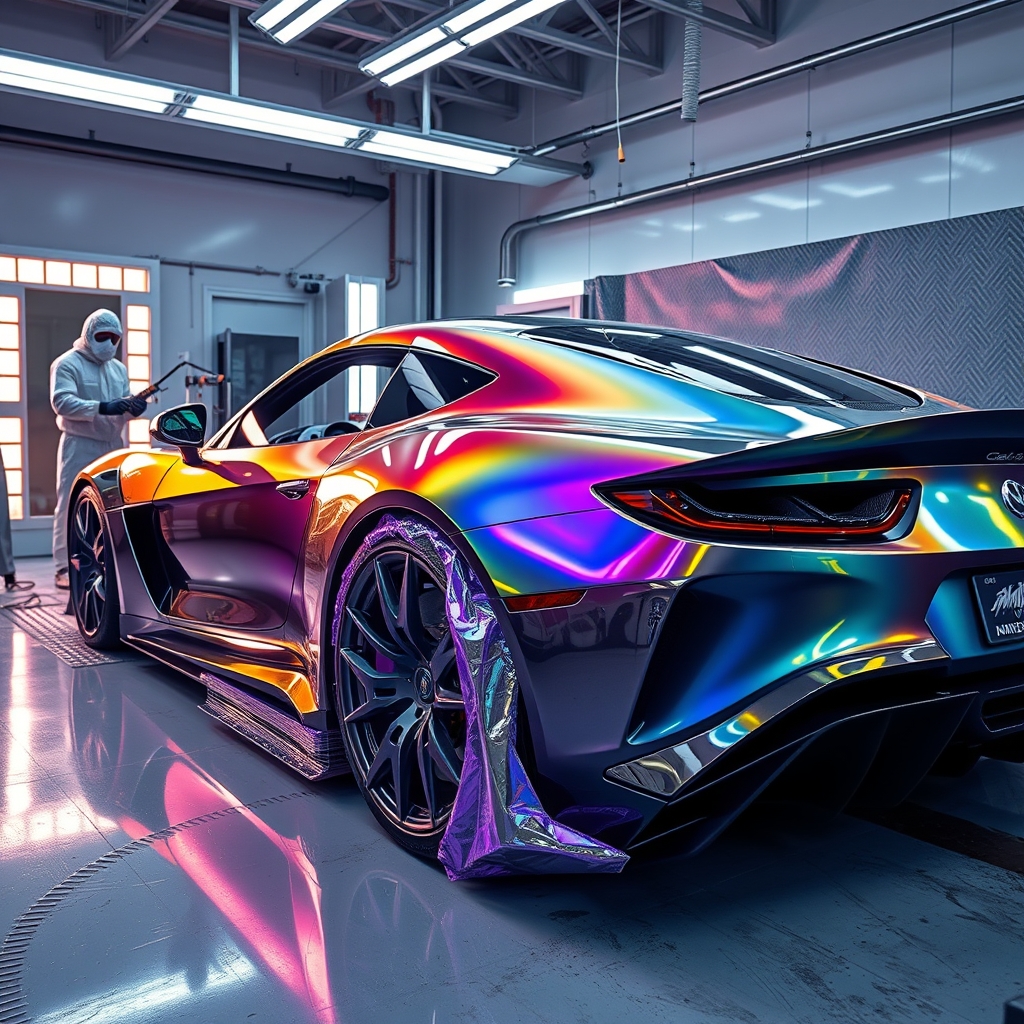
Modern custom paint jobs often feature multi-stage finishes, such as candy apple reds, chameleon pearls, or metallic flakes. These effects require layering translucent base coats, mid-coats, and clear coats to create depth and dimension. Tri-coat systems, for example, may involve a silver base, a translucent color layer, and a final clear coat, resulting in a mesmerizing, color-shifting effect. Achieving consistency across large panels demands skill, patience, and an eye for detail.
3. Hydrographics (Water Transfer Printing)
For truly unique designs, hydrographics allows intricate patterns—like carbon fiber, wood grain, or camouflage—to be applied to three-dimensional surfaces. The process involves floating a printed film on water, dipping the part, and sealing it with a clear coat. This technique is particularly popular for interior trim, wheels, and even full-body wraps, offering endless customization possibilities without the permanence of traditional paint.
4. Ceramic Coating for Long-Term Protection
Once the custom paintwork is complete, protecting it is paramount. Ceramic coatings, applied as a liquid polymer, bond chemically with the paint to create a hydrophobic, scratch-resistant barrier. Unlike traditional waxes, ceramic coatings last for years, repelling water, UV rays, and contaminants while enhancing gloss and depth. For high-end custom builds, this step is non-negotiable, ensuring the finish remains pristine under harsh conditions.
Challenges in Custom Car Painting
While the results can be breathtaking, custom automotive painting presents unique challenges. Unlike factory paint jobs, which are applied in controlled environments with robotic precision, custom work is often done by hand, requiring meticulous attention to detail. Factors like color matching—especially for vintage restorations—can be tricky, as older paints may have faded or been discontinued. Additionally, blending custom colors across multiple panels demands skill to avoid visible seams or mismatched hues.
Another hurdle is ensuring durability. Custom paint jobs are often subjected to harsher conditions than factory finishes, whether from road debris, UV exposure, or frequent washing. Using high-quality clear coats, UV inhibitors, and ceramic coatings helps mitigate these risks, but proper application is key. Even the best materials can fail if applied incorrectly, leading to peeling, orange peel texture, or premature fading.
Electric and Hybrid Vehicle Considerations
With the rise of electric vehicles (EVs), custom painters must adapt to new materials and safety protocols. Many EVs use lightweight aluminum or composite panels, which require different surface prep techniques than traditional steel. Additionally, high-voltage systems in EVs demand careful masking and protection during the painting process to prevent damage to sensitive electronics. Some shops now specialize in EV-specific refinishing, ensuring custom paintwork doesn’t compromise performance or safety.
The Future of Custom Automotive Painting
As technology advances, so do the possibilities for custom car painting. Digital color matching systems now allow for precise replication of any hue, while augmented reality (AR) tools enable customers to visualize designs before they’re applied. Eco-friendly waterborne paints are becoming the industry standard, reducing VOC emissions without sacrificing quality. Meanwhile, self-healing clear coats—embedded with microcapsules that release resin when scratched—promise to keep custom finishes looking fresh for longer.
For auto enthusiasts and collectors, custom painting is more than just an upgrade—it’s a statement. Whether it’s a subtle matte finish, a wild airbrushed mural, or a mirror-like gloss, the right paint job can elevate a vehicle from ordinary to extraordinary. As refinishing techniques continue to evolve, the line between art and automotive engineering blurs, offering endless opportunities for creativity and innovation. The next time you see a car with a jaw-dropping finish, remember: behind every flawless paint job is a blend of science, skill, and sheer artistic passion.