Hydrographics Water Transfer Printing: The Next Frontier in Custom Car Aesthetics and Protection
Customization has always been at the heart of automotive culture, but as technology advances, so do the methods for personalizing vehicles. Among the most innovative and visually striking techniques emerging today is hydrographics water transfer printing—a process that allows intricate designs to be applied to nearly any surface of a car, from dashboards to exterior panels. This method is not only transforming the way enthusiasts and professionals approach vehicle aesthetics but also offering functional benefits like corrosion resistance and durability.
The Science Behind Hydrographics
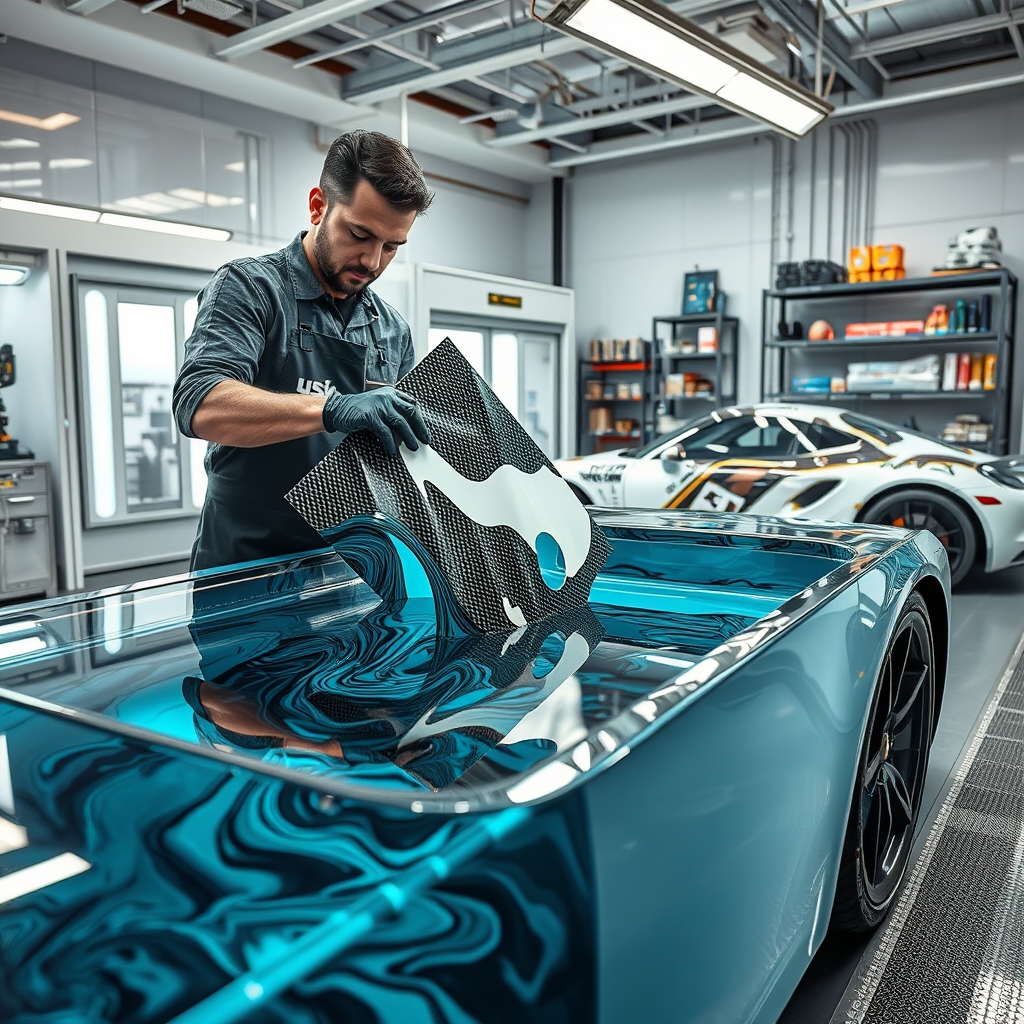
Hydrographics, also known as water transfer printing or immersion printing, is a process that involves applying a printed design to a three-dimensional object using water as the transfer medium. The technique begins with a specialized film that carries the desired pattern—whether it’s carbon fiber, wood grain, camouflage, or even custom artwork. This film is floated on the surface of a water tank, where it dissolves, leaving the ink suspended in a thin layer.
The object to be printed, such as a car part, is then carefully dipped into the tank. The ink adheres to the surface as the part is submerged, wrapping around curves and contours with remarkable precision. Once removed from the water, the part is rinsed, dried, and sealed with a clear coat to protect the design and enhance its longevity. The result is a seamless, high-quality finish that can mimic textures or create entirely unique visual effects.
Why Hydrographics is Gaining Popularity in Auto Body Shops
The automotive industry has long sought methods to combine aesthetics with functionality, and hydrographics delivers on both fronts. Unlike traditional painting or vinyl wrapping, which can be limited by surface complexity, hydrographics excels at covering intricate shapes, such as grilles, mirror caps, and interior trim pieces. This versatility makes it an ideal choice for custom builds, restomods, and even production vehicles looking to stand out in a crowded market.
Another key advantage is durability. When properly sealed with a high-quality clear coat, hydrographics can withstand UV exposure, chemicals, and minor abrasions, making it a viable option for both interior and exterior applications. For auto body shops, this means offering clients a long-lasting customization solution that doesn’t compromise on protection. Additionally, the process is more cost-effective than hand-painting intricate designs, making it accessible to a broader range of customers.
Applications in Modern Vehicle Customization
Hydrographics is not just for show cars and high-end builds—it’s finding its way into mainstream applications as well. One of the most popular uses is in restyling interior components. Dashboard panels, center consoles, and door handles can be transformed with wood grain, metallic finishes, or even futuristic patterns, giving a vehicle’s cabin a bespoke look without the need for expensive materials like real carbon fiber or aluminum.
On the exterior, hydrographics is being used to create eye-catching accents on bumpers, spoilers, and roof panels. For electric vehicles (EVs), where aerodynamics and weight savings are critical, hydrographics offers a lightweight alternative to heavy paint or vinyl wraps. Some manufacturers are even exploring the use of hydrographics for corrosion-resistant coatings on undercarriage components, combining aesthetics with practicality.
Challenges and Considerations for Auto Body Professionals
While hydrographics offers numerous benefits, it’s not without its challenges. The process requires a controlled environment to prevent dust or debris from contaminating the water tank, which could ruin the finish. Proper surface preparation is also critical—any imperfections in the base material will be visible through the design, so sanding, priming, and cleaning must be done meticulously.
Another consideration is the skill level required. Unlike spray painting, which many auto body technicians are already familiar with, hydrographics demands precision and practice. The angle and speed at which a part is dipped can affect the final result, and mistakes can be difficult to correct without stripping and reapplying the design. As a result, training and experience are essential for shops looking to offer this service.
The Future of Hydrographics in Collision Repair and Restoration
As the demand for unique, personalized vehicles continues to grow, hydrographics is poised to play a larger role in collision repair and auto body restoration. For classic car enthusiasts, the technology offers a way to modernize interiors without losing the vintage aesthetic. For collision repair shops, it provides an opportunity to upsell customization services alongside traditional repairs, such as paintless dent removal or bumper replacement.
Moreover, advancements in hydrographics films and clear coats are making the process even more versatile. New materials are being developed to improve adhesion, flexibility, and resistance to extreme temperatures, expanding the range of surfaces that can be treated. Some companies are even experimenting with eco-friendly films and water-based inks, aligning with the automotive industry’s push toward sustainability.
Hydrographics is more than just a passing trend—it’s a glimpse into the future of automotive customization, where creativity and technology intersect to redefine what’s possible. Whether it’s a subtle interior upgrade or a bold exterior statement, this innovative process is giving car owners and auto body professionals a powerful new tool to express individuality while enhancing durability. As the technique evolves, it will undoubtedly become a staple in shops around the world, bridging the gap between artistry and engineering in ways previously unimaginable.