Electric Vehicle Body Repair: Unique Challenges and Cutting-Edge Solutions for Modern Auto Shops
The rise of electric vehicles (EVs) has revolutionized the automotive industry, bringing with it a wave of innovation in design, performance, and sustainability. However, this shift has also introduced new challenges for auto body repair shops, particularly when it comes to collision repair and body restoration. Unlike traditional internal combustion engine (ICE) vehicles, EVs feature unique materials, structural designs, and safety considerations that demand specialized knowledge and advanced techniques. For auto shops aiming to stay ahead of the curve, understanding these challenges—and the cutting-edge solutions available—is essential to delivering high-quality repairs while maintaining safety and efficiency.
The Unique Construction of Electric Vehicles
Electric vehicles are engineered with a focus on weight reduction, battery protection, and crash safety, which often results in a different structural composition compared to conventional cars. Many EVs utilize lightweight materials such as aluminum, high-strength steel, and carbon fiber to offset the weight of their battery packs while improving energy efficiency. For instance, Tesla’s Model S and Model 3 employ a mix of aluminum and steel in their body structures, while Rivian’s R1T and R1S feature aluminum-intensive designs to enhance durability without compromising range.
These materials present distinct challenges in collision repair. Aluminum, for example, requires specialized welding techniques, such as fiber laser welding, to avoid warping or weakening the metal. Traditional MIG or TIG welding methods, commonly used for steel, are often unsuitable for aluminum due to its lower melting point and higher thermal conductivity. Additionally, the use of mixed materials in EV construction complicates repairs, as technicians must navigate the complexities of bonding dissimilar metals without compromising structural integrity.
Battery Safety: A Critical Consideration in EV Repairs
One of the most significant differences between EV and ICE vehicle repairs is the presence of high-voltage battery systems. These batteries are not only heavy but also pose serious safety risks if mishandled during collision repair. A damaged battery can lead to thermal runaway, electrical fires, or even explosions, making it imperative for technicians to follow strict safety protocols.
Before any repair work begins, auto shops must perform a thorough diagnostic assessment to evaluate the battery’s condition. This often involves using specialized scanning tools to detect internal damage or faults that may not be visible externally. In cases where the battery is compromised, it may need to be removed or isolated before repairs can proceed. Many EV manufacturers provide detailed repair guidelines, including specific procedures for disconnecting the battery and working with high-voltage components. Technicians must be trained and certified in high-voltage safety to ensure compliance with these protocols and protect both themselves and the vehicle.
Advanced Repair Techniques for EV Body Restoration
Given the unique construction and safety requirements of EVs, traditional repair methods often fall short. Fortunately, advancements in collision repair technology have introduced innovative solutions tailored to the needs of electric vehicles. Here are some of the most impactful techniques being adopted by modern auto shops:
Laser Frame Alignment and Precision Measuring
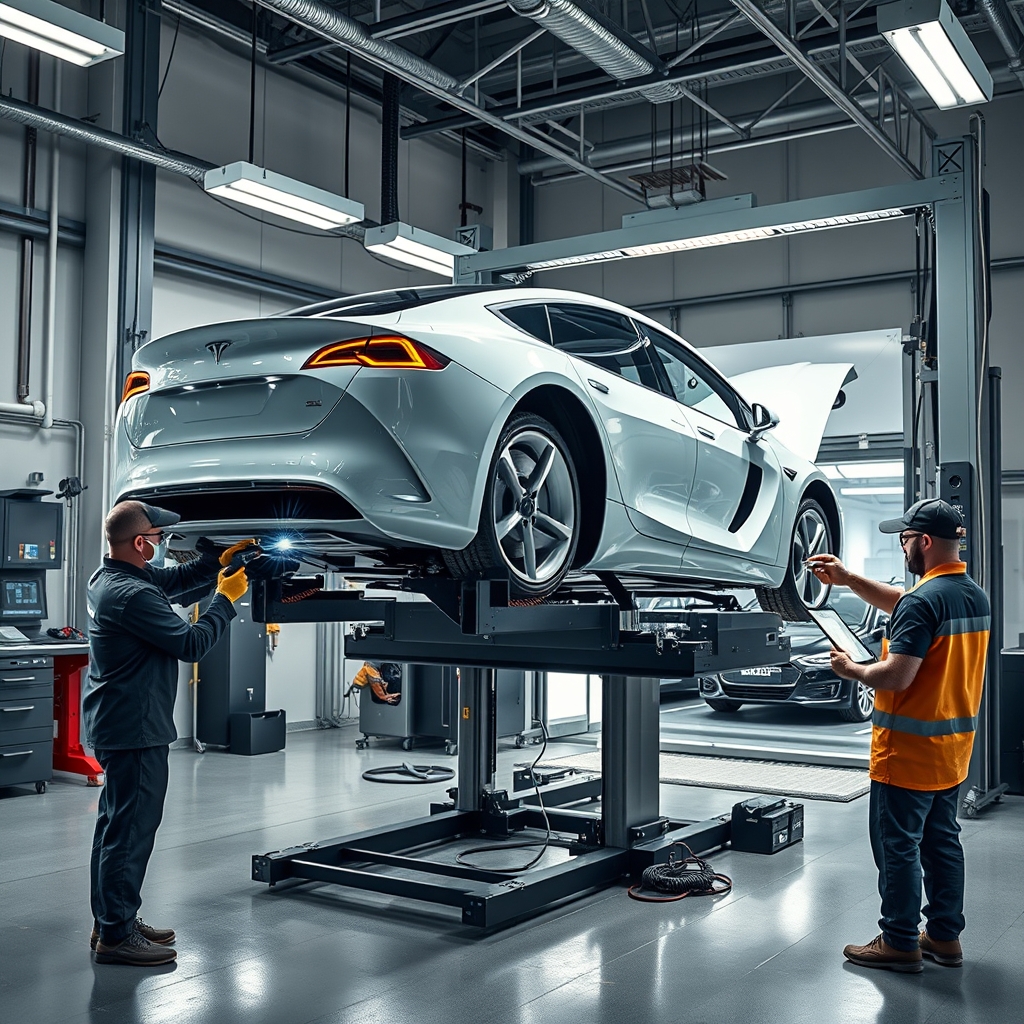
EVs are designed with precise structural tolerances to ensure optimal performance and safety. Even minor misalignments in the frame or body panels can affect the vehicle’s handling, aerodynamics, and battery placement. Laser frame alignment systems, such as those offered by Chief Automotive Technologies and Car-O-Liner, provide unparalleled accuracy in measuring and correcting structural damage. These systems use laser-guided technology to compare the vehicle’s current dimensions against manufacturer specifications, allowing technicians to make precise adjustments with minimal margin for error.
Smart Repair Systems for Light Damage
For minor dents, scratches, or paint damage, smart repair systems offer a cost-effective and efficient solution. These systems, which include paintless dent removal (PDR) and modular touch-up techniques, are particularly useful for EVs, where preserving the original finish and structural integrity is critical. PDR, for example, allows technicians to remove dents without compromising the vehicle’s paint or underlying materials, making it an ideal choice for aluminum body panels. Additionally, smart repair systems reduce the need for extensive disassembly, minimizing the risk of damaging sensitive EV components.
Ceramic Coating and Corrosion Prevention
EVs are often exposed to harsh environmental conditions, including moisture, road salt, and temperature fluctuations, which can accelerate corrosion—especially in aluminum-intensive designs. Applying a ceramic coating after repairs provides an additional layer of protection, enhancing the vehicle’s resistance to scratches, UV damage, and chemical contaminants. Ceramic coatings are also hydrophobic, making it easier to clean the vehicle and maintain its aesthetic appeal over time. For EVs, which often feature sleek, aerodynamic designs, preserving the finish is not just about aesthetics but also about maintaining efficiency and resale value.
Custom Car Painting and Hydrographics for Personalization
As EVs become more mainstream, owners are increasingly seeking ways to personalize their vehicles. Custom car painting and hydrographics water transfer printing offer unique opportunities to enhance the visual appeal of an EV while protecting its body. Hydrographics, in particular, allows for intricate designs and patterns to be applied to body panels, dashboards, and even interior components. This process involves submerging the part in water, where a printed film adheres to its surface, creating a seamless, durable finish. For EV owners looking to stand out, these techniques provide a way to combine aesthetics with functionality, as the coatings used in hydrographics can also offer additional protection against scratches and UV damage.
Training and Certification: The Backbone of EV Repair
As the demand for EV repairs grows, so does the need for skilled technicians who understand the intricacies of these vehicles. Auto body shops must invest in ongoing training and certification programs to ensure their teams are equipped to handle the unique challenges of EV repair. Organizations such as I-CAR (Inter-Industry Conference on Auto Collision Repair) offer specialized courses in EV safety, high-voltage systems, and advanced repair techniques. Additionally, many EV manufacturers provide their own training programs, which are often required for shops to become certified repair centers.
Beyond technical skills, technicians must also stay updated on the latest advancements in automotive spray booths, laser welding, and diagnostic tools. For example, modern spray booths are designed to accommodate the unique paint requirements of EVs, including low-VOC (volatile organic compound) paints that align with environmental regulations. Similarly, diagnostic tools capable of interfacing with an EV’s onboard systems are essential for identifying hidden damage and ensuring repairs meet manufacturer standards.
The transition to electric vehicles is reshaping the auto body repair industry, presenting both challenges and opportunities for shops willing to adapt. By embracing advanced technologies, prioritizing safety, and investing in training, auto repair professionals can position themselves as leaders in this evolving field. The future of collision repair is not just about fixing dents and scratches—it’s about understanding the unique needs of EVs and delivering repairs that ensure safety, performance, and longevity. As electric vehicles continue to dominate the roads, the shops that rise to the occasion will be those that combine innovation with expertise, setting a new standard for excellence in auto body restoration.