
The Next Frontier: How Autonomous Cabins, Seamless Displays, and Biomimetic Aesthetics Are Redefining Automotive Innovation
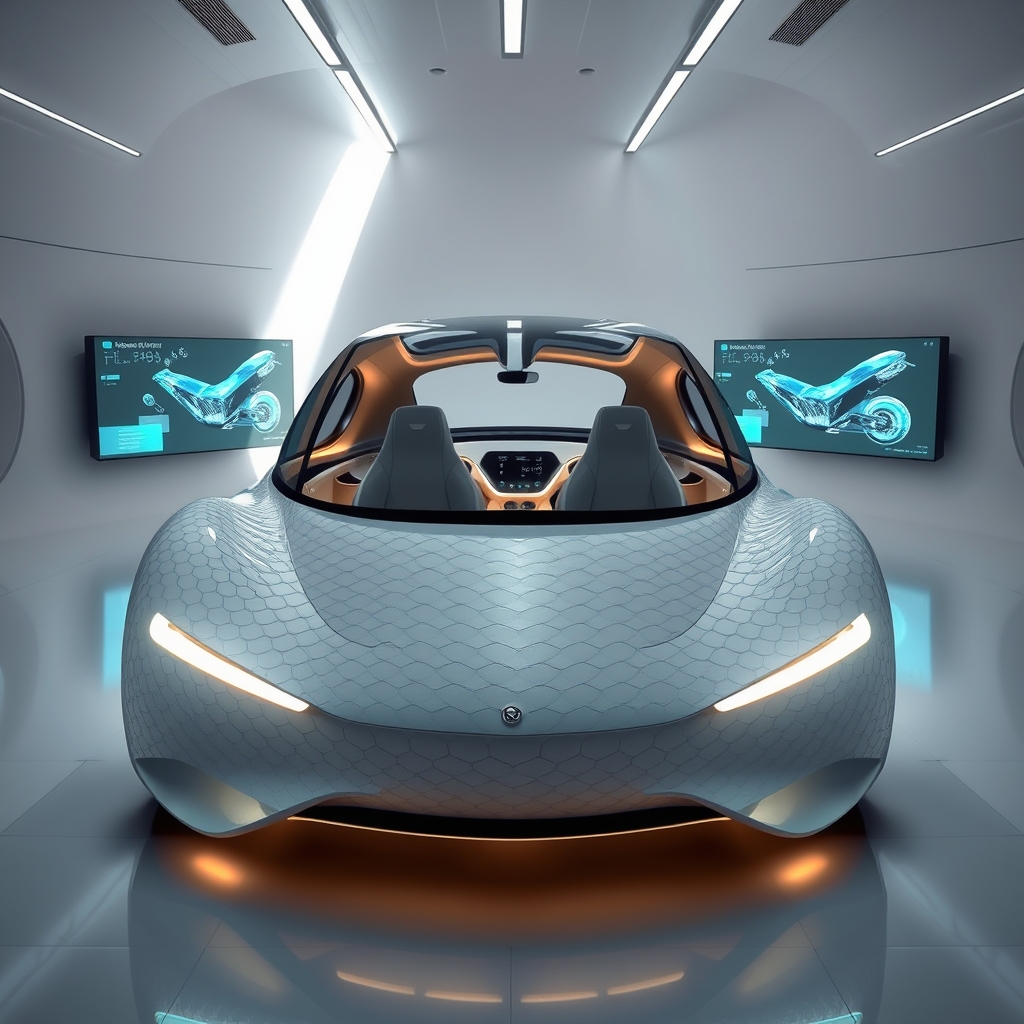
The automotive industry is undergoing a metamorphosis, where the boundaries between technology, sustainability, and design are not just blurring—they are dissolving entirely. At the heart of this transformation lies a relentless pursuit of efficiency, aesthetics, and user experience, driven by innovations that were once confined to the realm of science fiction. Today, these advancements are not just shaping the cars of tomorrow; they are redefining what it means to move through the world.
The Rise of the Autonomous Cabin
Autonomous driving technology has long been the holy grail of automotive innovation, but its true potential is only now being unlocked through the evolution of the cabin itself. The shift from driver-centric to passenger-centric design is not merely a change in layout—it is a fundamental reimagining of the vehicle as a mobile living space. Imagine stepping into a car where the seats swivel to face each other, the dashboard morphs into a panoramic display, and the interior adapts to your mood, whether you seek productivity, relaxation, or entertainment.
This transformation is made possible by advancements in sensor fusion, AI-driven personalization, and modular interior architecture. Companies like Tesla, Mercedes-Benz, and Waymo are leading the charge, integrating Level 4 and Level 5 autonomy with cabins that prioritize comfort, connectivity, and adaptability. The result? A vehicle that is no longer just a mode of transport but an extension of your lifestyle, capable of anticipating your needs before you even articulate them.
Seamless Displays: The Future of Human-Machine Interaction
The dashboard of the future is not a dashboard at all—it is a fluid, intuitive interface that seamlessly blends into the vehicle’s architecture. Gone are the days of cluttered instrument clusters and disjointed touchscreens. In their place, we are seeing the rise of seamless display integration, where screens stretch across the entire width of the cabin, curving around the driver and passenger to create an immersive, distraction-free experience.
This shift is driven by advancements in OLED and microLED technology, which allow for ultra-thin, flexible displays that can be embedded into virtually any surface. Augmented reality (AR) overlays further enhance this experience, projecting navigation cues, hazard alerts, and even entertainment directly onto the windshield or side windows. The result is a driving experience that is safer, more intuitive, and infinitely more engaging. Brands like BMW, with their iVision Dee concept, and Hyundai, with their N Vision 74, are already showcasing what this future could look like—where the line between the digital and physical worlds disappears entirely.
Biomimetic Aesthetics: Nature as the Ultimate Designer
If seamless displays represent the future of automotive interiors, biomimetic vehicle aesthetics are redefining the exterior. Biomimicry—the practice of drawing inspiration from nature to solve human challenges—is not new, but its application in automotive design is reaching new heights. From the aerodynamic efficiency of a shark’s skin to the structural resilience of a honeycomb, nature offers a blueprint for vehicles that are not only beautiful but also functionally superior.
Take, for example, the Mercedes-Benz AVTR concept, which draws inspiration from the fluid, organic forms of the natural world. Its exterior features a seamless, scale-like surface that reduces drag while creating a mesmerizing visual effect. Similarly, the Hyundai Le Fil Rouge concept mimics the aerodynamic properties of a cheetah in motion, with flowing lines that enhance both performance and aesthetics. These designs are not just about looking good; they are about pushing the boundaries of what is possible in terms of efficiency, sustainability, and emotional connection.
Sustainable Materials: The Invisible Revolution
While biomimicry is transforming the exterior, sustainable interior materials are revolutionizing the cabin. The shift away from traditional leather, plastics, and synthetic fabrics is not just an environmental imperative—it is an opportunity to redefine luxury. Materials like mycelium-based leather, recycled ocean plastics, and plant-derived composites are not only eco-friendly but also offer unique textures, durability, and aesthetic appeal.
For instance, Polestar’s use of recycled fishing nets in their interiors or BMW’s adoption of mycelium leather in the i Vision Circular concept demonstrates how sustainability can coexist with high-end design. These materials are not just alternatives; they are upgrades, offering a tactile and visual richness that traditional materials simply cannot match. As consumers become increasingly conscious of their environmental footprint, the demand for such innovations will only grow, making sustainable materials a cornerstone of future automotive design.
Generative Design and Digital Twins: The Architects of Tomorrow
Behind every groundbreaking design lies a process that is as innovative as the final product. Generative automotive design and digital twin prototyping are two such processes that are accelerating the pace of innovation. Generative design uses AI algorithms to explore thousands of design iterations, optimizing for factors like weight, strength, and aerodynamics. This approach not only speeds up the design process but also uncovers solutions that human designers might never have considered.
Digital twin prototyping takes this a step further by creating a virtual replica of the vehicle that can be tested and refined in a simulated environment. This allows engineers to identify and address potential issues before a single physical prototype is built, reducing waste and accelerating time-to-market. Together, these technologies are enabling automakers to push the boundaries of what is possible, creating vehicles that are lighter, stronger, and more efficient than ever before.
The Road Ahead: A Harmonious Blend of Art and Science
The automotive industry stands at a crossroads, where the convergence of technology, sustainability, and design is creating opportunities that were once unimaginable. The cars of the future will not just be machines; they will be living, breathing entities that adapt to our needs, reflect our values, and inspire our imagination. Whether it is through the seamless integration of displays, the organic beauty of biomimetic aesthetics, or the silent efficiency of autonomous cabins, one thing is clear: the journey has only just begun. The road ahead is not just about getting from point A to point B—it is about redefining what it means to travel, to connect, and to experience the world around us.