The Future of Automotive Protection: How Ceramic Coatings and Smart Repair Systems Are Redefining Vehicle Care
In the ever-evolving world of automotive care, the intersection of innovation and precision has given rise to groundbreaking advancements that are transforming how we protect and restore vehicles. Among these, ceramic coatings and smart repair systems stand out as game-changers, offering unparalleled durability, efficiency, and aesthetic appeal. These technologies are not just enhancing the way professionals approach vehicle maintenance but are also redefining the expectations of car owners who seek long-term protection and flawless finishes.
The Rise of Ceramic Coatings: A Shield for the Modern Vehicle
Ceramic coatings have emerged as one of the most revolutionary developments in automotive protection. Unlike traditional waxes or sealants, which offer temporary solutions, ceramic coatings form a permanent or semi-permanent bond with a vehicle’s paint, creating a hydrophobic and chemically resistant layer. This layer acts as a shield against environmental contaminants such as UV rays, acid rain, bird droppings, and road salt, which can cause oxidation and deterioration over time. The result is a vehicle that not only retains its glossy finish for years but also requires less frequent maintenance.
What sets ceramic coatings apart is their ability to provide a level of protection that was once unimaginable. The nanotechnology used in these coatings fills in microscopic imperfections in the paint, creating a smooth surface that repels water and dirt. This self-cleaning effect means that vehicles stay cleaner for longer, reducing the need for frequent washes. Additionally, the hardness of ceramic coatings—often rated at 9H on the pencil hardness scale—provides a robust barrier against minor scratches and swirl marks, further preserving the vehicle’s appearance.
Application Precision: The Key to Longevity
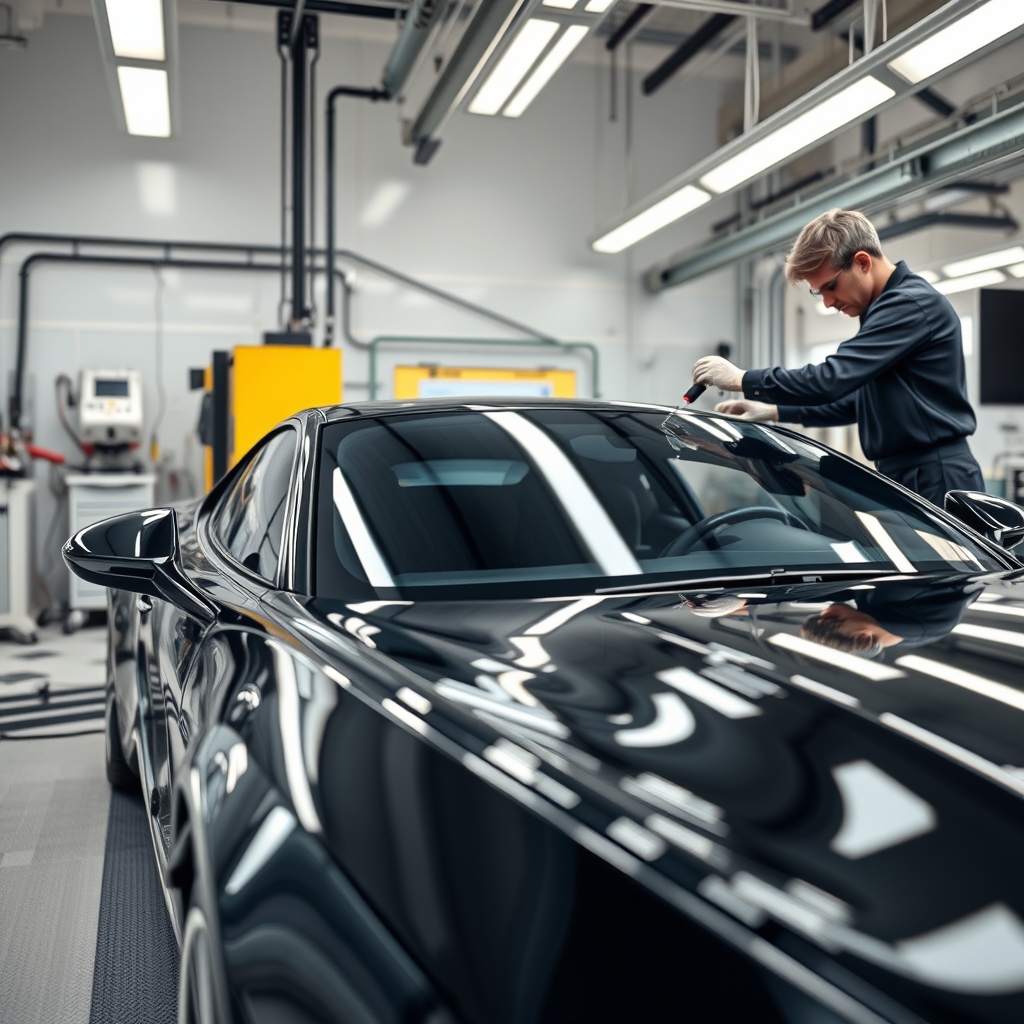
The effectiveness of a ceramic coating largely depends on the precision of its application. Unlike traditional products that can be applied by amateurs, ceramic coatings require a meticulous process that begins with thorough paint correction. This involves removing any existing imperfections, such as scratches, oxidation, or swirl marks, to ensure a flawless surface. The coating is then applied in a controlled environment, often using specialized tools and techniques to achieve an even and consistent layer. The curing process, which can take anywhere from 24 to 72 hours, is critical to the coating’s durability and performance.
For professionals in the collision repair industry, mastering the art of ceramic coating application has become a valuable skill. It not only enhances the quality of their work but also opens up new revenue streams, as car owners increasingly seek out these premium services. Moreover, the rise of ceramic coatings has spurred innovation in related areas, such as the development of spray booths designed to optimize the application process, ensuring that every vehicle receives the highest level of protection.
Smart Repair Systems: Efficiency Meets Precision
While ceramic coatings focus on long-term protection, smart repair systems are revolutionizing the way minor damages are addressed. These systems, which include techniques such as paintless dent removal (PDR), clear coat scratch repair, and spot painting, are designed to restore a vehicle’s appearance quickly and cost-effectively, without the need for extensive bodywork. The beauty of smart repair systems lies in their ability to deliver seamless results with minimal disruption, making them an ideal solution for modern collision repair centers.
One of the most notable advancements in smart repair systems is the use of laser frame alignment and fiber laser welding. These technologies allow technicians to achieve precise repairs with unmatched accuracy, ensuring that structural integrity is restored without compromising the vehicle’s safety or aesthetics. For example, laser frame alignment systems use advanced sensors and computer algorithms to detect even the slightest misalignments in a vehicle’s frame, guiding technicians through the correction process with pinpoint precision. Similarly, fiber laser welding enables strong, clean welds that are essential for repairing aluminum and other advanced materials used in modern vehicles.
The Role of Technology in Modern Collision Repair
The integration of technology into smart repair systems has also led to significant improvements in efficiency. Automated tools and software solutions streamline the repair process, reducing the time required to complete jobs and minimizing the risk of human error. For instance, digital color matching systems ensure that touch-up paint blends seamlessly with the vehicle’s original finish, eliminating the need for time-consuming trial-and-error methods. Additionally, mobile repair units equipped with smart repair systems allow technicians to perform on-site repairs, providing convenience for customers and expanding the reach of collision repair services.
For auto body shops, adopting smart repair systems is not just about keeping up with industry trends—it’s about staying competitive in a market where customers demand faster, more affordable, and higher-quality repairs. These systems enable shops to handle a wider range of repairs in-house, reducing the need to outsource work and increasing profitability. Moreover, the ability to offer quick turnaround times and flawless results enhances customer satisfaction, fostering loyalty and repeat business.
The Synergy of Ceramic Coatings and Smart Repair Systems
While ceramic coatings and smart repair systems serve distinct purposes, their combined use represents the future of automotive care. Ceramic coatings provide long-term protection that preserves a vehicle’s appearance, while smart repair systems offer efficient solutions for addressing minor damages that inevitably occur over time. Together, they create a comprehensive approach to vehicle maintenance that ensures cars not only look their best but also retain their value for years to come.
For collision repair professionals, embracing these technologies is essential to meeting the evolving needs of customers. As vehicles become more advanced, with complex materials and finishes, the demand for specialized care will continue to grow. By investing in training and equipment for ceramic coating application and smart repair systems, auto body shops can position themselves as leaders in the industry, capable of delivering results that exceed expectations. The future of automotive protection lies in the seamless integration of these innovations, where precision, efficiency, and durability come together to redefine what it means to care for a vehicle.
The journey toward this future is already underway, with each advancement bringing us closer to a world where vehicles remain pristine and structurally sound, no matter the challenges they face. As technology continues to evolve, so too will the methods we use to protect and restore our cars, ensuring that the road ahead is as smooth and brilliant as the finishes we strive to achieve.