
The Precision Revolution: How Laser Frame Alignment is Redefining Structural Integrity in Modern Collision Repair
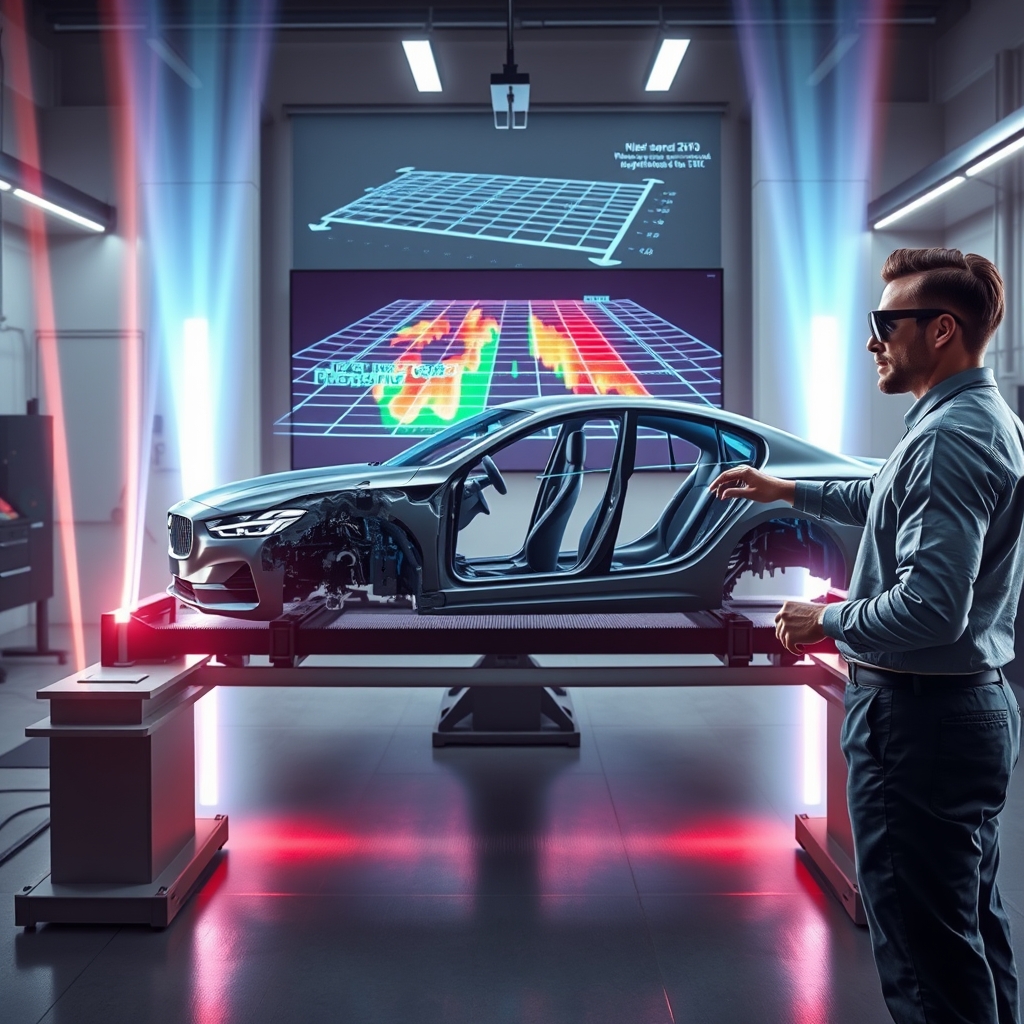
In the world of collision repair, structural integrity is everything. A vehicle’s frame is its backbone, designed to absorb impact, protect passengers, and maintain the precise geometry that ensures safe handling. Yet, for decades, restoring a damaged frame to its original specifications was a labor-intensive process fraught with guesswork. Traditional methods relied on hydraulic pulls, chains, and manual measurements—a system that, while effective, left room for human error and inefficiency. Today, however, a technological revolution is underway, one that is transforming frame straightening from an art of approximation into a science of precision: laser frame alignment.
The Limitations of Traditional Frame Repair
Before the advent of laser-guided systems, frame straightening was as much about experience as it was about equipment. Technicians would use a combination of hydraulic rams, clamps, and chains to pull a bent frame back into shape, often relying on visual assessments and manual measurements to gauge progress. While skilled professionals could achieve remarkable results, the process was inherently imprecise. Minor misalignments could go unnoticed, leading to issues like poor wheel alignment, uneven tire wear, or even compromised crash safety in future impacts. Moreover, the trial-and-error nature of traditional methods meant longer repair times, higher labor costs, and increased risk of overcorrecting or damaging the frame further.
Enter Laser Frame Alignment: A Game-Changer in Collision Repair
Laser frame alignment systems represent a quantum leap forward in collision repair technology. These advanced systems use high-precision lasers, computer software, and 3D imaging to create a digital map of a vehicle’s frame, comparing it in real-time to the manufacturer’s original specifications. The process begins with the vehicle being placed on a specialized alignment bench, where laser sensors scan the frame’s geometry, identifying even the slightest deviations. The data is then processed by software that generates a step-by-step repair plan, guiding technicians through the precise adjustments needed to restore the frame to its factory-perfect state.
One of the most significant advantages of laser alignment is its ability to detect hidden damage. In the past, minor bends or twists in a frame’s structure might have been overlooked, only to cause problems later. With laser technology, even sub-millimeter deviations are flagged, ensuring that repairs are comprehensive and long-lasting. This level of precision not only enhances safety but also improves the vehicle’s resale value, as potential buyers can be confident that the structure is sound.
The Role of Computer-Aided Design in Modern Frame Repair
At the heart of laser frame alignment is computer-aided design (CAD) technology. Modern alignment systems are integrated with vast databases of manufacturer specifications, allowing them to compare a damaged frame against the exact blueprint of the vehicle’s original design. This integration ensures that repairs are not just close to the original but identical to it. For example, if a vehicle’s front subframe is bent in a collision, the laser system will identify the exact degree of misalignment and guide the technician in applying the precise amount of force needed to correct it. The result is a frame that is restored to its pre-accident condition, with no compromises in safety or performance.
This technology is particularly valuable for luxury and performance vehicles, where even minor frame misalignments can affect handling, aerodynamics, and overall driving dynamics. High-end manufacturers like BMW, Mercedes-Benz, and Porsche often use aluminum or high-strength steel in their frames, which require even greater precision during repairs. Laser alignment systems are capable of handling these materials with the same level of accuracy as traditional steel, ensuring that the vehicle’s structural integrity is preserved.
The Efficiency and Sustainability Benefits of Laser Alignment
Beyond precision, laser frame alignment systems offer significant efficiency gains. Traditional frame straightening could take days, especially for severe damage, as technicians iteratively pulled and measured the frame. With laser guidance, the process is streamlined. The system provides real-time feedback, allowing technicians to make adjustments in a single session, often cutting repair times by 50% or more. This efficiency translates to lower labor costs for repair shops and faster turnaround times for customers, a critical factor in an industry where downtime can be costly.
Sustainability is another often-overlooked benefit of laser alignment. By reducing the need for trial-and-error adjustments, these systems minimize the risk of overcorrecting or damaging the frame, which can lead to material waste. Additionally, the precision of laser-guided repairs means that fewer replacement parts are needed, reducing the environmental impact of manufacturing and transporting new components. In an era where sustainability is becoming a priority for both consumers and businesses, technologies like laser frame alignment are helping collision repair shops reduce their carbon footprint without sacrificing quality.
Challenges and the Future of Laser Frame Alignment
Despite its many advantages, laser frame alignment is not without challenges. The initial cost of these systems can be prohibitive for smaller repair shops, with high-end laser alignment benches costing upwards of $100,000. Training technicians to use the equipment effectively also requires time and investment, as the technology demands a new set of skills beyond traditional frame repair techniques. However, as the technology becomes more widespread, costs are expected to decrease, making it accessible to a broader range of repair facilities.
Looking ahead, the future of laser frame alignment is likely to be shaped by advancements in artificial intelligence and machine learning. Imagine a system that not only guides repairs but also predicts the most efficient repair path based on thousands of similar cases. Or a system that integrates with augmented reality (AR) glasses, allowing technicians to see real-time overlays of the frame’s geometry as they work. These innovations could further reduce repair times, improve accuracy, and make the technology even more intuitive for technicians.
For electric vehicles (EVs), laser alignment is poised to play an even more critical role. EV frames often incorporate advanced materials like carbon fiber and aluminum to offset the weight of heavy battery packs, making precision repairs essential. Additionally, EVs have unique structural requirements to protect their battery systems in a collision. Laser alignment systems are already being adapted to meet these challenges, ensuring that the next generation of vehicles can be repaired with the same level of precision as their internal combustion counterparts.
As collision repair technology continues to evolve, laser frame alignment stands out as a testament to how innovation can transform an industry. What was once a process reliant on skill and intuition is now a data-driven science, where precision is not just a goal but a guarantee. For vehicle owners, this means safer, more reliable repairs. For repair shops, it means higher efficiency, lower costs, and a competitive edge in an increasingly technology-driven market. And for the industry as a whole, it represents a shift toward a future where every repair is executed with the same level of care and accuracy as the original manufacturing process. The backbone of a vehicle is no longer left to chance—it is restored with the precision of a surgeon’s scalpel, ensuring that every car that leaves the shop is as structurally sound as the day it rolled off the assembly line.