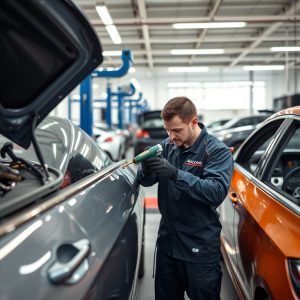
The Precision Art of Ceramic Coating Application: Elevating Automotive Protection to New Heights

In the ever-evolving world of automotive care, ceramic coating application has emerged as a game-changer, offering unparalleled protection and aesthetic enhancement for vehicles. Unlike traditional waxes or sealants, ceramic coatings form a semi-permanent bond with a car’s paint, creating a hydrophobic shield that repels water, dirt, and contaminants. This advanced technology not only preserves a vehicle’s showroom shine but also extends its longevity, making it a must-have for enthusiasts and professionals alike.
The Science Behind Ceramic Coatings
At the heart of ceramic coatings lies nanotechnology. These coatings are composed of silicon dioxide (SiO2) or titanium dioxide (TiO2) nanoparticles, which chemically bond to the vehicle’s paint surface. When applied, the liquid coating cures into a hard, glass-like layer that fills microscopic imperfections in the paint, creating a smooth, reflective finish. This process enhances the depth and clarity of the paint while providing a durable barrier against UV rays, oxidation, and chemical stains.
One of the most remarkable properties of ceramic coatings is their hydrophobic effect. Water and other liquids bead up and roll off the surface, taking dirt and grime with them. This self-cleaning effect reduces the need for frequent washing and minimizes the risk of water spots, which can etch into unprotected paint over time. Additionally, the coating’s resistance to environmental contaminants means that bird droppings, tree sap, and road salt are less likely to cause permanent damage.
The Application Process: Precision and Patience
Applying a ceramic coating is not a task to be rushed. It requires meticulous preparation, a controlled environment, and a skilled hand to achieve flawless results. The process typically begins with a thorough wash and decontamination of the vehicle’s surface to remove any dirt, wax, or residual polymers. This step is critical, as any impurities left on the paint can interfere with the coating’s ability to bond properly.
Next, the paint is often corrected using polishing techniques to eliminate swirl marks, scratches, and oxidation. This ensures that the coating adheres to a smooth, defect-free surface, maximizing its effectiveness and longevity. Once the paint is prepped, the ceramic coating is applied in small sections using a microfiber applicator. The coating is then allowed to cure, a process that can take anywhere from a few hours to a full day, depending on the product and environmental conditions.
Post-Application Care: Maximizing Longevity
While ceramic coatings are incredibly durable, they are not invincible. Proper maintenance is essential to preserve their protective properties. Regular washing with a pH-neutral shampoo helps remove contaminants without stripping the coating. It’s also important to avoid automated car washes with harsh brushes, as these can cause micro-scratches that compromise the coating’s integrity over time.
For those looking to enhance their coating’s performance, periodic top-ups with a spray sealant or ceramic boost product can help maintain its hydrophobic properties. Additionally, parking in shaded areas or using a car cover can protect the coating from prolonged UV exposure, which can cause it to degrade prematurely.
Ceramic Coatings vs. Traditional Protection Methods
Compared to traditional protection methods like wax or sealants, ceramic coatings offer several distinct advantages. Wax, for example, provides a temporary shine and limited protection, typically lasting only a few weeks before requiring reapplication. Sealants, while more durable than wax, still fall short of the longevity and performance offered by ceramic coatings. Most sealants last between three to six months, whereas high-quality ceramic coatings can protect a vehicle’s paint for two to five years, depending on the product and maintenance.
Another key difference is the level of protection. Ceramic coatings provide superior resistance to chemical stains, UV damage, and environmental contaminants. They also offer enhanced scratch resistance, though it’s important to note that they are not scratch-proof. For vehicles exposed to harsh conditions, such as daily drivers or off-road enthusiasts, the added durability of a ceramic coating can make a significant difference in preserving the paint’s appearance and value.
Innovations in Ceramic Coating Technology
The ceramic coating industry is continually evolving, with new formulations and technologies emerging to meet the demands of modern vehicles. One of the latest advancements is the development of graphene-infused ceramic coatings. Graphene, a single layer of carbon atoms, enhances the coating’s durability, heat resistance, and hydrophobic properties. These coatings are particularly well-suited for high-performance vehicles, where heat management and protection are critical.
Another innovation is the introduction of self-healing ceramic coatings. These products contain special polymers that can repair minor scratches and swirl marks when exposed to heat, such as sunlight or warm water. While not a substitute for professional paint correction, self-healing coatings offer an added layer of protection for daily drivers and vehicles prone to light surface damage.
The Role of Ceramic Coatings in Auto Body Restoration
For auto body shops specializing in collision repair and restoration, ceramic coatings have become an essential part of the refinishing process. After repairing and repainting a vehicle, applying a ceramic coating ensures that the new paint is protected from the moment it leaves the shop. This not only enhances the customer’s satisfaction but also reduces the likelihood of premature paint degradation, which can lead to costly warranty claims or customer complaints.
In the realm of classic car restoration, ceramic coatings are particularly valuable. These vehicles often spend long periods in storage or are driven infrequently, making them susceptible to environmental damage. A ceramic coating provides a long-lasting barrier that preserves the restoration work and maintains the vehicle’s value. For collectors and enthusiasts, this level of protection is invaluable.
As automotive technology continues to advance, so too does the science of vehicle protection. Ceramic coatings represent a significant leap forward in preserving a car’s appearance and structural integrity. Whether for a daily driver, a high-performance sports car, or a cherished classic, the benefits of ceramic coating application are undeniable. It’s not just about keeping a vehicle looking its best—it’s about safeguarding an investment and ensuring that it remains a source of pride and joy for years to come. The precision and care involved in applying a ceramic coating reflect a deeper commitment to automotive excellence, where every detail matters and protection is never an afterthought.