The Precision Art of Car Bumper Repair: Where Modern Technology Meets Seamless Restoration
The modern automobile is a marvel of engineering, designed not only for performance but also for safety and aesthetics. Among its most vulnerable components, the car bumper stands as the first line of defense in minor collisions, absorbing impact and protecting critical systems. Yet, beyond its functional role, the bumper plays a pivotal part in a vehicle’s visual harmony. A misaligned, cracked, or poorly repaired bumper can disrupt the entire aesthetic flow of a car, diminishing its value and appeal. This is where the precision art of car bumper repair comes into play—a discipline that blends advanced materials, cutting-edge technology, and meticulous craftsmanship to restore both form and function.
The Evolution of Bumper Materials and Design
Gone are the days when bumpers were simple steel bars bolted onto the front and rear of a vehicle. Today’s bumpers are complex assemblies made from a variety of materials, including high-strength plastics, thermoplastic polyolefins (TPO), fiberglass, and even carbon fiber in high-performance models. Each material presents unique challenges in repair, requiring technicians to possess an in-depth understanding of their properties, behaviors under stress, and compatibility with adhesives, fillers, and paints.
For instance, TPO bumpers, commonly found in modern vehicles, are lightweight and flexible, designed to absorb low-speed impacts without permanent deformation. However, their flexibility also means they can develop stress fractures or delamination if improperly repaired. Technicians must employ specialized techniques, such as plastic welding or the use of flexible fillers, to ensure repairs are durable and visually seamless. The shift toward lightweight materials has also necessitated the adoption of advanced tools, like ultrasonic plastic welders and infrared curing systems, to achieve factory-like finishes.
The Role of Advanced Repair Techniques
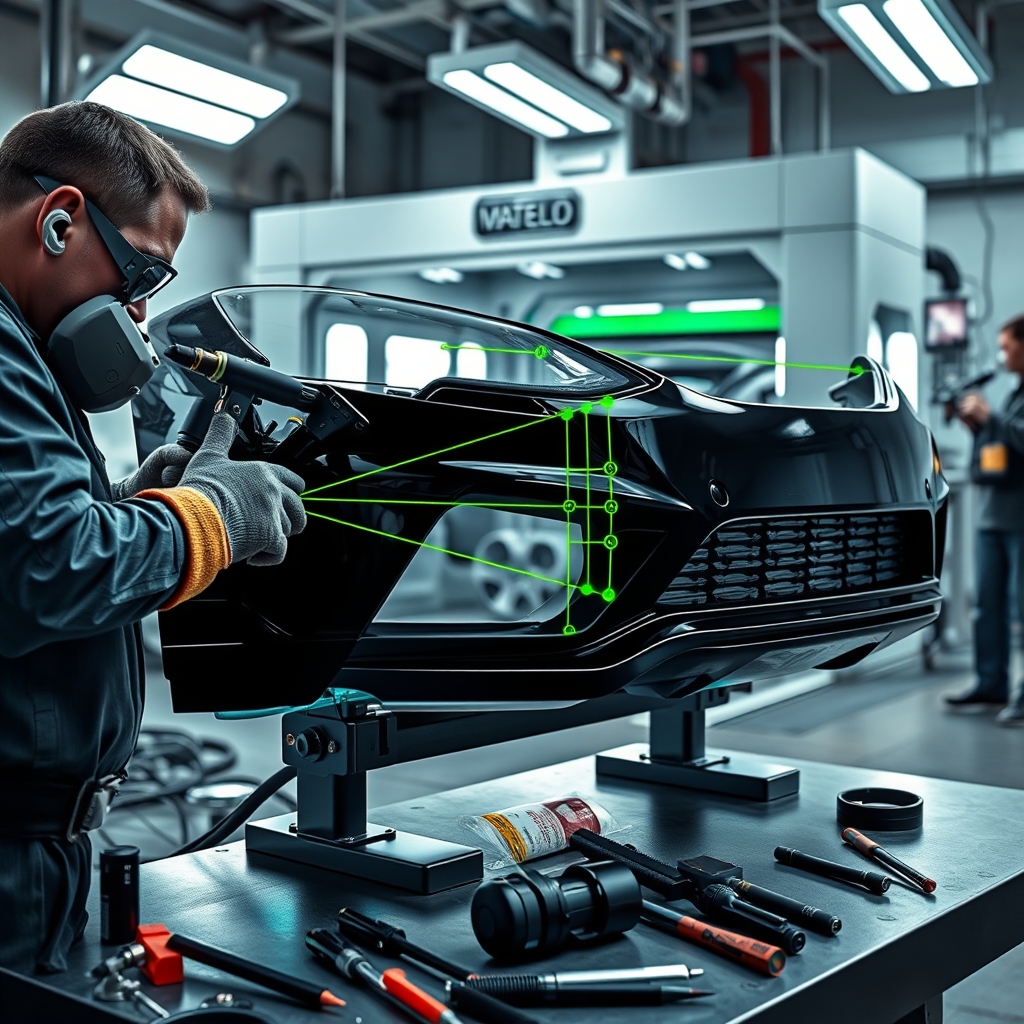
Modern car bumper repair is far from a one-size-fits-all process. It demands a tailored approach that considers the extent of the damage, the material composition, and the vehicle’s make and model. One of the most transformative advancements in this field is the use of laser measuring systems to assess alignment and structural integrity. These systems provide real-time data, allowing technicians to identify even the slightest deviations from factory specifications. By ensuring precise alignment, they not only restore the bumper’s protective capabilities but also maintain the vehicle’s aerodynamic efficiency and aesthetic appeal.
Another game-changer is the integration of smart repair systems, which enable technicians to address minor damages without the need for full bumper replacement. Techniques like paintless dent removal (PDR) and spot refinishing have revolutionized the industry by reducing repair times and costs while preserving the original finish. For more severe damage, advanced fillers and primers, such as those infused with nanotechnology, create a bond that mimics the strength and flexibility of the original material. These fillers are designed to expand and contract with the bumper, preventing cracks and ensuring longevity.
The Importance of Color Matching and Refinishing
A flawless repair is only as good as its ability to blend seamlessly with the rest of the vehicle. Achieving a perfect color match is both a science and an art, requiring an understanding of paint chemistry, lighting conditions, and the effects of aging on automotive finishes. Modern refinishing techniques leverage spectrophotometers and computerized color-matching systems to analyze the vehicle’s paint code and formulate a custom blend that accounts for variations in hue, saturation, and metallic flake distribution.
Once the color is matched, the refinishing process begins. This involves meticulous surface preparation, including sanding, priming, and sealing, to ensure the new paint adheres properly and resists environmental factors like UV rays and moisture. Automotive spray booths equipped with advanced filtration and climate control systems play a crucial role in this stage, providing a dust-free environment and optimal curing conditions. The result is a finish that not only matches the original but also withstands the test of time, maintaining its gloss and integrity for years to come.
Balancing Safety and Aesthetics
While the visual aspect of bumper repair is undeniably important, it should never come at the expense of safety. Modern bumpers are engineered to work in tandem with a vehicle’s crash management system, absorbing and dissipating energy to protect occupants in the event of a collision. A poorly executed repair can compromise this functionality, turning a minor fender bender into a costly and dangerous liability.
Technicians must adhere to manufacturer guidelines and industry standards, such as those set by the Inter-Industry Conference on Auto Collision Repair (I-CAR), to ensure repairs meet safety requirements. This includes using OEM-approved parts, adhesives, and fasteners, as well as verifying the integrity of underlying structures like reinforcement bars and energy absorbers. In some cases, advanced techniques like laser frame alignment may be employed to restore the vehicle’s structural geometry, ensuring the bumper performs as intended in future impacts.
The Future of Car Bumper Repair
As automotive technology continues to evolve, so too will the methods and materials used in bumper repair. The rise of electric vehicles (EVs) presents new challenges, as their unique weight distribution and battery placement require specialized repair protocols to avoid compromising safety systems. Additionally, the increasing use of advanced driver-assistance systems (ADAS) means that bumper repairs must account for sensors and cameras embedded in the bumper, ensuring they remain calibrated and functional.
Innovations like self-healing polymers and 3D-printed replacement parts are also on the horizon, promising to further streamline the repair process while enhancing durability. These materials have the potential to automatically repair minor scratches and dents, reducing the need for manual intervention and extending the lifespan of bumpers. Meanwhile, augmented reality (AR) tools are being developed to assist technicians in visualizing repairs, providing step-by-step guidance and reducing the margin for error.
The art of car bumper repair is a testament to the intersection of technology, craftsmanship, and innovation. It is a field where precision is paramount, and where the smallest details can make the difference between a repair that goes unnoticed and one that stands out for all the wrong reasons. As vehicles become more advanced, the demand for skilled technicians who can navigate the complexities of modern bumper repair will only grow. In this ever-evolving landscape, the goal remains the same: to restore not just the appearance of a vehicle, but its safety, performance, and value, ensuring it continues to turn heads and protect its occupants for miles to come.