The Hidden Craft of Car Bumper Repair: Balancing Aesthetics, Safety, and Modern Technology
Car bumpers are more than just a cosmetic feature—they are a critical component of vehicle safety, designed to absorb impact and protect both passengers and the car’s structural integrity. Yet, when damage occurs, repairing or replacing a bumper involves a delicate balance of aesthetics, functionality, and modern technology. The evolution of car bumper repair has transformed what was once a straightforward task into a sophisticated process that demands precision, expertise, and cutting-edge tools.
The Evolution of Bumper Design and Materials
In the early days of automotive manufacturing, bumpers were simple metal bars bolted onto the front and rear of vehicles. Their primary function was to withstand minor impacts without transferring force to the car’s frame. However, as automotive design evolved, so did bumper technology. Modern bumpers are now made from a variety of materials, including thermoplastics, composites, and even carbon fiber, each offering unique advantages in terms of weight, durability, and impact absorption.
Thermoplastic bumpers, for instance, are lightweight and flexible, making them ideal for absorbing low-speed collisions without cracking. On the other hand, composite bumpers, often reinforced with fiberglass or Kevlar, provide enhanced strength for vehicles that require additional protection. The shift toward these advanced materials has not only improved safety but also introduced new challenges—and opportunities—in the repair process.
The Challenges of Modern Bumper Repair
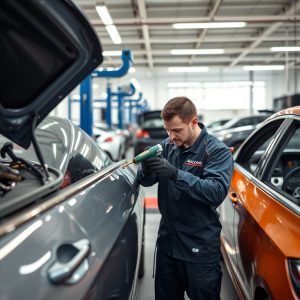
Repairing a damaged bumper is no longer as simple as hammering out a dent or welding a cracked metal bar. Today’s bumpers often feature integrated sensors, cameras, and parking assist systems, all of which must be carefully removed, repaired, or recalibrated during the repair process. A single misstep can compromise the vehicle’s safety features, leading to costly errors and potential liability for auto body shops.
Another challenge lies in matching the original finish. Modern bumpers are painted with advanced coatings that include UV protection, color-shifting pigments, and even self-healing properties. Achieving a seamless blend between the repaired section and the rest of the vehicle requires not only skill but also access to high-quality paints and refinishing techniques. Automotive spray booths equipped with precise temperature and humidity controls have become essential in ensuring a flawless finish that withstands the test of time.
Paintless Dent Removal: A Game-Changer for Minor Damage
For minor dents and scratches, paintless dent removal (PDR) has emerged as a revolutionary technique that preserves the bumper’s original finish while restoring its shape. Unlike traditional methods that involve sanding, filling, and repainting, PDR uses specialized tools to gently massage the dent from behind the bumper’s surface. This method is not only faster and more cost-effective but also maintains the vehicle’s factory paint, which is often more durable than aftermarket refinishing.
However, PDR is not a one-size-fits-all solution. It works best on shallow dents where the paint has not been cracked or chipped. For deeper damage, auto body technicians must rely on a combination of filler materials, sanding, and repainting to achieve a seamless result. The key lies in knowing when to use PDR and when to opt for more traditional repair methods.
Structural Repairs and Advanced Techniques
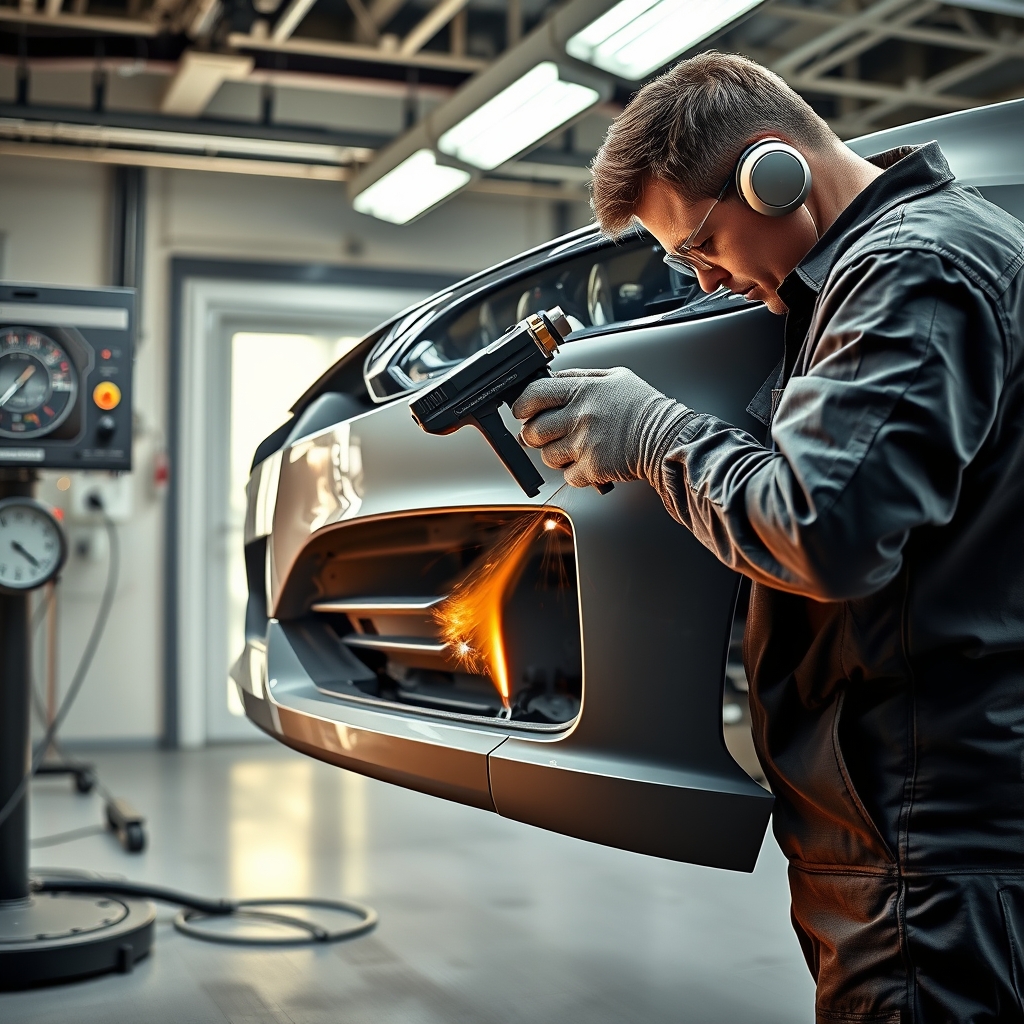
When a bumper sustains significant damage, structural integrity becomes a top priority. Cracks, deep gouges, or misalignments can compromise the bumper’s ability to absorb impact, putting both the vehicle and its occupants at risk. In such cases, technicians may need to employ advanced techniques like plastic welding, which uses heat and specialized adhesives to fuse cracked sections back together. For more severe damage, partial or full bumper replacement may be necessary, followed by precise alignment to ensure proper fit and function.
One of the most exciting advancements in bumper repair is the use of laser frame alignment and 3D scanning technology. These tools allow technicians to assess damage with unparalleled accuracy, ensuring that repairs meet manufacturer specifications. By comparing the vehicle’s current state to its original blueprints, auto body shops can restore bumpers to their pre-accident condition, both structurally and aesthetically.
The Role of Smart Repair Systems in Bumper Restoration
Smart repair systems have revolutionized the way auto body shops approach bumper damage. These systems combine modular repair techniques with advanced materials, allowing technicians to address localized damage without replacing entire panels. For example, a small crack in a bumper can often be repaired using a specialized filler and refinishing process, rather than requiring a full replacement. This not only reduces costs for vehicle owners but also minimizes waste, making it a more sustainable option.
Additionally, smart repair systems often incorporate mobile repair units, enabling technicians to perform on-site repairs for minor damage. This convenience has made bumper repairs more accessible to consumers, particularly for fleet vehicles or commercial trucks where downtime is a critical factor.
Preventing Future Damage: Ceramic Coatings and Beyond
Once a bumper has been repaired, protecting it from future damage is just as important as the repair itself. Ceramic coatings have become a popular choice for vehicle owners looking to enhance durability and resistance to scratches, UV rays, and environmental contaminants. These coatings form a hard, protective layer over the bumper’s surface, making it easier to clean and less susceptible to minor abrasions.
For those seeking even greater protection, hydrographics water transfer printing offers a unique solution. This process involves applying a custom-designed film to the bumper, which not only enhances its appearance but also provides an additional layer of defense against scratches and chips. While primarily used for aesthetic purposes, hydrographics can also serve as a functional barrier, particularly for off-road vehicles or those exposed to harsh conditions.
The world of car bumper repair is a testament to how far automotive technology has come. What was once a straightforward task has evolved into a sophisticated blend of art and science, where precision, safety, and innovation intersect. As vehicles continue to advance, so too will the techniques and tools used to restore them, ensuring that every repair not only looks flawless but also upholds the highest standards of performance and protection. Whether it’s a minor scratch or a major collision, the goal remains the same: to return the vehicle to the road in a condition that is as safe and visually appealing as the day it left the factory.