The Next Frontier in Auto Body Restoration: How Hydrographics and Ceramic Coatings Are Redefining Customization and Protection
The automotive industry is undergoing a transformative shift, where innovation meets artistry to redefine how vehicles are restored, protected, and customized. Among the most groundbreaking advancements are hydrographics water transfer printing and ceramic coating applications, two technologies that are pushing the boundaries of what’s possible in auto body restoration. These methods are not just enhancing aesthetics but also elevating durability, offering car owners and enthusiasts a blend of creativity and long-term protection that was once unimaginable.
The Art and Science of Hydrographics Water Transfer Printing
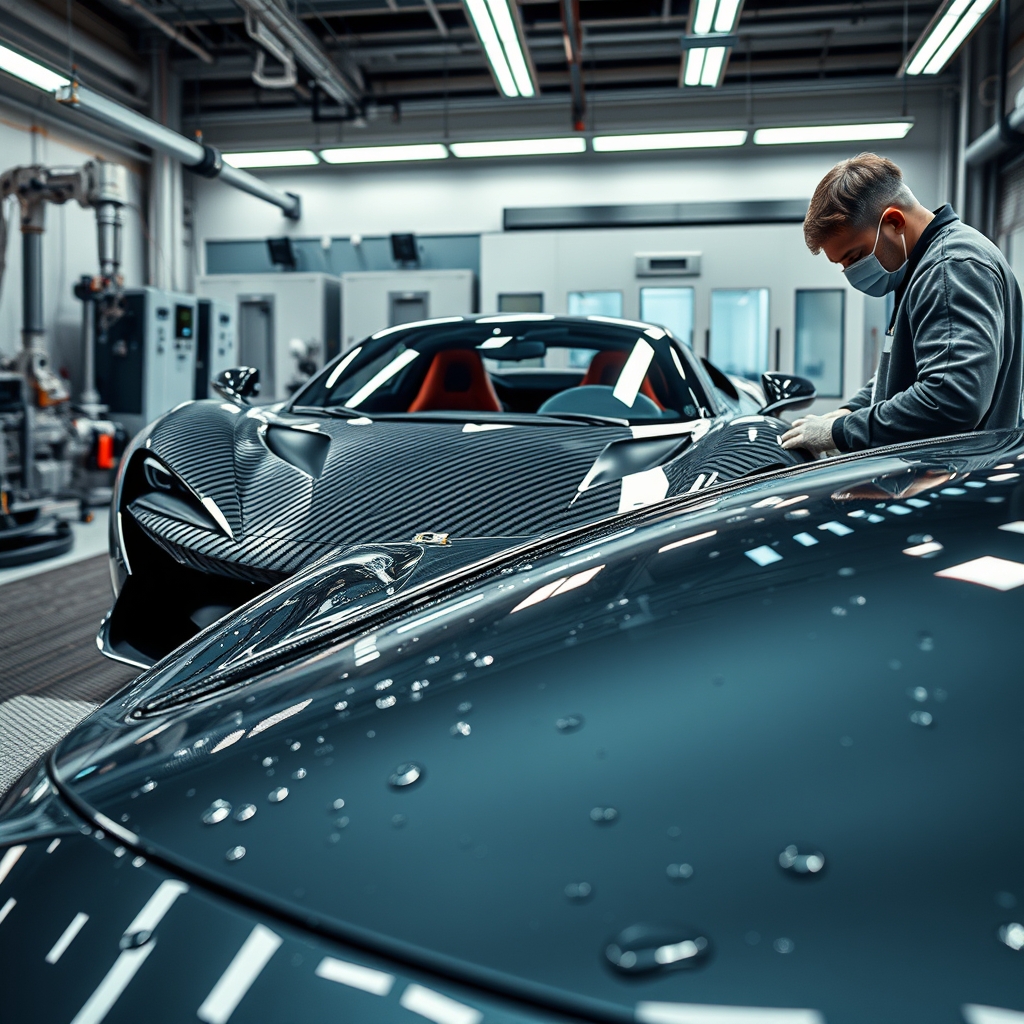
Hydrographics, also known as water transfer printing, is a process that allows intricate patterns and designs to be applied to three-dimensional surfaces with remarkable precision. Unlike traditional painting or vinyl wrapping, hydrographics uses a water-soluble film that dissolves, leaving the ink to adhere seamlessly to the vehicle’s surface. This technique is particularly revolutionary for auto body restoration because it can transform even the most complex shapes—like bumpers, dashboards, or entire car panels—into works of art.
The process begins with preparing the surface, ensuring it is clean, smooth, and free of imperfections. A base coat is applied, followed by the hydrographics film, which is floated on water. The object is then dipped into the water, where the film wraps around it, conforming to every contour. After rinsing and drying, a clear protective topcoat is applied to seal the design, ensuring longevity and resistance to wear. The result is a flawless, high-definition finish that can mimic carbon fiber, wood grain, camouflage, or even custom artwork.
Why Hydrographics is Revolutionizing Customization
One of the most significant advantages of hydrographics is its versatility. Unlike airbrushing or hand-painting, which can be time-consuming and limited in complexity, hydrographics can achieve detailed, repeatable patterns with ease. This makes it ideal for custom car builds, where uniqueness and precision are paramount. Additionally, the process is cost-effective compared to other customization methods, making it accessible to a broader range of car enthusiasts.
Hydrographics is also gaining traction in the collision repair industry, particularly for vehicles with extensive damage. Instead of replacing entire panels, technicians can restore and refinish them using hydrographics, reducing costs and environmental waste. This aligns with the growing demand for sustainable auto body solutions, where efficiency and eco-friendliness go hand in hand.
The Power of Ceramic Coatings: A Shield for the Modern Vehicle
While hydrographics redefines aesthetics, ceramic coatings are revolutionizing vehicle protection. These advanced coatings, made from nano-ceramic particles, create a semi-permanent bond with the vehicle’s paint, forming a hydrophobic and UV-resistant layer that shields against environmental contaminants, scratches, and oxidation. Unlike traditional waxes or sealants, which degrade over time, ceramic coatings offer long-lasting protection that can endure for years with proper maintenance.
How Ceramic Coatings Work
The application of ceramic coatings is a meticulous process that begins with thorough paint correction. Any imperfections, such as swirl marks or scratches, must be polished out to ensure a flawless finish. Once the surface is prepared, the ceramic coating is applied in thin, even layers, allowing it to cure and bond with the paint. The result is a glossy, mirror-like finish that repels water, dirt, and even minor abrasions.
Beyond aesthetics, ceramic coatings provide practical benefits that extend the life of a vehicle’s exterior. They protect against UV rays, which can cause paint fading, and prevent chemical stains from bird droppings, tree sap, or road salt. For electric vehicles (EVs), which often feature lightweight materials prone to corrosion, ceramic coatings offer an added layer of defense, preserving both appearance and structural integrity.
The Synergy of Hydrographics and Ceramic Coatings
When combined, hydrographics and ceramic coatings create a powerful duo for auto body restoration. Hydrographics allows for unparalleled customization, while ceramic coatings ensure that the design remains vibrant and protected for years. This synergy is particularly valuable for high-end custom builds, where owners demand both uniqueness and durability. For collision repair shops, offering these services can set them apart in a competitive market, attracting clients who seek cutting-edge solutions for their vehicles.
Moreover, the integration of these technologies reflects a broader trend in the automotive industry: the fusion of art and science. Gone are the days when auto body work was purely functional. Today, it’s about creating a statement, whether through bold designs or invisible shields that preserve a vehicle’s beauty. As these technologies continue to evolve, they will undoubtedly shape the future of auto body restoration, offering endless possibilities for customization and protection.
The journey of auto body restoration is no longer just about fixing what’s broken—it’s about elevating vehicles to new heights of artistry and resilience. With hydrographics and ceramic coatings leading the way, the road ahead is as limitless as the imagination of those who dare to redefine what a car can be.