The Digital Renaissance: How Generative Design, Augmented Reality, and Smart Materials Are Redefining Automotive Artistry
The automotive industry is undergoing a transformative shift, where the boundaries between art and engineering blur into a seamless fusion of innovation. This evolution is not merely about creating faster or more efficient vehicles but reimagining the very essence of mobility through the lens of sustainability, technology, and human-centric design. At the heart of this revolution lies a trio of groundbreaking advancements: generative design, augmented reality, and smart materials, each playing a pivotal role in crafting the vehicles of tomorrow.
The Power of Generative Design in Automotive Innovation
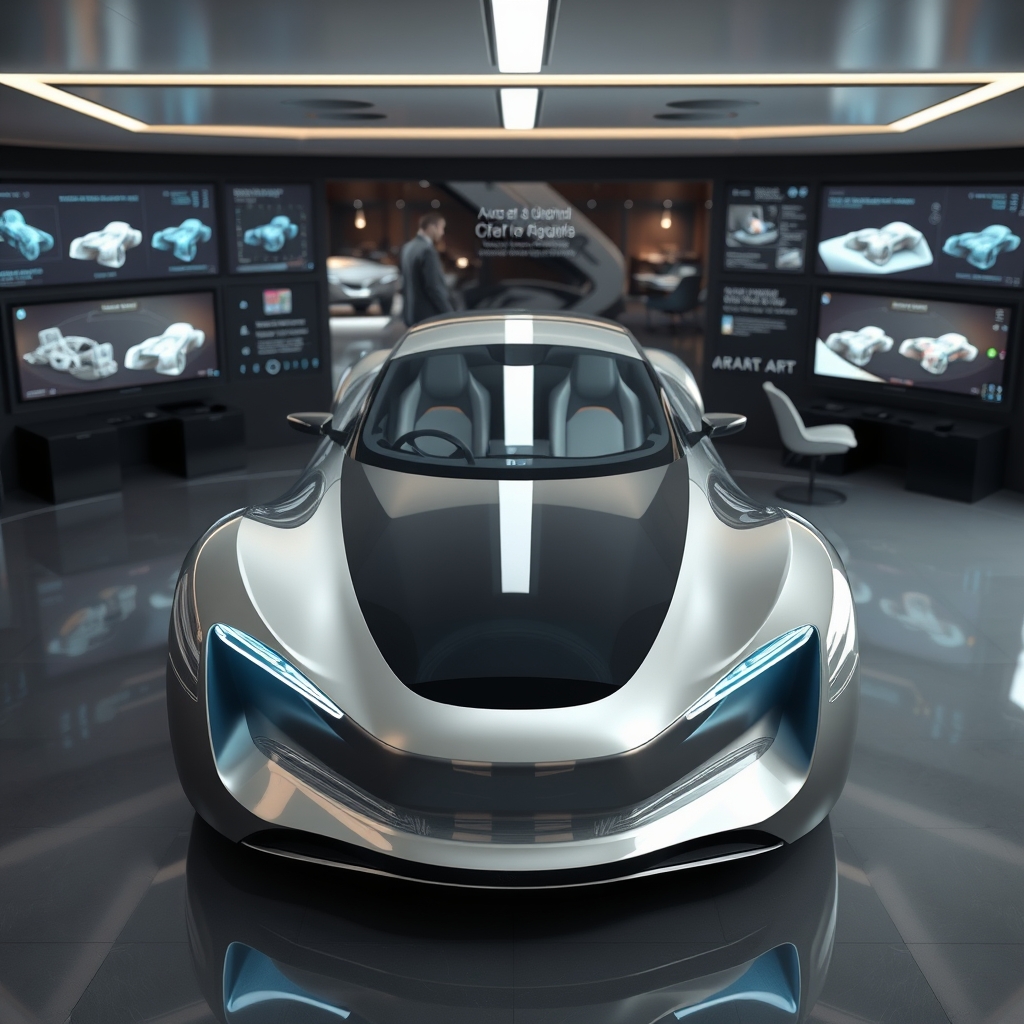
Generative design is revolutionizing the way vehicles are conceived, allowing engineers and designers to explore thousands of iterations in a fraction of the time it once took. By inputting specific parameters—such as weight, strength, material properties, and aerodynamic efficiency—algorithms can generate optimized structures that push the limits of what was previously thought possible. This approach is not just about efficiency; it’s about unlocking creativity. For instance, generative design has enabled the creation of intricate, organic shapes inspired by biomimicry, where vehicles mimic the efficiency of natural forms like the streamlined bodies of fish or the lightweight structures of honeycombs.
One of the most compelling applications of generative design is in the development of lightweight structural components. By leveraging advanced materials like recyclable body composites and carbon fiber, designers can reduce vehicle weight without compromising strength or safety. This not only enhances performance but also contributes to greater energy efficiency, a critical factor in the era of electric vehicles. The result is a new paradigm of automotive design, where form and function coexist in perfect harmony, driven by the precision of digital innovation.
Augmented Reality: Bridging the Gap Between Driver and Machine
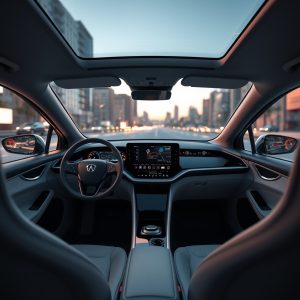
The integration of augmented reality (AR) into automotive design is transforming the way drivers interact with their vehicles. Gone are the days of cluttered dashboards and overwhelming controls. Instead, AR is paving the way for minimalist dashboard layouts that prioritize clarity and intuitiveness. Imagine a windshield that doubles as a dynamic display, projecting real-time navigation, traffic updates, and even hazard alerts directly into the driver’s line of sight. This seamless display integration not only enhances safety but also creates a more immersive and engaging driving experience.
Beyond the dashboard, AR is also revolutionizing the design and manufacturing process. Engineers can now use AR to visualize and manipulate 3D models of vehicles in real-time, allowing for faster prototyping and more accurate assessments of design choices. For example, digital twin prototyping enables designers to simulate the performance of a vehicle under various conditions, from aerodynamic efficiency to structural integrity, before a single physical prototype is built. This not only accelerates the development cycle but also reduces waste, aligning with the industry’s growing commitment to sustainability.
The Role of Smart Materials in Sustainable Design
Sustainability is no longer an afterthought in automotive design; it is a driving force. Smart materials are at the forefront of this movement, offering solutions that are as eco-friendly as they are innovative. Recyclable body composites, for instance, are being used to create vehicle structures that are not only lightweight but also fully recyclable at the end of their lifecycle. This circular approach to material usage is a game-changer, reducing the environmental impact of manufacturing and disposal.
Another exciting development is the use of smart glass technology, which can dynamically adjust its tint based on external light conditions. This not only enhances passenger comfort but also reduces the need for energy-intensive climate control systems. Similarly, human-centric lighting design is being integrated into vehicle interiors to create environments that adapt to the needs of occupants, promoting well-being and reducing fatigue during long drives. These materials are not just functional; they are redefining the relationship between the vehicle and its environment, making sustainability an intrinsic part of the design process.
Autonomous Cabins and the Future of Human-Centric Design
As vehicles become more autonomous, the focus of automotive design is shifting from the driver to the passenger. Autonomous cabin design is reimagining the interior space as a mobile living room, office, or even a sanctuary. With the elimination of traditional driving controls, designers have the freedom to create interiors that prioritize comfort, connectivity, and personalization. Modular platform engineering allows for flexible seating arrangements, enabling vehicles to adapt to different use cases, whether it’s a family road trip or a solo commute.
Holographic user interfaces are another exciting innovation in this space, offering a futuristic way for passengers to interact with their vehicle. Imagine adjusting the climate, selecting entertainment, or even communicating with other vehicles through intuitive, gesture-controlled holograms. This level of interactivity not only enhances the user experience but also blurs the line between technology and art, creating a truly immersive environment.
Biomimicry and the Aesthetics of the Future
The influence of biomimicry in automotive design extends beyond structural efficiency; it is also shaping the aesthetics of vehicles. By drawing inspiration from nature, designers are creating exteriors that are not only visually striking but also functionally superior. Kinetic exterior styling, for example, allows vehicles to adapt their shape in real-time to improve aerodynamic efficiency. This could mean active aerodynamic systems that adjust spoilers or air vents based on speed, reducing drag and enhancing performance.
Biomimetic vehicle aesthetics also play a psychological role, evoking a sense of connection to the natural world. This is particularly important in an era where urbanization and digital saturation can leave people feeling disconnected. By incorporating organic forms and textures into vehicle design, automakers can create a sense of harmony between technology and nature, making the driving experience more emotionally resonant.
The automotive industry stands at the precipice of a new era, where technology and creativity converge to redefine what it means to move. The advancements in generative design, augmented reality, and smart materials are not just shaping the vehicles of the future; they are reimagining the very fabric of mobility. As these innovations continue to evolve, they promise to create a world where cars are not just machines, but extensions of human expression, sustainability, and artistry. The road ahead is not just about getting from point A to point B; it’s about the journey itself, and the endless possibilities that lie along the way.