
The Evolution of Paintless Dent Removal: How Modern Techniques Are Preserving Vehicle Value and Aesthetics
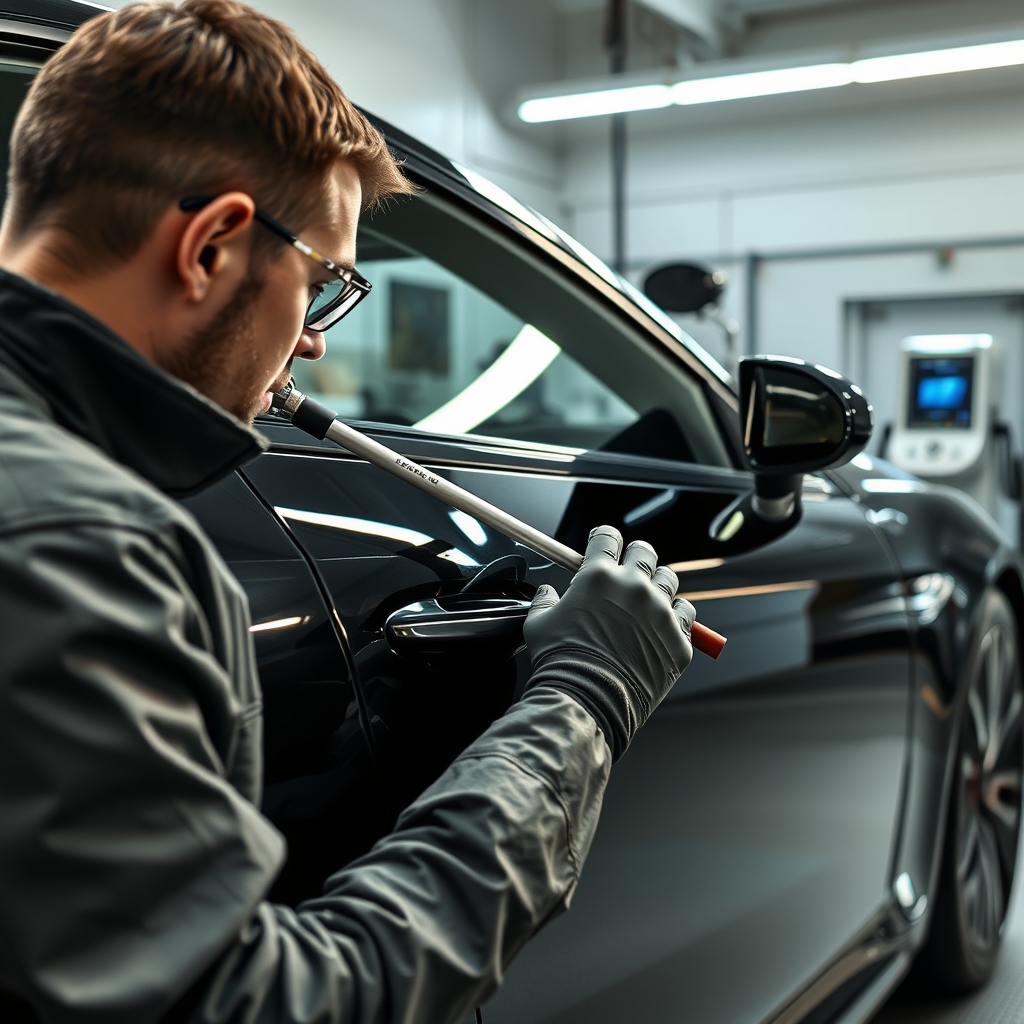
In the ever-evolving world of collision repair technology, few innovations have had as profound an impact as paintless dent removal (PDR). This technique, once considered a niche solution for minor dents, has grown into a cornerstone of modern auto body repair, offering a blend of efficiency, cost-effectiveness, and preservation of a vehicle’s original finish. As automotive manufacturing continues to advance, with lighter materials and more complex designs, PDR has adapted to meet these challenges, proving itself as an indispensable tool in the arsenal of auto body professionals.
The Origins of Paintless Dent Removal
Paintless dent removal traces its roots back to the 1940s, when early automotive manufacturers began experimenting with ways to repair minor dents without compromising the vehicle’s original paint. The technique gained traction in the 1980s and 1990s, particularly in Europe and the United States, as auto body shops sought faster, more affordable alternatives to traditional dent repair methods. Unlike conventional techniques that rely on fillers, sanding, and repainting, PDR works by carefully massaging the dented metal back into its original shape from behind the panel, using specialized tools and precision techniques.
The appeal of PDR lies in its simplicity and effectiveness. By avoiding the need for repainting, the technique preserves the vehicle’s factory finish, which is not only aesthetically pleasing but also critical for maintaining resale value. This is particularly important for luxury and high-end vehicles, where even minor imperfections can significantly impact their market worth. Over time, PDR has evolved from a manual, labor-intensive process to a highly refined craft, incorporating advanced tools and technologies to tackle even the most challenging dents.
Modern Tools and Techniques
The tools used in paintless dent removal have undergone a remarkable transformation. Early PDR relied on basic hand tools, such as metal rods and picks, which required a high level of skill and patience. Today, technicians have access to an array of specialized equipment designed to enhance precision and efficiency. One of the most significant advancements is the use of LED lighting systems, which create a reflective surface on the vehicle’s paint, allowing technicians to visualize the dent’s depth and contours with greater clarity. This lighting, often paired with magnification tools, enables them to work with unparalleled accuracy.
Another game-changer in PDR is the introduction of glue-pulling systems. This technique involves applying a special adhesive to a plastic tab, which is then attached to the dented area. Using a slide hammer or pulling device, the technician gently pulls the dent outward until the metal returns to its original position. Glue-pulling is particularly useful for dents located in areas where access from behind the panel is limited, such as the edges of doors or the center of hoods. This method has expanded the range of dents that can be repaired without repainting, making PDR a viable option for a broader spectrum of damage.
The Role of Technology in PDR
Technology has played a pivotal role in elevating paintless dent removal from a manual craft to a high-tech solution. One of the most exciting developments is the integration of digital imaging and 3D scanning. Some advanced PDR systems now use cameras and software to create a digital map of the dent, providing technicians with real-time feedback on their progress. This technology not only improves accuracy but also reduces the time required to complete a repair, making the process more efficient for both the technician and the vehicle owner.
Additionally, the rise of smart repair systems has further enhanced the capabilities of PDR. These systems combine PDR with other advanced techniques, such as laser frame alignment and fiber laser welding, to address more complex damage. For example, a vehicle with a dent and minor frame misalignment can now be repaired using a combination of PDR and laser alignment, ensuring that both the aesthetics and structural integrity are restored. This holistic approach to collision repair is becoming increasingly popular, as it allows auto body shops to offer comprehensive solutions that save time and money for their customers.
Challenges and Limitations
While paintless dent removal has revolutionized the collision repair industry, it is not without its challenges. One of the primary limitations of PDR is its dependence on the condition of the vehicle’s paint. If the paint is cracked, chipped, or otherwise damaged, PDR may not be a viable option, as the technique relies on the integrity of the original finish. In such cases, traditional repair methods, such as auto body filler and repainting, may be necessary to achieve a flawless result.
Another challenge is the complexity of modern vehicle designs. As automakers continue to push the boundaries of aerodynamics and lightweight materials, the shapes and structures of vehicle panels have become more intricate. Dents in these areas can be more difficult to access and repair, requiring technicians to develop new skills and techniques. For instance, aluminum body panels, which are increasingly common in electric vehicles, present unique challenges due to their different malleability compared to traditional steel. Technicians must undergo specialized training to effectively repair dents in these materials without causing further damage.
The Future of PDR
The future of paintless dent removal looks promising, with ongoing advancements in technology and techniques set to further expand its capabilities. One area of growth is the integration of artificial intelligence (AI) and machine learning into PDR systems. AI-powered tools could analyze dents in real-time, providing technicians with step-by-step guidance on the best approach to repair them. This would not only improve the quality of repairs but also reduce the learning curve for new technicians, ensuring that the craft continues to evolve.
Another exciting development is the potential for PDR to be used in conjunction with other emerging technologies, such as ceramic coating application. Ceramic coatings are already widely used to protect vehicle paint from environmental damage, and their popularity is only expected to grow. By combining PDR with ceramic coatings, auto body shops could offer a comprehensive solution that not only repairs dents but also enhances the vehicle’s long-term protection and aesthetics. This synergy between techniques could redefine the standards of auto body repair, setting a new benchmark for quality and durability.
As the automotive industry continues to evolve, so too will the techniques and technologies used to repair and maintain vehicles. Paintless dent removal stands as a testament to the power of innovation in collision repair, offering a solution that is both efficient and effective. By preserving the original finish of a vehicle, PDR not only enhances its appearance but also safeguards its value, making it a vital tool for auto body professionals and vehicle owners alike. The craft of PDR is far from static; it is a dynamic field that continues to adapt, ensuring that vehicles remain in pristine condition for years to come.