The Precision Revolution: How Laser Frame Alignment and Smart Repair Systems Are Redefining Collision Repair Accuracy
In the world of collision repair, precision isn’t just a goal—it’s the foundation of safety, performance, and customer trust. Modern vehicles are engineered with tighter tolerances, advanced materials, and complex geometries that demand more than traditional repair methods can offer. Enter the era of laser frame alignment and smart repair systems, where cutting-edge technology is transforming how auto body shops restore structural integrity with unparalleled accuracy.
The Rise of Laser Frame Alignment
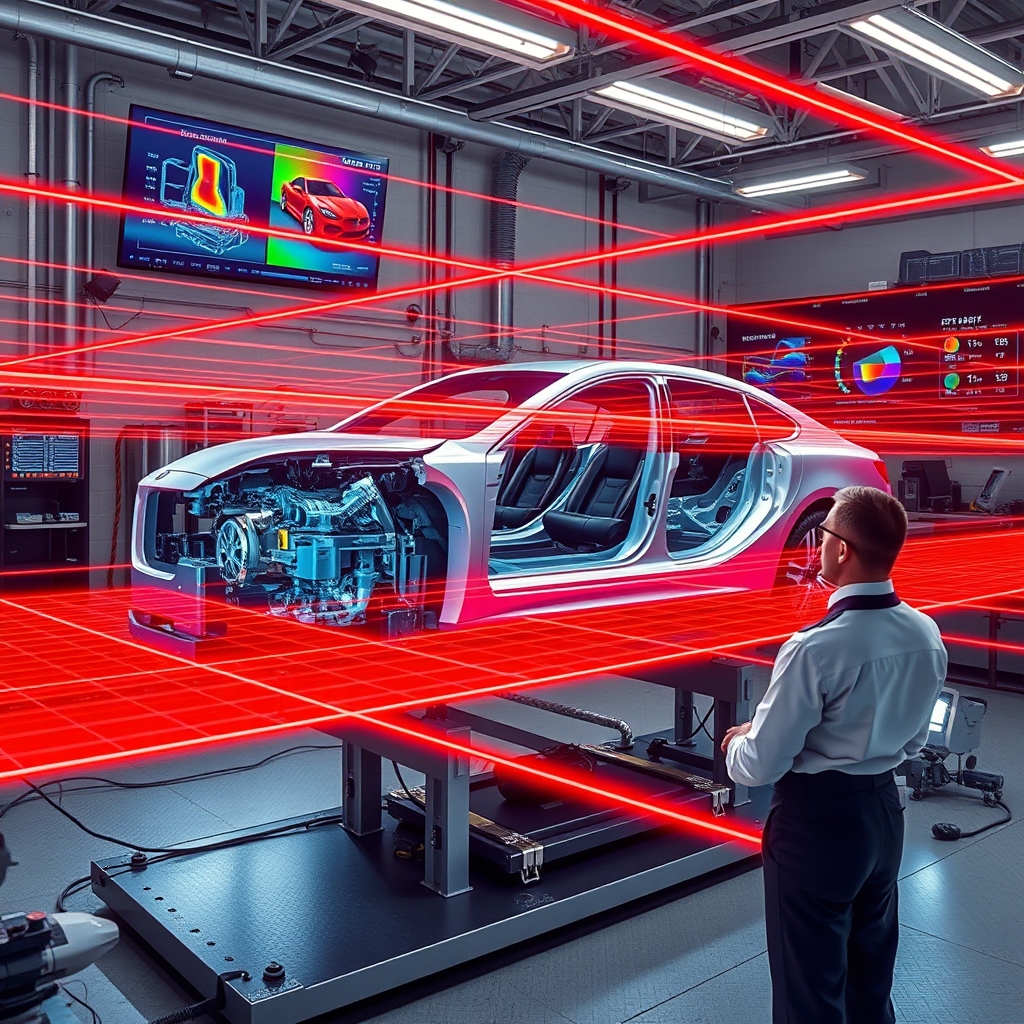
Gone are the days when frame straightening relied solely on manual measurements and the skilled eye of a technician. Today, laser frame alignment systems have become the gold standard in collision repair, offering real-time, three-dimensional analysis of a vehicle’s structure. These systems use high-precision lasers to map the exact dimensions of a damaged frame, comparing them against manufacturer specifications with millimeter accuracy.
What makes laser alignment revolutionary is its ability to detect even the slightest deviations that could compromise a vehicle’s safety. Traditional methods often missed subtle misalignments, leading to long-term issues like poor handling, uneven tire wear, or even structural failure in future collisions. With laser technology, technicians can pinpoint problem areas instantly, ensuring repairs meet or exceed OEM standards. This level of precision is especially critical for modern vehicles, where advanced driver-assistance systems (ADAS) and crumple zones rely on exact structural geometry to function correctly.
How Laser Alignment Works
The process begins with the vehicle being secured on a specialized alignment bench, which serves as a stable platform for measurements. Laser projectors are then positioned around the vehicle, emitting beams that create a digital grid of reference points. These points are cross-referenced with the vehicle’s original blueprint data, stored in cloud-based databases accessible to repair shops. Any discrepancies are flagged instantly, allowing technicians to make targeted adjustments using hydraulic pulling systems.
One of the most significant advantages of laser alignment is its speed. What once took hours of manual measurement and trial-and-error adjustments can now be accomplished in a fraction of the time. This efficiency not only reduces labor costs but also minimizes the time a customer spends without their vehicle—a critical factor in today’s fast-paced world.
The Role of Smart Repair Systems
While laser frame alignment addresses structural repairs, smart repair systems are revolutionizing how minor to moderate damage is handled. These systems combine advanced diagnostics, automated tools, and data-driven techniques to deliver faster, more consistent results. From paintless dent removal (PDR) to clear coat scratch repair, smart systems are making once-labor-intensive processes more efficient and accessible.
Paintless Dent Removal: A Game Changer
Paintless dent removal has long been a preferred method for repairing minor dents without compromising a vehicle’s original finish. However, smart PDR systems are taking this technique to new heights. Using specialized cameras and software, these systems analyze the depth, location, and contours of a dent, then guide technicians through the repair process with step-by-step instructions. Some advanced systems even use robotic arms to apply precise pressure, eliminating the guesswork and reducing the risk of overcorrection.
The benefits of smart PDR extend beyond speed and accuracy. By preserving the factory paint, these systems help maintain a vehicle’s resale value and avoid the environmental impact of traditional repainting. For customers, this means a faster turnaround time and a repair that’s virtually undetectable.
Clear Coat Scratch Repair: Restoring Flawless Finishes
Scratches and swirl marks are among the most common types of damage that bring vehicles into repair shops. Smart repair systems have streamlined the process of clear coat scratch repair, using automated polishing tools and color-matching software to restore finishes with minimal effort. These systems can analyze the depth of a scratch and determine whether it can be buffed out or requires a more intensive repair, ensuring consistency and reducing waste.
For deeper scratches, smart systems guide technicians through the process of wet sanding, polishing, and applying a new clear coat layer. The result is a seamless repair that blends perfectly with the surrounding paint, leaving no trace of the original damage. This level of precision is particularly valuable for luxury and high-end vehicles, where even minor imperfections can significantly impact value.
The Synergy of Technology and Craftsmanship
While laser frame alignment and smart repair systems are undeniably transformative, they don’t replace the skill and experience of a trained technician. Instead, they enhance it. These technologies act as force multipliers, allowing technicians to work with greater confidence and efficiency. A repair shop equipped with these tools can handle a wider range of damage, from minor dents to severe structural misalignments, with a level of precision that was once unimaginable.
Moreover, the data generated by these systems provides valuable insights into repair trends, helping shops optimize their workflows and improve customer satisfaction. For example, laser alignment systems can generate detailed reports that document the before-and-after condition of a vehicle’s frame, giving customers peace of mind that their car has been restored to factory specifications. Similarly, smart repair systems can track the most common types of damage, allowing shops to tailor their services to meet local demand.
The Future of Collision Repair
As vehicles continue to evolve, so too will the technologies used to repair them. Electric vehicles (EVs), with their unique structural designs and battery placement, are already presenting new challenges for collision repair shops. Laser frame alignment and smart repair systems are poised to play a crucial role in addressing these challenges, offering the precision and adaptability needed to work with advanced materials like aluminum and carbon fiber.
Looking ahead, we can expect to see even greater integration between repair technologies and vehicle diagnostics. Imagine a future where a car’s onboard sensors can communicate directly with a repair shop’s alignment system, providing real-time data on structural damage before the vehicle even arrives. This level of connectivity would further streamline the repair process, reducing guesswork and ensuring repairs are both accurate and efficient.
The collision repair industry is undergoing a quiet revolution, one where precision is no longer a luxury but a standard. Laser frame alignment and smart repair systems are at the forefront of this change, redefining what’s possible in auto body restoration. For technicians, these tools represent an opportunity to elevate their craft, delivering repairs that are not only faster but also safer and more reliable. For customers, they offer the assurance that their vehicle is in the best possible hands, restored to its original condition with a level of accuracy that was once the stuff of science fiction. As technology continues to advance, the line between repair and perfection will blur, setting a new benchmark for what it means to bring a damaged vehicle back to life.