Beyond the Surface: The Intricate Dance of Vehicle Corrosion Prevention and Advanced Collision Repair Techniques
Every vehicle tells a story, one that unfolds with every mile driven and every season endured. Yet, beneath the gleaming paint and polished surfaces lies a silent battle—one against the relentless forces of nature. Corrosion, the invisible enemy of automotive longevity, quietly gnaws at metal, compromising both aesthetics and structural integrity. But in the world of modern collision repair, this battle is being fought with an arsenal of advanced techniques, where science and craftsmanship converge to preserve not just the appearance of a vehicle, but its very essence.
The Silent Threat: Understanding Vehicle Corrosion
Corrosion is more than just rust; it’s a chemical process that occurs when metal reacts with oxygen and moisture, leading to deterioration over time. For vehicles, this means weakened frames, compromised safety, and diminished resale value. The challenge is particularly acute in regions with harsh climates, where road salt, humidity, and temperature fluctuations accelerate the process. But even in milder environments, corrosion remains a persistent threat, lurking beneath the surface and waiting for the opportune moment to strike.
Traditional methods of corrosion prevention, such as undercoating and rust-proofing sprays, have long been the first line of defense. However, these solutions often provide only temporary relief, requiring frequent reapplication and offering limited protection against the more insidious forms of corrosion. Today, the automotive industry is turning to more sophisticated approaches, leveraging cutting-edge materials and technologies to create a barrier that is as durable as it is effective.
The Role of Ceramic Coatings in Modern Corrosion Prevention
Ceramic coatings have emerged as a game-changer in the fight against corrosion. Unlike traditional waxes or sealants, ceramic coatings form a semi-permanent bond with the vehicle’s paint, creating a hydrophobic layer that repels water, dirt, and contaminants. This not only enhances the vehicle’s shine but also provides a robust shield against the elements. The chemical composition of ceramic coatings, often infused with silicon dioxide (SiO2) or titanium dioxide (TiO2), ensures that the protective layer is both flexible and resilient, capable of withstanding the rigors of daily driving.
But the benefits of ceramic coatings extend beyond mere aesthetics. By preventing moisture from penetrating the paint, these coatings significantly reduce the risk of corrosion. This is particularly valuable in collision repair, where even minor scratches or chips can expose bare metal to the elements. A well-applied ceramic coating can seal these vulnerabilities, ensuring that the vehicle remains protected long after it leaves the repair shop. Moreover, the durability of ceramic coatings means that they require minimal maintenance, making them a cost-effective solution for both repair professionals and vehicle owners.
Advanced Techniques in Collision Repair: A Multi-Layered Defense
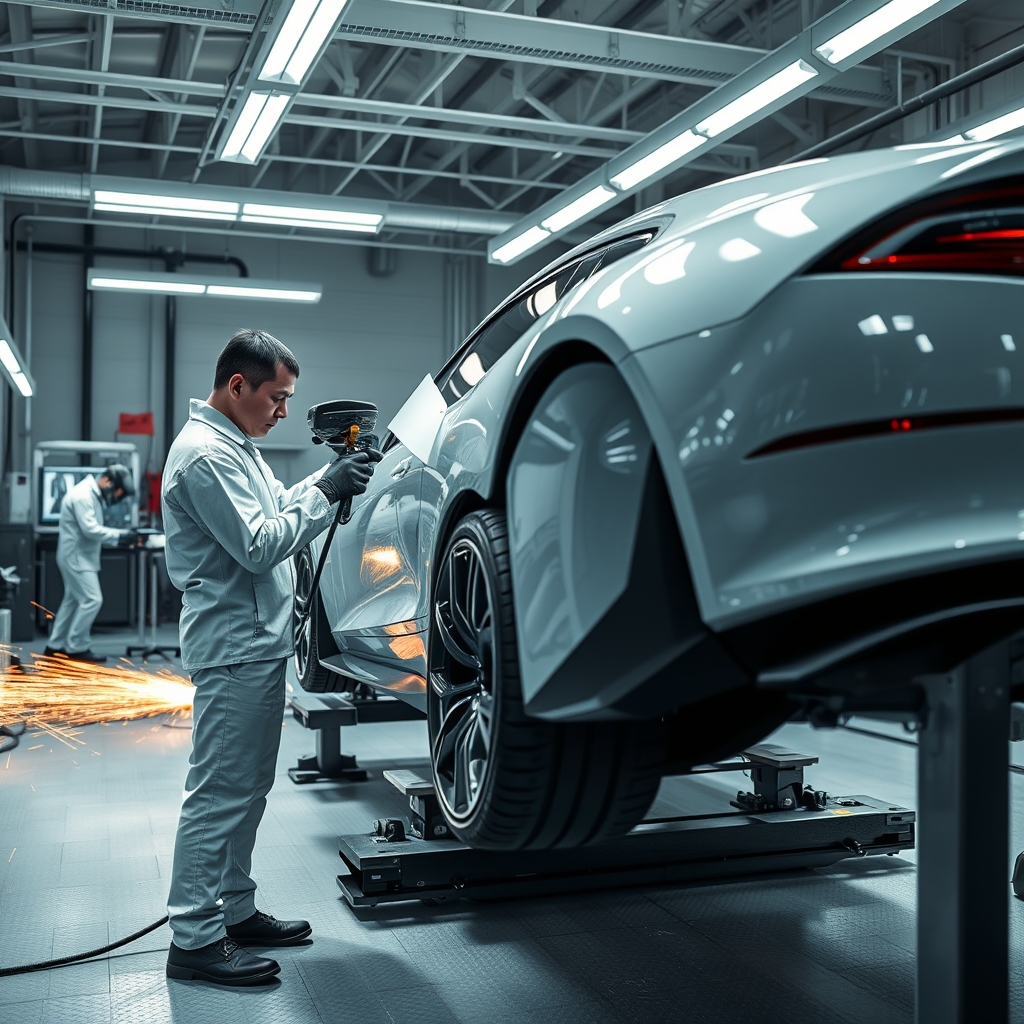
While ceramic coatings play a pivotal role in corrosion prevention, they are just one piece of the puzzle. Modern collision repair shops employ a multi-layered approach to ensure that vehicles are not only restored to their pre-accident condition but are also fortified against future damage. This begins with the careful removal of any existing corrosion, often using specialized tools and techniques such as media blasting or chemical treatments. Once the affected areas are cleaned and prepped, the next step involves the application of corrosion-inhibiting primers, which provide an additional layer of protection before the final paint and clear coat are applied.
In cases where structural components have been compromised, advanced materials such as aluminum and high-strength steel are increasingly being used. These materials offer superior resistance to corrosion while also reducing the overall weight of the vehicle, improving fuel efficiency and performance. However, working with these materials requires specialized knowledge and equipment, particularly when it comes to welding and alignment. Techniques like fiber laser welding and laser frame alignment have revolutionized the repair process, allowing for precise, high-strength repairs that maintain the vehicle’s structural integrity.
The Art of Smart Repair Systems: Efficiency Meets Precision
For minor damage, such as scratches, dents, and chips, smart repair systems have become an indispensable tool in the collision repair arsenal. These systems, which include paintless dent removal (PDR) and spot repair techniques, allow technicians to address damage quickly and efficiently, often without the need for extensive repainting. This not only reduces repair times but also minimizes the risk of corrosion by preserving the original factory finish.
Paintless dent removal, in particular, has gained widespread acclaim for its ability to restore a vehicle’s body to its original condition without compromising the paint. By carefully massaging the metal from behind the dent, skilled technicians can eliminate imperfections while maintaining the integrity of the protective clear coat. This technique is especially valuable for modern vehicles, where the paint is often more susceptible to chipping and peeling. When combined with ceramic coatings, PDR ensures that the vehicle remains not only dent-free but also protected against the elements.
The Future of Vehicle Longevity: A Holistic Approach
The fight against corrosion is not just about applying the latest coatings or using the most advanced materials—it’s about adopting a holistic approach to vehicle care. This means considering every aspect of the repair process, from the initial assessment of damage to the final application of protective treatments. It also means educating vehicle owners about the importance of regular maintenance, such as washing and waxing, to prevent the buildup of contaminants that can accelerate corrosion.
For collision repair professionals, staying ahead of the curve requires a commitment to continuous learning and innovation. As new materials and technologies emerge, the industry must adapt, ensuring that every repair not only restores the vehicle’s appearance but also enhances its longevity. Whether it’s through the application of ceramic coatings, the use of advanced welding techniques, or the implementation of smart repair systems, the goal remains the same: to preserve the beauty, safety, and value of every vehicle that rolls into the shop.
The journey of a vehicle from the moment it leaves the factory to the day it retires from the road is a testament to the craftsmanship and ingenuity of those who maintain it. In the hands of skilled technicians, even the most damaged vehicles can be transformed into works of art, their surfaces gleaming with a protective shield that defies time and the elements. It’s a delicate balance of science and skill, where every layer of paint, every weld, and every coating plays a part in the larger story of automotive resilience. And as technology continues to evolve, so too will the methods we use to protect and preserve the machines that move us forward.