The Invisible Revolution: How Advanced Frame Straightening and Laser Alignment Are Redefining Collision Repair Precision
In the world of collision repair, structural integrity is everything. A vehicle’s frame is its backbone, designed to absorb impact and protect passengers in the event of an accident. Yet, for decades, restoring a damaged frame to its original specifications was a labor-intensive process fraught with guesswork. Traditional methods relied on hydraulic pulls and manual measurements, leaving room for human error and inconsistent results. Today, however, a quiet revolution is underway—one driven by advanced frame straightening techniques and laser alignment technology, transforming collision repair into a science of precision.
The Limitations of Traditional Frame Repair
For years, auto body technicians depended on mechanical frame racks and chains to pull damaged frames back into shape. While effective to a degree, these methods lacked the finesse required for modern vehicles, which often feature high-strength steel, aluminum, and complex geometries. Misaligned pulls could compromise a vehicle’s structural integrity, leading to poor handling, uneven tire wear, or even safety hazards in future collisions. Additionally, manual measurements with tape measures and plumb bobs were time-consuming and prone to inaccuracies, making it difficult to achieve factory-level precision.
The Rise of Laser-Guided Frame Alignment
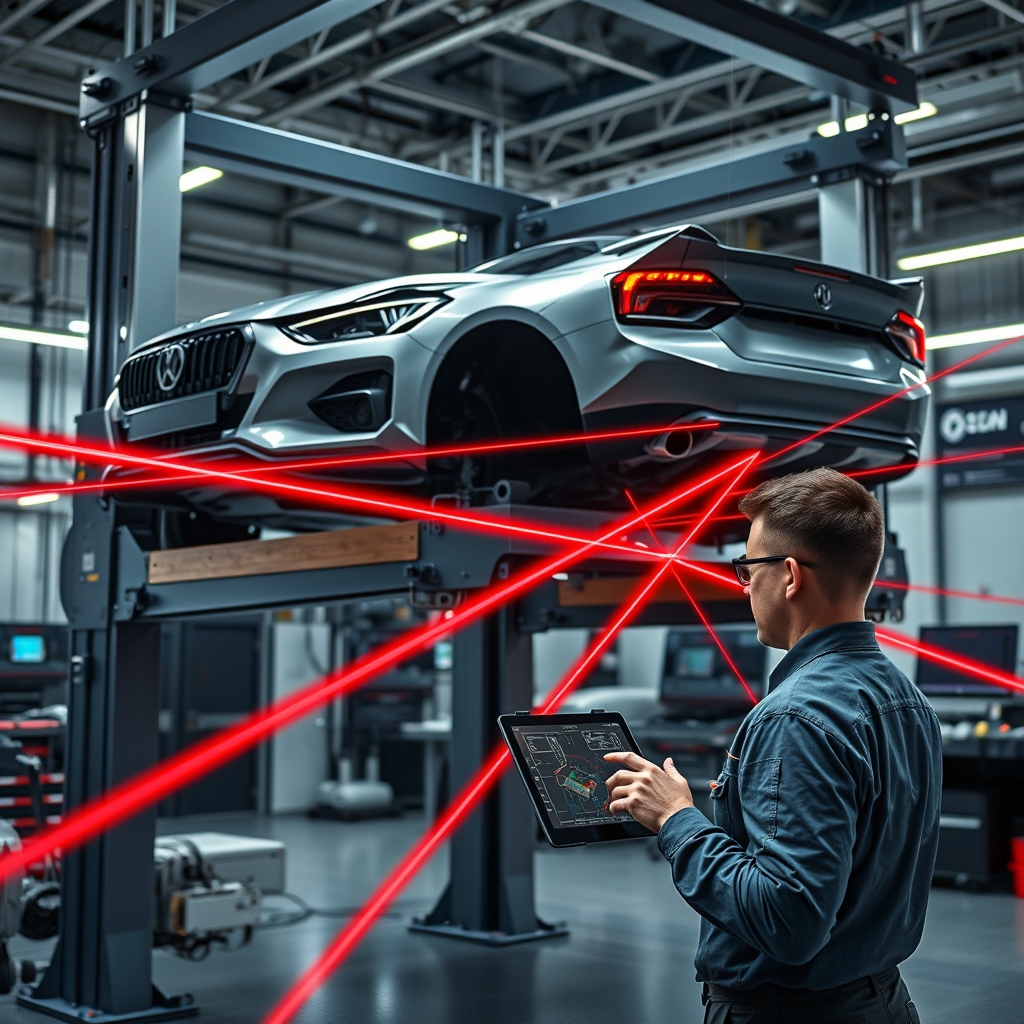
The game-changer in modern frame straightening arrived with laser alignment systems. These cutting-edge tools use high-precision lasers to project reference points onto a vehicle’s frame, creating a digital blueprint of its original geometry. Technicians can then compare real-time measurements against manufacturer specifications, ensuring that every pull is executed with millimeter accuracy. Unlike traditional methods, laser alignment eliminates guesswork, allowing for faster, more consistent repairs while maintaining the vehicle’s crashworthiness and structural integrity.
How Laser Alignment Works
Modern laser alignment systems, such as those from Chief Automotive and Car-O-Liner, integrate with computerized measuring databases that store factory specifications for thousands of vehicle models. When a damaged car is placed on a frame rack, sensors and lasers map its current dimensions, highlighting deviations from the original design. Technicians then use hydraulic pulls to gradually realign the frame, with the laser system providing real-time feedback. This closed-loop process ensures that each adjustment brings the vehicle closer to its pre-accident condition, reducing the risk of overcorrection or misalignment.
The Role of Advanced Frame Racks and Computerized Pulling
While laser alignment provides the precision, modern frame racks deliver the power. Today’s computerized frame machines are equipped with multiple pulling towers, allowing technicians to apply force from multiple angles simultaneously. This multi-directional pulling capability is essential for repairing complex frame damage, such as twist or diamond misalignments, which were nearly impossible to correct with older, single-point pulling systems. Additionally, computerized racks can store and replicate pulling sequences, ensuring consistency across repairs and reducing the time required to restore a vehicle’s structural integrity.
Material-Specific Challenges in Modern Frame Repair
The shift toward lightweight materials, such as aluminum and ultra-high-strength steel, has introduced new challenges in frame straightening. Aluminum, for instance, is more malleable than steel but also more prone to heat distortion during welding. To address this, collision repair centers now use specialized aluminum frame racks and cold straightening techniques to avoid compromising the metal’s integrity. Similarly, high-strength steel requires precise heat application to prevent weakening, making laser-guided alignment even more critical in ensuring that repairs meet OEM standards.
The Impact on Vehicle Safety and Longevity
Beyond aesthetics, proper frame alignment plays a crucial role in a vehicle’s long-term safety and performance. A misaligned frame can cause uneven weight distribution, leading to premature tire wear, poor handling, and increased stress on suspension components. In severe cases, it can even affect a vehicle’s crashworthiness, reducing the effectiveness of airbags and crumple zones in future accidents. By leveraging laser alignment and advanced frame straightening techniques, modern collision repair centers can restore vehicles to their original safety specifications, giving owners peace of mind and extending the lifespan of their cars.
Integration with Other Advanced Repair Technologies
Frame straightening is no longer an isolated process but part of a broader ecosystem of advanced collision repair technologies. For example, laser alignment systems often integrate with 3D scanning tools, allowing technicians to create digital twins of damaged vehicles for more accurate diagnostics. Additionally, modern frame racks can sync with smart repair systems, enabling seamless transitions between structural repairs and cosmetic refinishing. This holistic approach ensures that every aspect of a vehicle’s restoration—from its frame to its paint—meets the highest standards of precision and quality.
The Future of Frame Straightening: AI and Automation
As collision repair technology continues to evolve, the next frontier in frame straightening may lie in artificial intelligence and automation. Some industry leaders are already experimenting with AI-driven diagnostic tools that can predict the optimal pulling sequence for a damaged frame, reducing repair time and minimizing human error. Meanwhile, robotic frame straightening systems are being developed to execute precise pulls with minimal technician intervention. While these technologies are still in their infancy, they hint at a future where frame repairs are faster, more accurate, and more accessible than ever before.
The transformation of frame straightening from a manual, error-prone process to a high-precision science reflects the broader evolution of collision repair. As vehicles become more complex and safety standards more stringent, the demand for advanced repair techniques will only grow. Laser alignment and computerized frame straightening are not just improving the quality of repairs—they are redefining what’s possible in auto body restoration. For technicians and vehicle owners alike, this invisible revolution is a testament to how innovation can turn even the most structural of repairs into a work of precision engineering, ensuring that every vehicle leaves the shop safer, stronger, and closer to its original design than ever before.